‘The climate is changing, why aren’t we?’ Reads the cardboard placard photographed at a climate protest in the call for essays on sustainability heroes. Far from being a new question, it is perhaps more urgent than at any other time. During the COVID-19 Lockdown, we were treated to novel views of clear blue skies in China and India, and of wild animals entering into urban areas because of less noise and traffic. The benefits of the massive drop-off in air travel and fuel consumption on the natural world is clear and obvious; we have been shown a glimpse of an alternative existence, albeit one where our current financial and economic systems would have to be radically overhauled.
These unprecedented times have created uncertainty, the worst economic and financial forecasts since records began, eclipsing any other economic depression, even during the 1930’s. The fossil fuel industry is in deep trouble and countries are at the brink of bankruptcy, rope dancing on a thread spun of debt and quantitative easing.
Although there aren’t any official numbers available yet on the extent of reduction in wine consumption due to COVID-19, judging from recent reports such as Champagne sales dropping by a third in the first half of 2020 compared to 2019, and estimations of wine sales in California dropping by 9 million cases between 2020 and 2021, we can be sure that there will be a considerable reduction in harvests and wine production in 2020 and 2021. Cellars are full and markets are stagnating around the globe.
Despite the frightening economic status quo, there are some undeniable positives which came out of the pandemic. People started focusing inwards, spending time with loved ones, preparing meals at home instead of going out, paying more attention to sourcing quality ingredients and the demand for local produce and home delivery of wine increased. The current model for how wine markets operate is being redrawn as we speak due to the massive decline in consumption as a result of restaurants temporarily shutting or never reopening their doors again, cancellation of events and people generally being wary of going to public places to share a drink. It is possibly the best moment in modern times for the wine industry take a step back, to reassess its relationship with mother nature and to begin to focus more on what is good for the planet and its human and non-human inhabitants.
Of course there are many already walking this path, my chosen example for a ‘sustainability hero’ is Jakab Pince, a small but exemplary winery in Hungary.
Jakab Pince and Homonna are two small wineries in the picturesque village of Erdőbénye, tucked away in Tokaj wine region in the far north-eastern Hungarian countryside. Both produce ethereal wines from Furmint and Hárslevelű grapes, which are regular features on Michelin-starred restaurants’ wine lists around the world.
One needs to drive about twenty minutes north-east from Mád, the central part of the region to get to Bénye – as the locals call it – passing some of the oldest historical vineyards on the way which were classified in 1737, some way before official recognition of Bordeaux and Burgundy parcels. Although the focus of this article is Jakab Pince, the two are inseparably intertwined by their history, their winemaker and their shared ethos. They are located on the same street, a stone’s throw away from each other. While Jakab Pince is a separate winery, and the owner makes the decisions in his vineyards, they follow the same principles and all the wines are made by Attila Homonna since the beginning.
Jakab Pince was established in 2007, by Zoltán Jakab, a medical doctor working in the pharmaceutical industry. Jakab had been infected by the winemaking bug as a child by watching his late grandfather tending to his small vineyard near Miskolc (a large city about 50 kilometres from Tokaj) making a small amount of wine each year, only for family consumption. Some years later, his father purchased some vines in the Padi-hegy vineyard, which gave the base for the winery today.
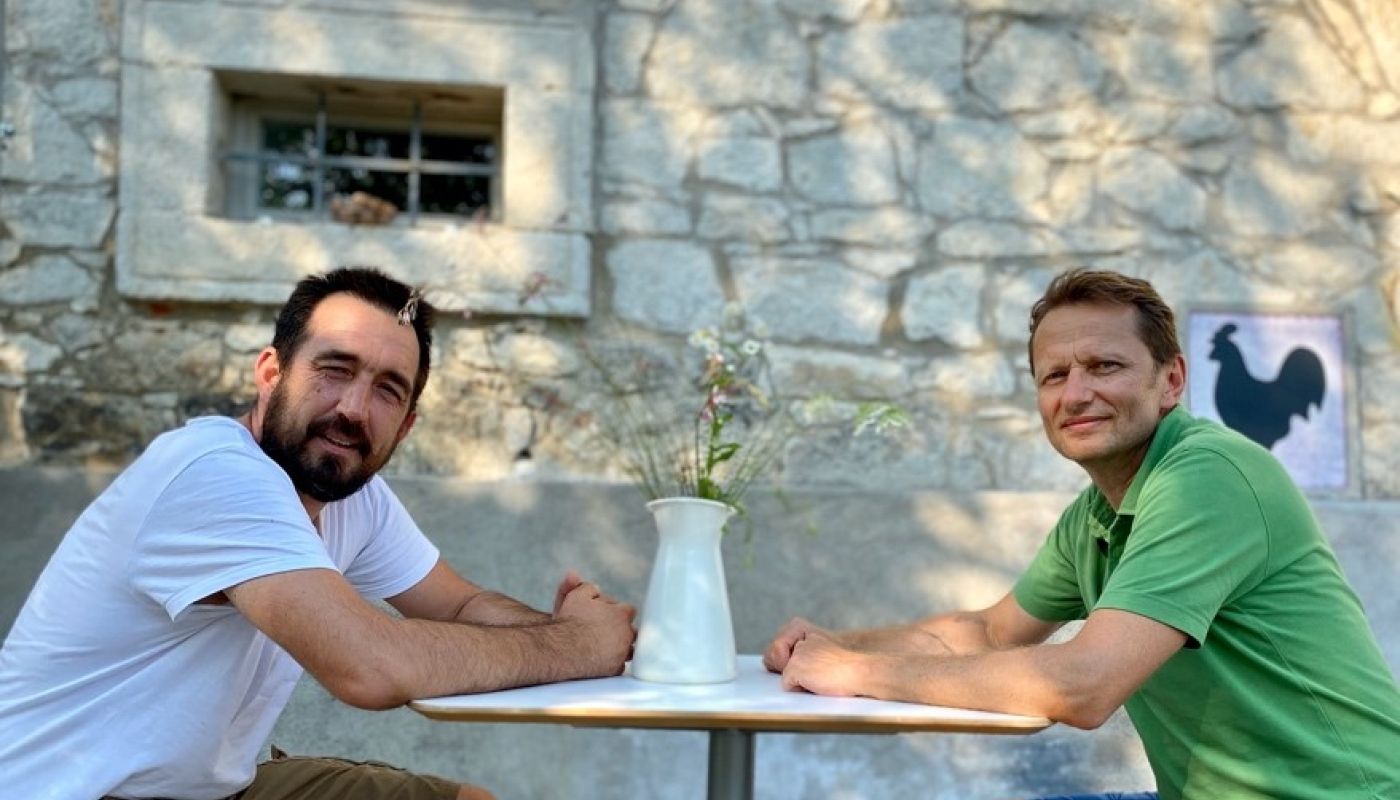
Had it not been for their shared love of wine, the duo’s paths may have never crossed. In 2007, Zoltán Jakab met Attila Homonna (the two of them pictured above, Attila on the left), a pioneering electronic musician-cum-winemaker, who by then already had five vintages under his belt in Tokaj. Jakab asked him to make his first vintage that year, and since then they gradually built the winery up step by step, purchasing more land and increasing production. According to Homonna, he was the first winemaker in the region to go fully organic in 2003 and Jakab has been organic since the beginning; although neither went through the process of certification. They tell me this is because they simply don’t care much to be certified. However, they are fully committed to organic winemaking, and in some years rather lose large amounts of crops than ever to resort to using chemical materials in the vineyard that they would not be able to, were they certified organic. For example, in 2010 and in 2014 they lost over 75% of their grapes due to downy mildew and only made around 2000 bottles of wine each instead of the usual of around 8000 per year.
Since 2007, Jakab slowly acquired more and more areas under vine – adding to the original Padi-hegy vineyard – in Rány, Kulcsár and Vay. They now co-own 3.5 hectares and they both separately own an additional few hectares each.
Sustainability has the utmost importance in every aspect of vineyard management and winemaking at Jakab Pince, although they are subtle about it, believing that working with nature is the only sustainable model. The wines are very much made in the vineyard, as opposed to inside the winery. The vines are pruned and trained to produce very low yields, only around 1 kilogram per vine.
Workers spend a lot of time in the vineyard with canopy management and green harvest, and they cut the undergrowth and cover crops by scythes. Leaving an abundance of cover crops provides a natural habitat for wildlife, such as bees, ladybirds and stag beetles (the mascot of Homonna) and also helps to achieve more concentration in the Furmint and Hárslevelű grapes by the crops competing for water and nutrients with the vines. Cover crop waste is composted and reused as fertiliser. Neither herbicides nor systemic chemicals are used to protect the soil and grapes, only copper sulphate, sulphur and organic materials such as orange oil are sprayed in the lowest possible quantities. They are very cautious, especially about the use of copper, as its impact on the environment even within the realms of organic winemaking has been a hotly contested topic in recent years.

Jakab’s attitude to vineyard management is admittedly simple: lots of canopy work, minimal plant protection and minimal soil protection, and even in the week before harvest, they go through every vineyard three times to make sure canopy arrangement is top notch (often to the puzzlement of some vineyard workers). Harvest is by hand only and usually two to three weeks before most begin in the region, as acidity is a very important cornerstone of the style of wines made at Jakab Pince.
In the winery they press the grapes very gently using a horizontal basket press, only pressing about half of the grapes’ weight in juice, which they vinify in a mixture of used Hungarian (Kádár), Austrian (Stockinger) and a small amount of French (Atelier Centre France) barrels and stainless steel with spontaneous fermentation by indigenous yeasts. Ageing is also in the same barrels, usually for eleven months. The use of wood is very delicate, with more focus on texture than any oak flavour in the wines. Sulphur is added gradually, only the lowest amount necessary in order to protect the wine. Wines are always stored in bottle for a minimum of one year before being released to the market, although the most concentrated wines from the Vay vineyard are kept for a further year to develop in the bottle. The dry wines always have a strong mineral character with a lean structure, great concentration and pronounced acid backbone (malolactic conversion rarely happens). A small amount of sweet wine is also made, which is on the lower side on residual sugar, compared to most sweet wines of Tokaj, and with a lively tropical fruit and apricot driven flavour profile.
The winery actively supports the local community by employing only local vineyard workers and by buying everything they can nearby, including food consumed there which is mostly from the villagers’ own farms. To source their cardboard boxes used for packaging, they are working together with a company in the nearby town of Tiszalök that provides employment for local workers with disabilities. In addition to their two permanent employees, seasonal workers are also always from Erdőbénye and neighbouring villages.
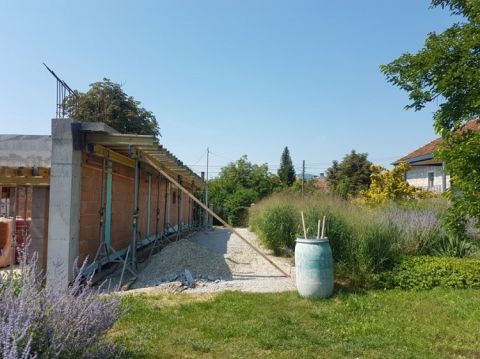
Up until now, Jakab Pince has been using a beautiful, traditional wine cellar – often found in Tokaj houses – underneath their family home for vinification and ageing (bottling is at nearby Béres winery), but they are currently undergoing huge redevelopment with the building of a brand new, fully carbon neutral winery right next door to their home, which will be ready by the end of 2020. They designed it to be on street level and without any stairs at all, thus saving on energy and time when moving equipment, grapes and wine around.
Energy will be supplied by solar roof tiles, a recent innovation which allows the most efficient harvesting of sunlight energy from the surface of the winery roof. To make the operation even more environmentally sustainable, a rainwater collector system will be installed underground which will be able to cover the new winery’s water needs. A geothermic heat pump will be responsible for heating and cooling, therefore the new winery will not need any fossil based energy to maintain the desired temperature inside the building.
Regarding packaging materials, current bottle weight will be reduced by 50% by using new, lighter bottles from the 2019 vintage, and Jakab’s labels will be printed on paper instead of earlier used vinyl material. The paper cartons used for packaging are recyclable and locally made. Closures are synthetic (Diam 10) corks since 2017, changing over from natural cork effectively eliminated cork taint and also resulted in using slightly less sulphur at bottling. However, levels of sulphur are rather low in any case, around 70 mg/l in total, which is less than half of the currently allowed maximum in the EU for white wine made from organically grown grapes.
The winery is already virtually waste-free, as all the stalks and materials left over after pressing are composted, and used up in the vineyards as fertiliser, and this will be continued in the future.
Jakab Pince is a unique place in Tokaj-Hegyalja region with a powerful vision for sustainable, conscious wine making. I believe that these two hidden gems in Erdőbénye are the future and that their ethos and approach to making wine is exemplary.
As Attila Homonna promptly says: ‘Our way of sustainable viticulture is the only one we can imagine. A change in approach in the industry is imminent as we have long passed the point of no return. We need to modify our deeply ingrained reflexes, which have been part of our culture for many generations. It is a tall order, nevertheless if we don’t try our best to change our approach now, we have to bear the responsibility of losing the battle and taking away the future of generations to come.’ One can only hope that more will follow in their footsteps.
















