Artemis N Burger writes I am currently based in Vienna, Austria. I was born in England and graduated from the University of Salford with a Postgraduate Diploma in Business Administration and continued my studies at the Sorbonne University. In 2002, I qualified as a Cambridge English language teacher (CELTA), teaching in Austria and Germany. I later pursued my passion for oenology, gaining the WSET Diploma in Wines & Spirits and the Weinakademiker qualification from the Weinakademie in Rust, Austria. My hobbies include strolling through the Viennese vineyards with my Cavalier King Charles Spaniel, fencing, and supporting conservation projects.
Where have all the butterflies gone?
The metamorphosis from the common caterpillar to the butterfly, a radiant winged creature of diaphanous beauty, has become a symbol of transformation and hope. In the great civilizations of antiquity, the butterfly represented renewal, resurrection, and regeneration.
In Ancient Greek, the word for butterfly is 'psyche,' coined by Aristotle, which means soul. For centuries, the term psyche has also referred, in etymology, to an order of Lepidoptera (insects).
Most Ancient Greek philosophical teachings are focused on the psyche, which derives from the Greek verb, ψύχω, which means to breathe, blow, (make cold/chill) - indicative of life itself. The soul was considered the spiritual "breath" that animates the living organism.
And why is this important?
Living microorganisms existing and interacting within a healthy ecosystem will contribute to biodiversity. Ecosystems rely on these fluttering gems, as they are essential pollinators that impact the whole environment.
The disappearance of butterflies
However, their natural habitat has been compromised due to deforestation, loss of native plants, widespread pesticide use, chemical pollution, and climatic change, specifically warmer autumns.
Disturbingly, current trends in detrimental (urban) development, agriculture, and pollution have led to the extinction of several butterfly species and put many others under significant ecological pressure.
Butterflies are indicators, like floating pieces of litmus paper of climate change and changes associated with ecological disturbances. The decline in butterfly fauna is attributed to a corresponding decrease in nectar-rich and critically important wild plant species. The distribution and diverse species of butterflies and plants are prerequisites for conservation, particularly sustaining ecosystems.
Why are butterflies so important in viticulture?
Butterflies are vital pollinators; although they do not pollinate the flowers on grapevines, they are primary pollinators for cover crops between the vines, which naturally replenish vital soil nutrients and thus breathe (ψύχω) life back into the earth.
Butterflies also aid in pest management by restoring native plants, which become natural deterrents for pests and help habitats thrive in low pesticide-managed agricultural areas, such as vineyards. By conserving, a biodiverse habitat within the vineyard, the enhancement, and sustainability of beneficial arthropod populations (parasitoids and predators) can control vineyard pests.
Vineyards can be a precious preservation area for butterflies, in harmony, with the natural ecology. Overall, butterflies can assist in increasing fertility and biodiversity and lessen the use of pesticides.
Ultimately, butterflies fluttering around vineyards have a magical aesthetic appeal and can also attract ecotourism.
My first butterfly-vineyard awakening was on holiday in Cofu
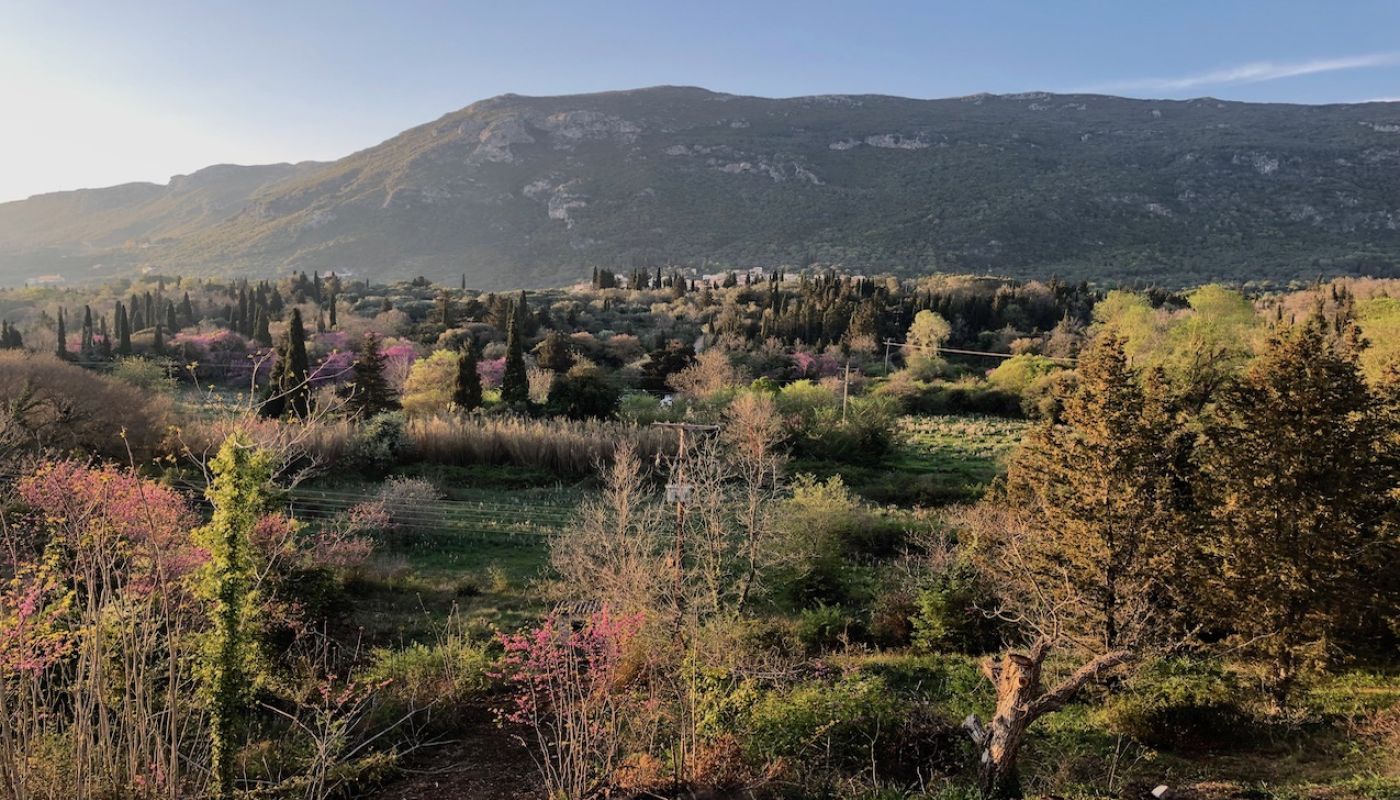
My most nostalgic childhood memories are reminiscing about my long summer holidays on the island of Corfu. The landscape was irresistibly alluring with Venetian olive groves as far as the eye could see; sleepy villages perched on the mountain sides and that ever so synonymous sound of summer – the chirping cicadas. Every holiday was spent in my great aunties' holiday home near the village of Scripero, amphitheatrically built on the foothills of Mount Pantokrator. A Venetian-built estate located in the north-western central part of Corfu. One memory will never fade away … that of butterflies. The abundance and diversity of the butterflies were paradisical, accompanied by dragonflies and damselflies and subsequently followed by swarms of fireflies and glow worms glistening in the dusk of the warm, balmy evenings. Most villagers would have their plot of vines within this fascinating valley with its unique microclimate. I remember the flutter of butterflies were mostly shades of orange and yellow, circulating between the vines. One species was the eastern orange-tip Anthocharis Damone, only found on the slopes of the nearby Mount Pantokrator. I recall its sorbet lemon colour, deep orange apical patches fluttering around the juniper bushes, golden thistle (Scolymus hispanicus), and the blue eryngium creticum. All this was embraced by night-scented wild jasmine and the unmistakable intoxicating whiff of thyme, wild mint, and oregano. However, the true butterfly allurer in this valley was the chaste tree blossoms, which like honeywort, attract the most distinct butterflies and bees.

Last year, after 30 years or so, I strolled through the same unchanged monopathi (dust path) and was disheartened by the modest amount of butterflies or wild plants. My curiosity led me to research a little, chatting with the locals and a few winegrowers on the island.
Eventually, I concluded that the loss of biodiversity in the area is mainly due to the abandonment of agriculture, livestock, primarily sheep and goats, the change in grazing patterns, the reduction of plant diversity, climate change, pesticides, and urbanisation, mostly tourism projects on the coast. Additionally, forest fires have left devasting effects on the island, too, for the fauna and flora.
The deeper issue is that parcels of land had been unattended for decades, and the younger generations from farming families (before the economic crisis) opted for better-paying, comfortable jobs in the cities or working within the profitable tourism/service sector. However, after enduring the economic crisis and the covid pandemic, thousands of young Greeks returned to their ancestral homes to recultivate their parents/grandparents' land.
Butterflies and biodiversity within the vineyard. Fluttering back into fashion
However, there is a glimmer of hope; conservationists are observing an unexpected force for the eventual resurgence of the butterfly population. Many vintners striving to control vineyard pests have resorted to sustainable developments, like butterfly sanctuaries. This is achieved by strengthening the natural habitats around and within the rows of vines, acting as a buffer zone that keeps the destructive insects, like parasitic wasps, at bay by alluring the good ones. Sequentially, the butterflies consume pests that damage crops, hence a perfect substitute for pesticides, generating an increase in the butterfly population.
Native grasses, annual and perennial wildflowers, shrubs, and trees must be integrated into the sanctuaries and provide year-round floral resources and nesting habitats for native pollinators. Plants selected are based on terrain, temperature, and moisture levels. Still, critically, pollinators like butterflies, hummingbirds, honeybees, and bees will benefit from the nearby habitat - sequentially supporting the ecosystem and enhancing healthy vine growth. Although these pollinators don't directly impact the vines' lifecycle, creating a habitat means a sustainable approach to biodiversity. Research has shown that at vineyards with pollinator sanctuaries (habitat-enriched vineyards there were three to four times more butterflies than at conventional vineyards.

Conclusion
Butterfly sanctuaries or pollinator sanctuaries are vital in supporting the overall ecosystem, nurturing butterflies, and supporting the growth of grapes, vegetables, and aesthetically beautiful native plants. Creating more habitats for butterflies is a natural enhancement of our approach to biodiversity.
These butterfly sanctuaries demonstrate the importance to the viticultural industry to promote the ecosystem and contribute to its preservation and conservation.
Concerning Corfu, many commercial and private small parcel vineyards on the island of Corfu are organic or even biodynamic. Implementing varied fauna species beneficial to conserving the equilibrium of the vines and their habitat is not a groundbreaking new theory but a natural, ancient phenomenon. The harmony within and around the vineyard has always entailed rich polyculture, cattle, and limited use of pesticides. Local Corfiot farmers have always practiced this method of farming, even implementing the main principles of biodynamics, without ever having an inkling of anthroposophy and the notions of Rudolf Steiner's work. Ancient Greek farmers have always respected the harmony between all the elements of nature. It's with great hope the new generation of Corfiot vintners who have returned to their ancestral farms can regenerate the fertile soils and encourage the return of the diverse butterfly species.
As demand for organic and naturally grown foods grows, butterflies may, one day, become a symbol of ecologically sustainable farming, including the production of wine.
Regeneration is all about enriching the species within the vineyard, ensuring resilience and sustainability. It is about breathing (ψύχω) life back into our vineyards and the overall agricultural system.
Nature conservation and viticulture ought to be lovingly linked in the future.
Credit for the final image: Dr Dan Danahar. Other images are the author's own.
















