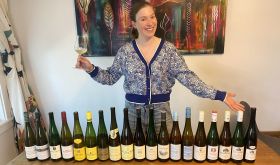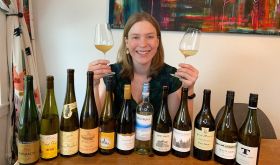
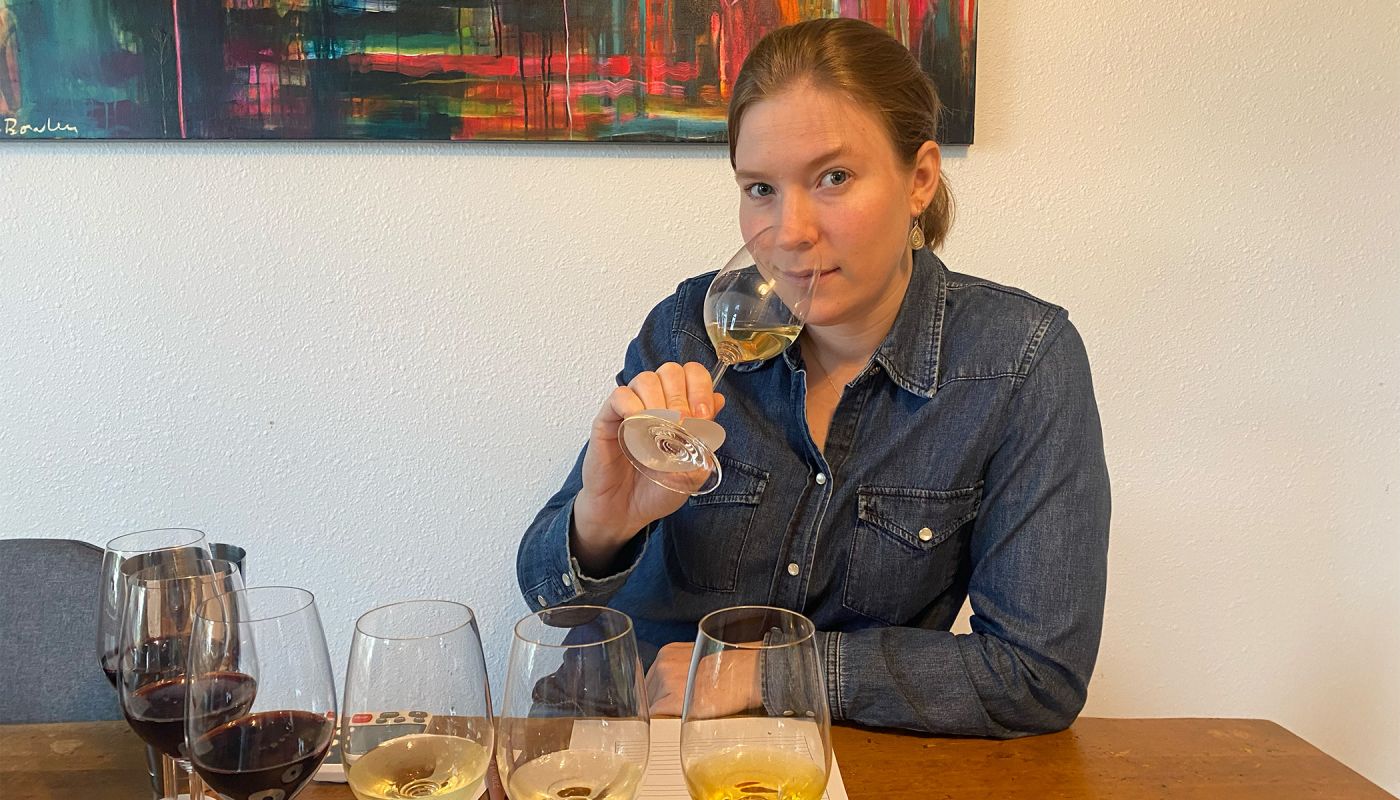
In September of 2024, I received the news that I had, for the second time, failed the blind tasting section of the Master of Wine (MW) stage 2 exam. It was not a surprise (as my exam recap explained, taking it didn’t feel great) but that didn’t make receiving the news any more welcome.
Despite my best intentions last year, I did not find the time to adequately prepare, and I therefore made the decision to defer my exam until June 2026. My stunningly supportive team has agreed that it might be both fun and beneficial for me to write up a blind tasting series – complete with videos!
Why this is good news for you
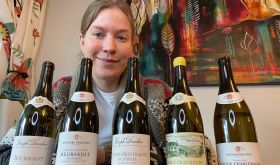
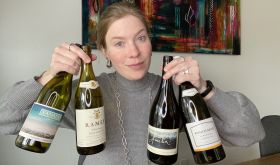
I have my fingers crossed that, as well as being a boon for me, this series will do a few things for you. First and foremost, I hope to entertain you – both by way of pulling back the curtain on the pursuit of the MW (which, of course, Richard did in his wildly successful Diary of an MW student beginning back in 2009) but also by offering you a fun way to participate in this process. I’ll be providing a list of ‘benchmark’ wines (and a handful of alternatives because inevitably some of these won’t be available in your country) in each article so that you can purchase a few of these wines and try your hand at blinding them. Our forum is always open for comments and feedback, favourite tasting tips, or suggestions for additional benchmark wines, and I hope you’ll make use of it.
My deeper hope is that through dissecting the component parts of both great wines and average-quality commercial wines, you will recognise which components are most important to you. Maybe you’ll find that certain aspects of your favourite wines can be found in a wider array of wines than you thought and you’ll diversify your palate preferences while increasing your enjoyment!
How Mission Blind Tasting works
For the next five weeks, I’ll break down how to approach blind tasting. Then, every week thereafter, I’ll publish an in-depth look at a themed tasting. Some will focus on a specific style (like rosé or sparkling) and how you might parse origin and quality from what’s in the glass. Others will look at specific grape varieties, exploring their markers and how those markers vary by region. A few will look at quality hierarchy and maturity, or explore regional specialties (such as Argentine Torrontés or Austrian Grüner Veltliner) and explain how to pick them out of a line-up. Along the way we’ll consider wines that are commonly confused, the winemaking involved, and the market for these wines.
Big fat caveats
The biggest caveat here is that I’ve never passed the MW stage 2 tasting exam. However, my teammates Jancis (1984), Julia (2003) and Richard (2012) have. I know that they’ll keep me in check.
The second caveat is that blind tasting requires that you stereotype a region, grape variety and/or winemaking style – both in your selection of wines and in your tasting of them. As I discussed in this wine of the week, selecting for typicality doesn’t represent all – or even the best – of what a region has to offer. So, while I’ll be making recommendations throughout this series on useful benchmark examples, that doesn’t mean they’re necessarily ‘the best’ wines a region produces.
In line with the above, if there is no ‘typical’ expression of a wine, I’ll be ignoring that wine. Columbia Gorge Mencía? Yes please! But not here. Here is for Mencía from Bierzo.
How MW tasting is different from other programmes
You don’t have to be a wine student prepping for a test to join in Mission Blind Tasting; this series is for anyone looking to get more out of their glass of wine.
However, if you are a WSET (Wine and Spirits Education Trust) student, a sommelier pursuing CMS (Court of Master Sommeliers) pins, or an MW student, it’s important to acknowledge how the MW tasting exam differs from those of other programmes, as it explains a lot about the approach I’ll be taking in this series.
- MW students taste with context Instead of being handed a single glass of wine and asked to deduce what the wine is with zero information (CMS-style), MW students expect to be handed 2–12 glasses of wine and told something to the effect of ‘these are all from the same country’ or ‘these are all from different countries’. Students structure their argument based on the set of wines.
- MW students can be poured any wine in the world MW students are not provided with a list of wines that are most likely to be poured (unlike the CMS, which publishes lists for both their certified and advanced exams). This is because if an MW student is poured a glass of Fiano alongside Pinot Grigio and Vermentino and is told that all three wines are from Italy, we have more than enough data to consider Fiano as an answer. A CMS student wouldn’t have that information.
- MW students prioritise a logical argument for their deduction rather than a single correct answer In an MW exam, you can be asked to identify a wine’s region of origin, variety and vintage. But you can also be asked to detail a wine’s style and commercial appeal, pinpoint its quality level and identify how it was made. In all cases, you rack up points by writing a short essay full of correct evidence about the wine (how it looks, smells and tastes) and coming to logical conclusions on what those pieces of evidence mean. (For example, pale ruby colour [this is your evidence] indicates a variety low in extractable anthocyanin [this is your conclusion] such as Pinot Noir, Nebbiolo, Xinomavro or Grenache.)
Throughout this process you get closer and closer to identifying what a wine is. But in a 900-point exam (25 points per wine, 36 wines total), fewer than 200 points will be allocated to correctly identifying the wine. Your evidence and conclusions are worth 700+ points. This system both insures that students know what they’re talking about and accounts for any variability in winemaking or climate (eg if you are poured a 2018 red Bordeaux – a warm vintage – and you argue that the high alcohol and concentrated fruit points to the warm climate of Napa Valley over the more moderate climate of Bordeaux, you’ll be given most of the available points).
If you have questions regarding this series, I’ll be checking the forum daily. Next week, we’ll discuss how to set up a tasting.