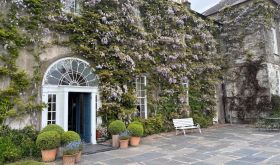
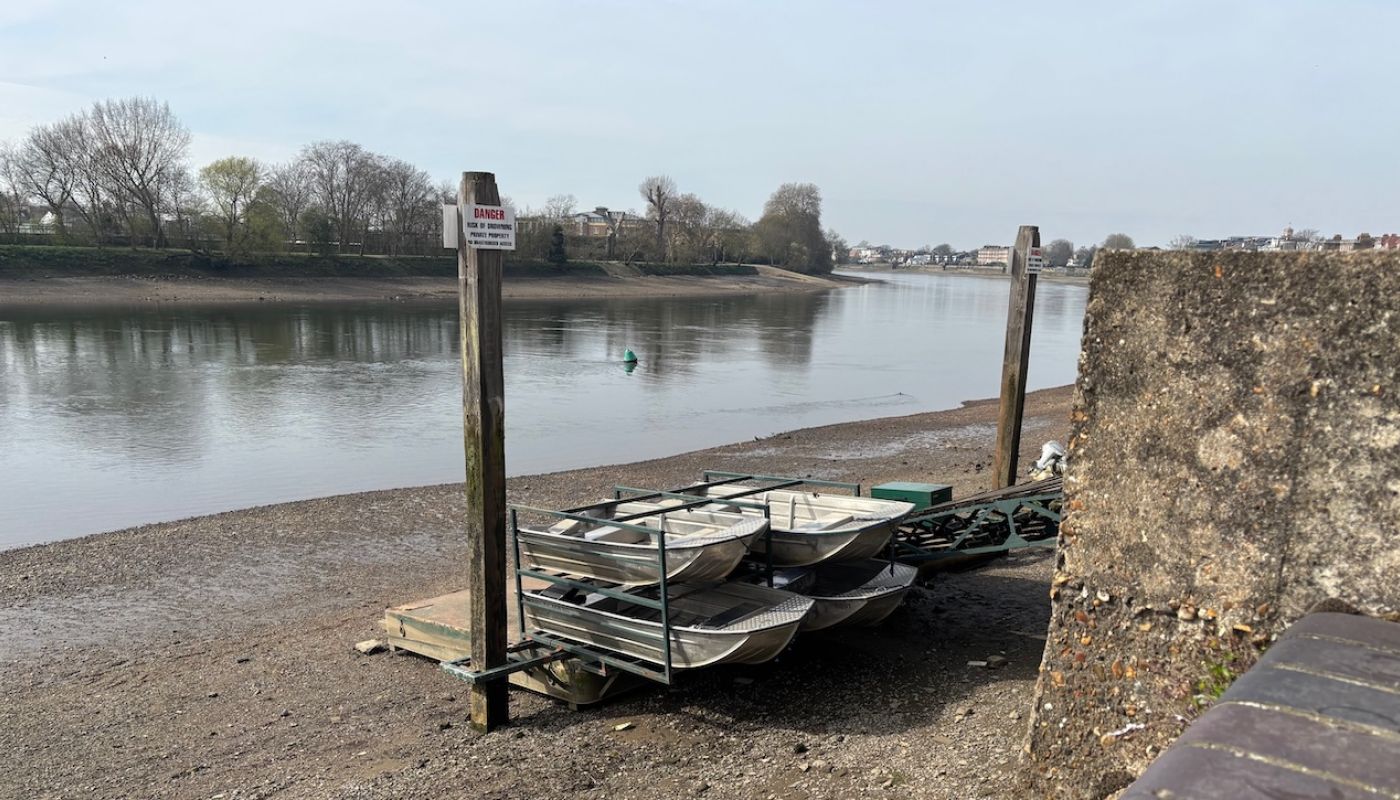
I feel comfortable in North London, where I have lived since I first arrived in the city in 1976. I feel old in hipster East London, and have always felt slightly uncomfortable in Hammersmith on the River Thames in West London, seen above at low tide.
Walking along the north bank of the river there, I invariably feel underdressed and unable to understand local chatter about the quirks of the river, the tide and the extent to which these preoccupy the prosperous inhabitants as well as the singular importance of rowing to the local community.
As we walked west from Hammersmith Bridge in the sunshine, the river was thick with oarswomen competing in the Women’s Eights Head of the River Race, the world’s biggest women’s rowing competition, but our purpose was unrelated to rowing. Our destination was Emery Walker’s House, which had once belonged to the distinguished printer and colleague of William Morris, a terraced house overlooking the Thames that is an intriguingly personal testament to the Arts and Crafts movement. After our visit there with Richard and Suzanne Spiegelberg, they suggested lunch at their favourite Italian nearby.
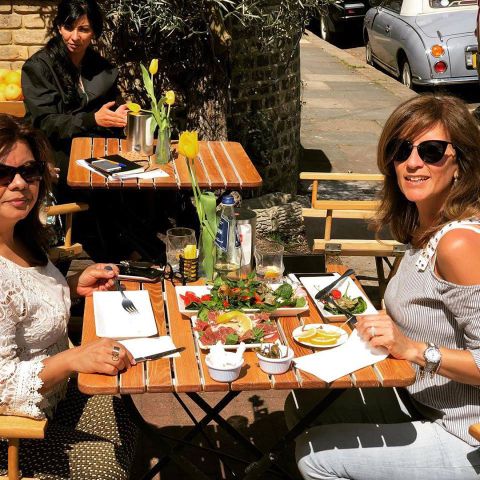
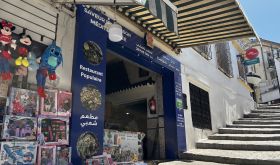
As we approached Mari Deli Dining, I felt as though we had travelled far more than a couple of hundred yards. Relaxed diners sat in the sunshine along the street and under the awning in front of the restaurant. An old, open-topped Fiat (which has become a star on social media apparently) was parked outside, exuberantly decorated with spring flowers. There was produce – packets of pasta and pulses – on display outside, and everybody seemed to be speaking Italian.
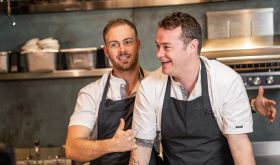
We went inside to be greeted by a tall man with a strong Italian accent dressed in a chef’s jacket. He embraced our friends, continued in Italian, handed us menus and sat us down.
It was 2.30 pm and most of the 10 tables were empty. I looked around and I felt I could have been in Florence, Rome or Naples (the home of the chef’s family). All the produce on the shelves was Italian. The coffee machine and coffee were, too, and above them was a range of bottles of Italian aperitivi and digestivi. The wine list was of course Italian.
As was the menu. It began with pizzas and pastas and a melanzane parmigiana. ‘Very, very good’, the chef assured us about his baked aubergine. There was a list of breakfast items, paninis, coffees and desserts of course. At the back of the menu, behind a list of wines including Sassicaia, Ornellaia, Tignanello and Solaia – all without vintages – was a piece of paper stating that in 2005 the winner of London’s outstanding wine list was a restaurant called Il Miraggio. There is no champagne but there is Franciacorta.
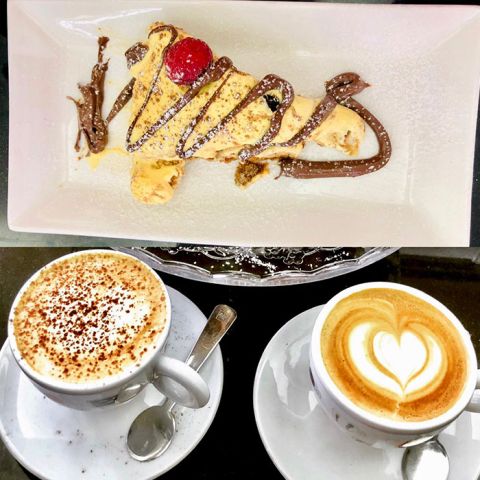
We ate well, with everything obviously homemade. While the rest of our party chose bowls of minestrone, some with tortellini, I ordered linguine with sea urchin – greeted by a ‘buonissimo’ from the chef – and a glass of Aglianico. This was followed by a rich, slightly boozy (and unusually un-Italian) rum baba, an excellent cappuccino and a bill of £159.53 for the four of us.
The sun continued to pour in through the window and I began to wonder whether it was the Thames flowing past outside or perhaps the Arno or the Tiber.
A few days later on a weekday I retraced my steps, at 11.30 am. The situation was exactly the same: customers sitting outside; sun pouring in – but this time Mariano Aiello, chef/owner/shopkeeper and, as I was to discover, lynchpin of the local community, was waiting for me. A youthful 50, he told me a story with a tragic beginning but a happy ending.
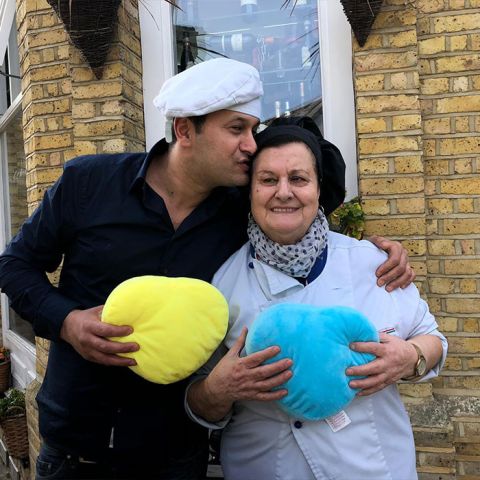
‘My family used to run Il Miraggio restaurant on the Fulham Road – my father Mario, my mother Maria– whose names I have given to my own children while my own is a slight corruption. And then my father died suddenly in an accident and everything changed. My mother was left on her own, though what you have to understand is that she has always cooked. She taught me and today even at 87 she derives great joy from it.
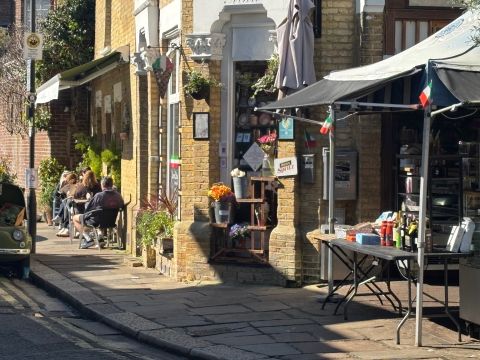
‘Shortly afterwards, I came for a walk along the river and saw this place. It was a corner shop with a small garden where our kitchen is today and everything about it was run down. But I thought that it was perfect for my mother and so I bought it after we had sold the restaurant. The idea was that it would continue as a shop, double as a café and takeaway but we would not serve customers at tables. That would require staff and we had already done that’, he added, with yet another of his enormous smiles.
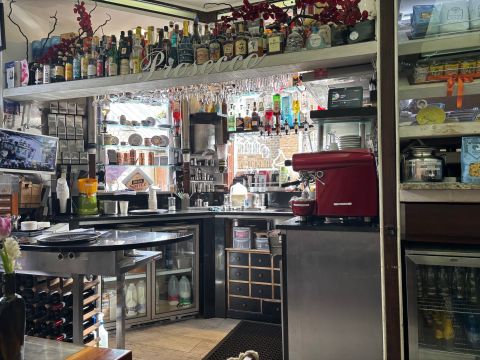
‘We did everything to the interior. We built a kitchen and enlarged the outside. And then when COVID struck in 2020 I found that what we had built was everything that the local community badly needed. We started baking bread. I was importing flour from Italy, eggs from France and even a pallet-load of toilet paper, I remember. I used to deliver to people locally who were self-isolating in lovely homes but couldn’t get out. It was a very busy time.’
At this juncture we were joined at the next table by a father and his four-year-old daughter Rose who had the day off school and had come in with the contents of her piggy bank, 10- and 20-pence pieces which she was swapping for notes as the till was invariably short of coins. The father, who couldn’t help overhearing our discussion, chipped in: ‘This place really did become the centre of the community. It was indispensable. It really was something special.’
Mariano continued, ‘When COVID was finally over, we realised that we missed the close connection with our customers that we had established. So we took down the takeaway partition and put in these tables and chairs and we have carried on as we used to do at Il Miraggio. But with one difference’, he exclaimed as he reached for the menu and turned to the last page, headed ‘Our Daily Specials’.
‘This is what makes cooking here so exciting. I buy a quantity of sea urchins or cod cheeks or clams and I put them on the menu and when they are all sold, that’s it. I buy, we sell and it’s all gone.’
With that, he stood up and led me on a tour of a kitchen that is no more than 10 steps deep, past a whole cluster of ingredients in plastic tubs, a deep fryer and several electric hot plates to half a dozen boxes of fish, all under ice, which had just been delivered. I would be hard put to place Aiello anywhere where he would be one iota happier, except perhaps on a football pitch where, he confessed, he has already spent many years as a keen amateur player.
I saved my most awkward question for the end. ‘What exactly is Mari’s?’ I asked. Aiello was unusually quiet, but not for long. ‘Well, I would say that it is not a restaurant but then again it is run by a family that has been in the restaurant business for many years. Above all, it is an Italian café, delicatessen and a wine bar run along strictly family lines, a place for my customers to come in and enjoy.’
And my very final question: What’s it like when the crowds descend for the Boat Race, I wondered? Mariano replied emphatically with a smile, ‘It’s crazy’.
Mari Deli Dining 1A Eyot Gardens, London W6 9TN; tel: +44 (0)20 7041 9251
Images not otherwise credited are the author’s own.
Every Sunday, Nick writes about restaurants. To stay abreast of his reviews, sign up for our weekly newsletter.