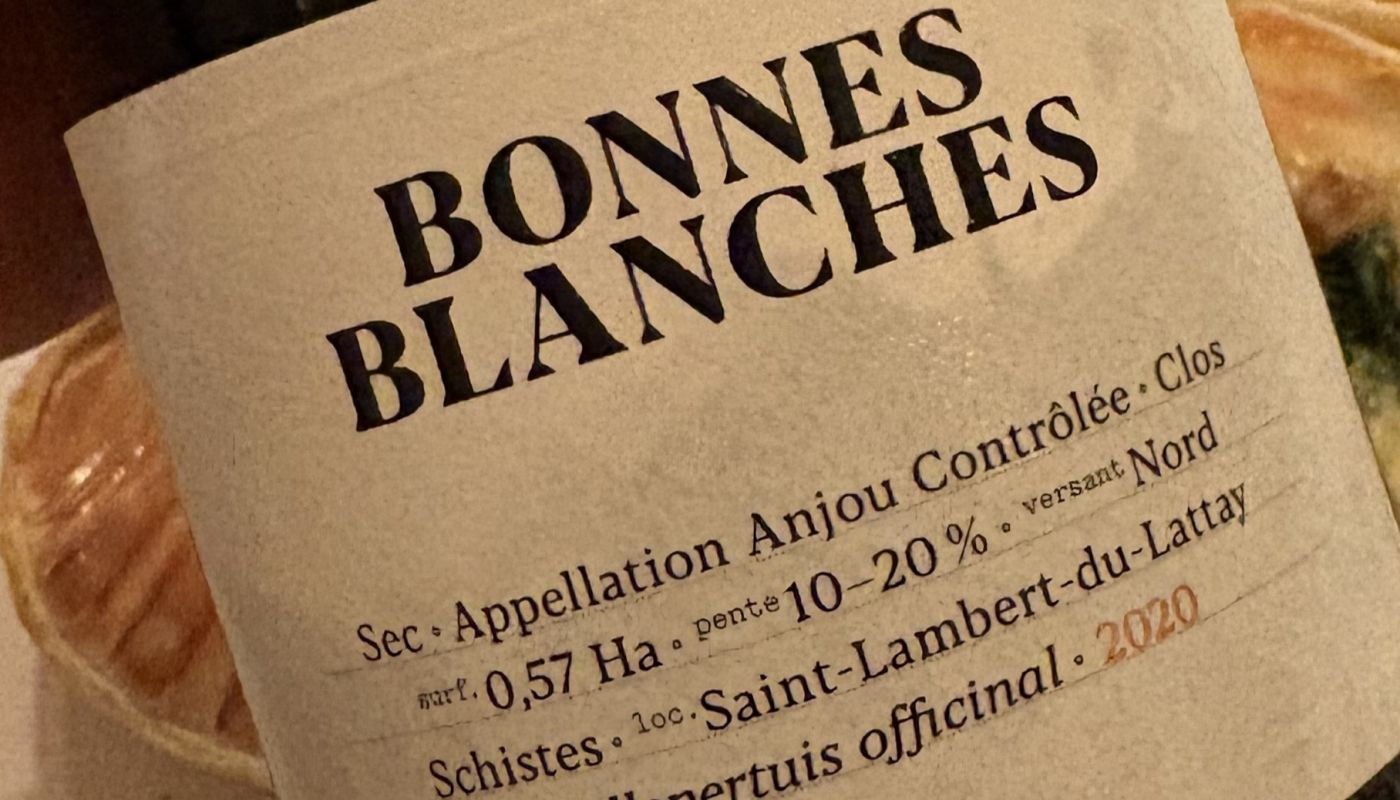
Oliver Carr writes Oliver Carr is a sommelier who now lives in Denmark and works for wine distributor Vinova. Vinova imports, among other things, wines from the Loire Valley
The grape is the sauce
“Riesling might be the most versatile grape variety.”
“Well – Chenin,” I retorted.
It was an arrogant thing to say to your Head Sommelier, interrupting briefing, adding unnecessary tension right before service.
I had worked there just over a year, and a little too much confidence had crept in. I didn’t yet know what I didn’t know. For a young wine professional from the New World, Chenin Blanc sat on a pedestal. We hardly had any. New Zealand doesn’t import much wine – not compared to what we drink from home. Bottles of Chenin were rare.*
“Well – Chenin” veiled a blunt subtext: “See how much I know about wine. I drink wine from EUROPE.”
As embarrassing as this is to recall, the response was:
“…Fair.”
My ignorant infatuation with a few wines by Pithon-Paillé and Huet inadvertently echoed my Head Sommelier’s long-earned love of the Loire.
Why do sommeliers love Chenin? Acidity must have something to do with it. Acidity can be a shortcut to vibrancy, energy and a refreshing quality. But many varieties boast high acidity, so it’s not only that. It could be that yellow-apple complexity that shows in ripe Chenin – a flavour set that sometimes feels more like a food than a wine. Plenty of varieties can show bruised apple characteristics. Some of the best Chenins don’t. So it can’t be that. The appeal extends beyond grape chemistry.
When pairing wine and food, a good sommelier starts to think like a great chef. It’s a complicated challenge to design a ‘complete’ dish, one that can stand alone or buttress a short tasting menu. It requires a swathe of organoleptic elements to be balanced, yet imbalanced enough to be exciting. On a four-course menu every dish must have richness, freshness, aromatics, texture, and length, layered like a painting, with nothing standing out too much, but SOMETHING standing out enough. Science is difficult; art is difficult. Cooking is both.
The secret may be in the sauce. That deservedly lauded component that can be adjusted to complement everything else. To blend the tones and tweak the brightness. It can be as rich as desired, as sour as needed, with flavour elements increased or decreased until the match is perfect. The greatest chefs I’ve worked with were, without exception, phenomenal sauciers.
A good sommelier knows not to compare oneself to a chef. We are more like librarians than authors. However, on occasion, I taste a dish and think: I know just the sauce for that.
Could the dish use a little more acidity? There’s a Chenin Blanc for that.
Do those nutty notes need a little more pop? There’s a Chenin Blanc for that.
Could that spice be tempered by a gentle sweetness? Yes. Yes it could.
The Loire Valley offers a broad palette for wine pairing, which gains further tints and hues when we include bottles with the sun-soaked richness of South Africa or California. Perhaps we love Chenin because that spectrum of colours, from silvery-bright through oily-gold, contains the options we need for a finishing touch. The sliver of white on the eye that brings the painting to life.
The pure deliciousness of great Chenin cannot be overlooked – even when you can’t pigeon-hole the style of the wine. The way the yellow apple can blossom into chamomile with the help of some lanolin, dovetailing, before rinsing the palate with ripe lemon, then lingering honeycomb. In balance and tensely imbalanced. The trend for low yields and slow barrel fermentation can lend a salinity, umami, and length that would make a chef proud.
Why do sommeliers love Chenin? Because with Chenin we can speak the language of food. Because it allows us to converse with the artistry of our chefs. Because we can find a Chenin for every purpose.
When a friend offers me a glass of Chenin, I have no idea what to expect. It could be a welcome relief on a hot afternoon, or the finishing brushstroke to a pièce de résistance. That ignorant infatuation has ripened into long-earned love – because now I can embrace how much I will never know.
*Back in the late 00s, we could access some very exciting New Zealand Chenin Blanc from Millton (of course), Esk Valley, John Forrest, and a few other micro-parcels.
The photo is the author's own.
















