Niall Rush writes Niall Rush is a London-based jack-of-some-trades, currently (probably?) the world’s only combination video game producer and wine merchant. Outside of his professional duties, he has recently started running a wine tasting club for queers and extremely occasionally writes on a dusty Substack yonder.
Why Pinot Noir sucks
I spent my 30th birthday in Paris on a humble mission: I wanted to have the best wine I had ever had. I was well on my way to wine obsession, mere months from my eventual move into the industry, and I wasn’t going to be 30 again. Up to that point, I had no better opportunity in my life to blow more money than I should on a bottle I’d never forget.
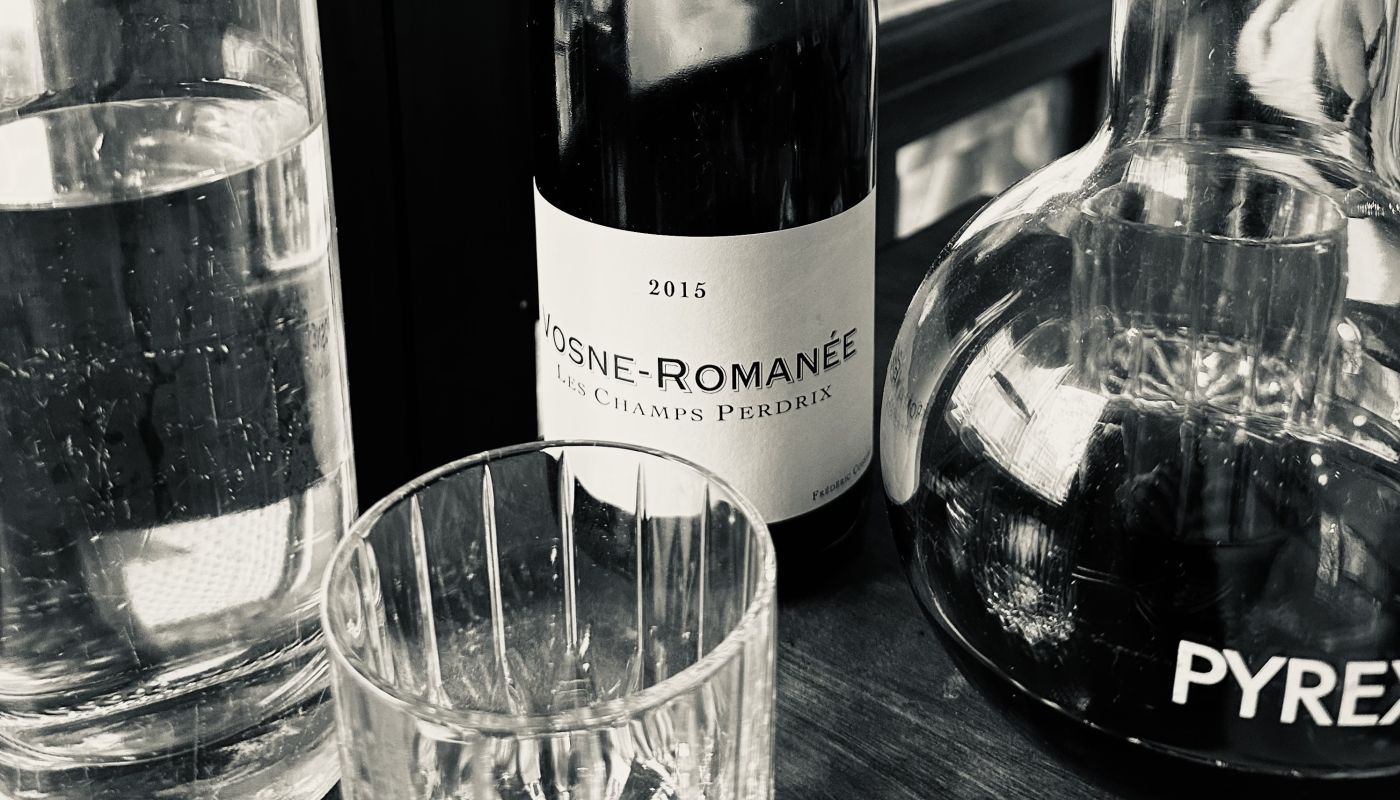
And so I found myself in Clown Bar for lunch, conferring with the sommelier, deciding at last on a bottle of 2015 Frédéric Cossard Vosne-Romanée ‘Les Champs Perdrix’. A producer in tune with my tastes, working a stone’s throw from La Tâche for a tiny fraction of the price.
But this was a day where I had to nail it. Why would I choose Pinot Noir?
Vulnerable to frost, heat, disease, and everything else, Pinot presents far more challenges to a vigneron than a workhorse like Cabernet Sauvignon. But many winemakers are eager for well-deserved recognition of their heroic efforts to bring the fussiest grape varieties to term. We hear a lot about how this or that grape variety is particularly difficult. I can think of no other globally popular grape variety where that difficulty is so often disastrously evident in the bottle.
As a category, bad Pinot Noir magnifies all of wine’s potential sins and grotesqueries. The vegetal and under-ripe becomes unbearable; the overripe and jammy becomes sickening. This is what you often get when you pay enough that a guarantee should apply, when mere satisfaction is the minimum you’re entitled to. Genuinely characterful, dependable sub-£20 Pinots are lauded exceptions that prove the rule. Even when you succeed in swerving the sticky or green ends of the spectrum, you may find yourself rewarded with a £50 bottle of wine which is fine.
Burgeoning winos looking for affordable transcendence may attempt to educate themselves to victory, only to discover that Pinot Noir’s homeland is the most legally complicated and microscopically delineated vignoble in the entire world. And outside France, those winemakers with lofty ambitions to challenge and honour Burgundy are obliged to Burgundify their approach and communications, to name their vineyards and tell their stories, their history, their aspect and soil, lest they be accused of traducing Pinot’s position as Terroir’s earthly representative. Accordingly, Pinot attracts more semi-scientific marketing guff than any other variety, and the learning curve steepens ever further.
And when you do finally get a fantastic bottle, there is often something of the farm to it, something redolent of decay tucked beneath all that floral, beautiful fruit. It feels incomplete without it. At its best, it flirts so close to the line. I think we all must secretly understand where the Pinot-deniers are coming from, artless as they may seem. What may be seductive and sous-bois to me is a hair’s breadth of psychological bias away from cow leavings.
Personal tastes aside, it is necessary for the food-and-drink cultist to believe that the default option sucks. The same complex is shared by the coffee snob, or even the perfect London Guinness chaser: the subject must be found everywhere, and 90% of it must be truly miserable. Your knowledge and enthusiasm must serve as both map and shield, separating and protecting you from what the masses innocently accept. If it was all broadly good, what would be the point of connoisseurship?
At the sharp end of Sturgeon’s law lies the soul of this form of enthusiasm, a space where personal recommendation and evangelism have indispensable practical value. Pinot is the perfect cargo for the cult of the wine fan, a clear mirror of our collective pathology. It is all the pain, glory and mystery of wine, the mountaintop so luminous and distant, the edge of the chasm so precipitous. Yes, it is forbiddingly complicated; no, there are no shortcuts, and even the wealthy are not immune from disappointment.
In those moments where you get the right bottle at the right time, your devotion is rewarded with rich visions of the Cistercians patiently experimenting, of bygone royals hoarding barrels in their dank cellars, of all the myth and science and je ne sais quoi that compels us. The perfect bottle is your steadfast battle to find it; the winemaker’s careful battle to make it; knowledge meeting luck, skill meeting nature. It’s every lackluster bottle you drank in search of it. It is not made, it is not purchased: it is achieved. Only when the cork is popped will you know if your quest was in vain.
Fortunately for me, that birthday bottle of Vosne-Romanée was indeed the right bottle at the right time. It was Pinot Noir in UHD, all tangerine peel and sour cherry, fragrant and pure, complete with loamy bass notes and intangible energy; dust motes floating in sunbeams. I welcomed it into the moment like an old, flighty friend, turning every detail over in my mind, as if I might never see their like again. As the last drops left my glass, my personal dragon-chase resumed.
The photo is the author's own. Caption: 'the Vosne in question, with Clown Bar’s curious choice of decanter'.