この記事は、できるだけ早くお届けするためにまずAIで翻訳したものです。今後はAIに教育を行うことでその精度を上げること、それと並行し翻訳者が日本語監修を行った記事と、AI翻訳のみによる和訳記事を明確に分けることで、読者の皆様の利便性を最大限に高めることを目指しています。表現に一部不自然な箇所がある場合があります。ご了承ください。
マリーナ・レフコヴァ (Maryna Revkova) について マリーナ・レフコヴァは2021年ウクライナ最優秀ソムリエ、ASIディプロマ保持者で、現在オーストリア・ワイン・アカデミーでDipWSETを取得中だ。ポルトガルでソムリエとして働き、シャトー・ラトゥール (Château Latour) で収穫作業員として収穫を経験し、現在はオデサ地方のワイナリーのディレクターを務めている。ストーリーテリング、土着品種、東欧のワイン・アイデンティティに情熱を注ぎ、ウクライナの固有品種の普及に取り組んでいる。
オデッサ・ブラック:待ち続けたブドウ
2021年の夏、私は数人の同僚とともにリヴィウで開催された年次ウクライナ・ワイン・コンペティションの審査員を務めていた。テイスティングはほぼ終了し、最後の赤ワイン品種を待っていた。いつも最後に残されるのはオデッサ・ブラックだった。若く手に負えないワインの激しい味わいで、口蓋を削るようなタンニンがぎっしりと詰まり、なぜかボルシチとイチゴを思わせる香りがあり、触れるものすべてを染める深いバイオレット・ルビー色をしていた。
私たちの土着品種が、ツヴァイゲルト (Zweigelt) やカベルネ・ソーヴィニヨン (Cabernet Sauvignon) のような品種よりもまだ劣っていることに気づくと、いつも悲しくなり、少し心を動かされた。
いつものように、最後のサンプルを採点した後、ホテルに戻って歯を磨き(最後の数杯の後、私たちは皆『ロード・オブ・ザ・リング』のゴラムのような見た目になっていた)、冷たいビールを飲んだ。それから約1年間、オデッサ・ブラックのことを考えることはなかった。
そして2022年、すべてが変わった。そして運命が、デュッセルドルフのプロヴァイン (ProWein) で、同じワイン——同じ生産者、同じヴィンテージ——に私を再び引き合わせた。移住の危機だったのか、故郷への悲しみだったのか、不正と喪失の時代に真に自分のものである何かへの突然の感情的な飢えだったのか。しかし、ワインは変わっていた。
ボトルの中でわずか1年、ワインは柔らかくなっていた。タンニンはもはやそれほど刺激的ではなかった。かつてはかすかに植物的だった香りが、今では熟した温かい黒い果実を語っていた。私は数本をポルトガルに持ち帰り、同僚たちに誇らしげに注いだ。
オデッサ・ブラックは単により多くの時間を必要としていたのだ。
問題は——時間こそが、ウクライナ・ワインがしばしば得られないものだということだった。
このブドウは戦後のソビエト・ウクライナで、1948年にオデサ地方のタイロフ研究所 (Tairov Institute) で、アリカント・ブーシェ (Alicante Bouschet) とカベルネ・ソーヴィニヨンを交配して作られた。もしそれらの原木が広く植えられ、真剣に扱われていたなら、今頃は樹齢50年を超えていただろう。私たちは21世紀に真に偉大なワインを既に飲んでいたかもしれない。しかしオデッサ・ブラックは決して真剣な品種として扱われなかった。着色用ブドウ——ブレンドを暗くする「インク」——として見られ、可能性と声を持つ単独品種としては見られなかった。
ソ連では、ワインは表現についてではなかった。それは大量生産——ヘクトリットルで測定される目標を達成することだけが目的の巨大工場で作られる「人民のアルコール」だった。すべては国家によって規制されていた:アルコール度数、糖分、酸度、色。
ブドウはカテゴリーに分けられていた:「技術的」(色、糖分、酸の補正用)、「芳香的」(ミュスカ (Muscat) やリースリング (Riesling) など)、またはベース・ブレンド用ブドウ(カベルネやサペラヴィ (Saperavi) など)。オデッサ・ブラックは「技術的」に分類されていた。その役割は強化することであり、語ることではなかった。
個性の余地はなかった。標準的なプロファイルに適合せず、新しい品種として信頼されていなかった。ソビエトのワインの多くは欠陥を隠すために酒精強化されるか甘味が加えられていた。オデッサ・ブラックはその世界には野生的すぎた。
1985年まで、ヨーロッパ的な意味での個人ワイン醸造は存在しなかった。たとえ誰かが高品質で表現力豊かなオデッサ・ブラックを作りたいと思っても、それは違法だっただろう。その後反アルコール・キャンペーンが始まり、ソ連全土でブドウ畑が引き抜かれた。初期のオデッサ・ブラックの植栽の多くが失われた。
1991年にウクライナが独立を獲得した後、ワイナリーの民営化が始まり、2000年代半ばにクラフト・ワイン醸造がゆっくりと現れた。2010年以降になってようやく、テロワール、品質、土着品種に焦点を当てた新世代の生産者が現れた。
最初のオデッサ・ブラックの樹は、これらの新しい生産者によって2012年頃に植えられた。最初の単一品種ワインは2017ヴィンテージで登場した。わずか数年後、2つの異なる生産者が2020年のワインでムンドゥス・ヴィニ (Mundus Vini) の金メダルを獲得した。それは始まりに過ぎなかった。
オデッサ・ブラックは回復力のあるブドウだ。冬、暑さ、干ばつ、病気を生き延び、それでも品質の良い果実を与える。あらゆる意味でウクライナのブドウなのだ。
必要なのは時間だけだ。そして忍耐。
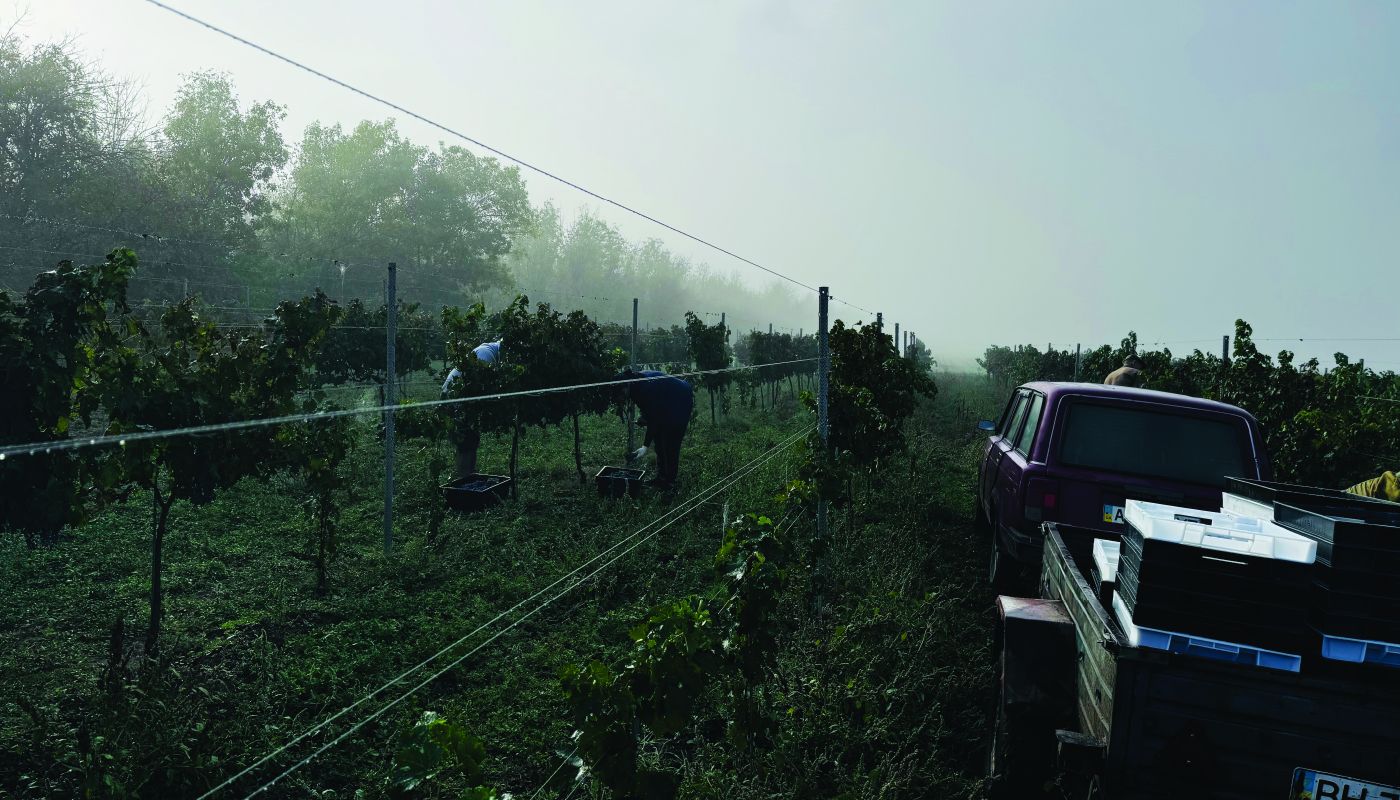
ベッサラビアでのオデッサ・ブラック収穫の写真は著者自身のものである。