
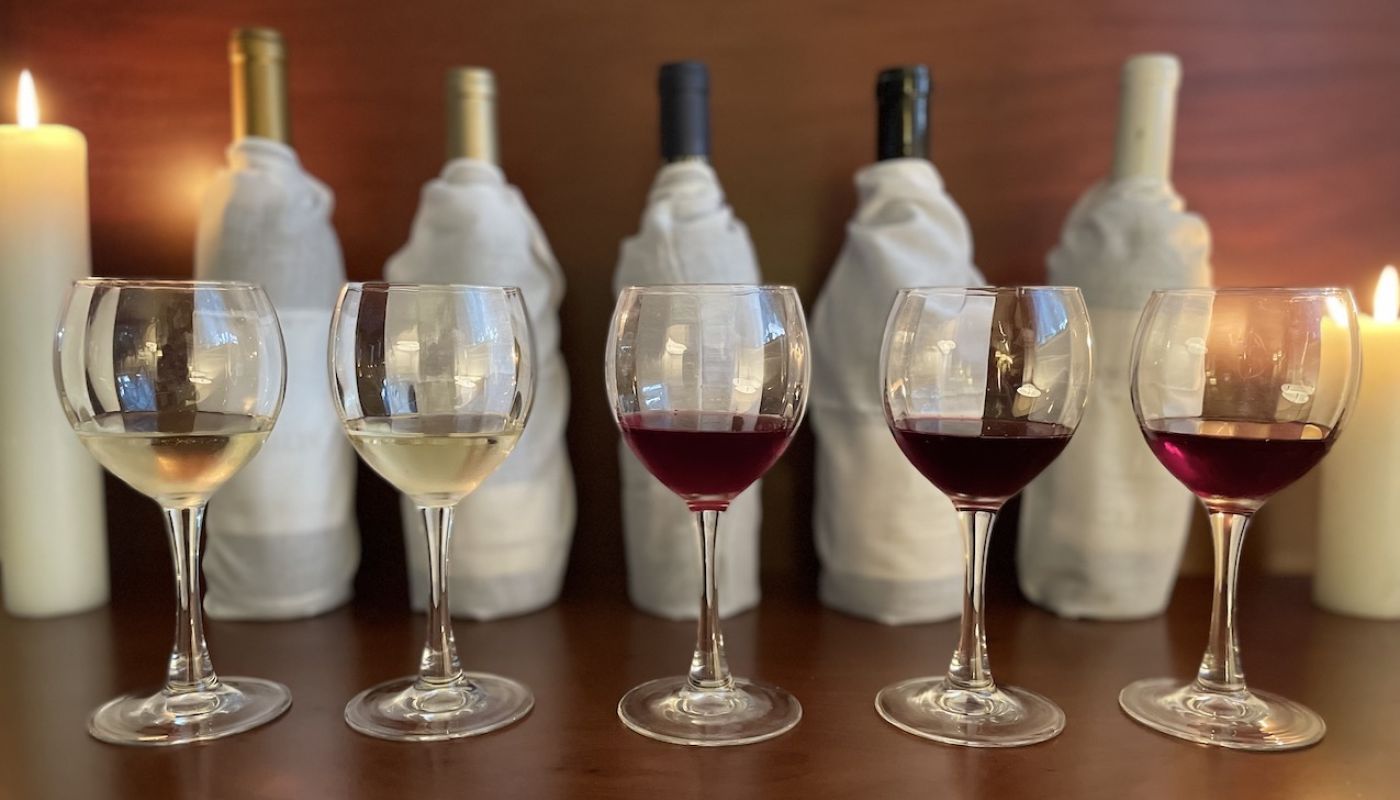
If proof were needed that wine is a subjective business, you need only take a look at that curious activity, blind tasting.
Currently a total of 180 people all over the world are anxiously awaiting the results of exams partly dependent on their blind-tasting skills. Both the Stage 1 and the final Master of Wine exams involve assessing and identifying wine in, respectively, 12 and 36 scarily anonymous glasses.
I took the exam in 1984, when things were simpler. Australian wines really did look Australian (the whites had a distinctive greenish tinge thanks to the prevailing fashion for starving them of any contact with oxygen). This was also before barrel-fermented Chardonnay tended to taste the same wherever in the world it was made.
The range of grape varieties and countries likely to feature in the Master of Wine exam was also much more limited than it is today. This year’s MW candidates were presented with wines made from, inter alia, Carricante, Torrontes, Albariño, Marsanne, Roussanne and Zinfandel grapes (twice).
The MW examiners are keen to insist that quality assessment and reasoning are just as, or even more, important than strict identification. Still, this will be little comfort to those who have already checked the list of this year’s wines posted on the MW website and seen that their guesses – and a heck of a lot of guesswork is involved in blind tasting – were wildly adrift of reality.
Most of us wine professionals who taste regularly are pretty good at assessing quality but tasting blind for identification purposes is just like a sport; you have to practise and be in peak condition to do it well.
Today I hardly ever have to identify wines blind. It’s not that I refuse to do so, but people rarely present wines blind to me. There was a blessed period when the Bordelais allowed us wine critics to taste their en primeur releases blind – not to identify them but to assess them without the distraction of knowing what they were. But they stopped doing this from the 2016 vintage onwards (perhaps because they didn’t like the results; too many posh wines underrated?). Virtually the only exceptions are around two or three very familiar dinner tables where we all make utter fools of ourselves far too often. And I get another chance every February when I help judge the Oxbridge wine-tasting competition, when it seems only fair to log what we judges make of the wines before marking the competitors’ papers.
On two interesting occasions recently I was invited to dinners that attempted to recreate what was arguably the most famous blind tasting of all, the Judgment of Paris tasting in 1976 when France’s top tasters were asked to compare their own finest wines with some California upstarts. They ended up, much to their consternation, emphatically preferring the American wines to the likes of Ch Haut-Brion 1970 and Bâtard-Montrachet, a grand cru white burgundy. (See my account of participating in a transatlantic rerun 30 years later.)
All the wines in this notorious blind tasting were either Chardonnays or Cabernets of some sort, these being by far the most common California wines. So when I sat down to a replay at The Vineyard restaurant near Newbury in April this year, it simply never occurred to me that the first pair of wines, clearly white, would be anything other than Chardonnay.
Our host was someone equally familiar with California wine, Silicon Valley Bank’s in-house wine professional Greg Gregory, who had paid handsomely for a lot donated by the family of Sir Peter Michael that included this dinner for six in a 2019 auction in aid of the Sonoma County Vintners Foundation. As the only wine professionals at the table, Gregory and I sipped the first two glasses of white and indulged in a doubtless very boring discussion about which was the white burgundy and which the California Chardonnay while the rest of the table paid attention to the Orkney scallop first course.
The answer was: neither. They were both Rieslings! (If you know anything about wine, you will know how very different Riesling and Chardonnay are.) Trimbach’s Cuvée Frédéric Émile 2009 and Château Montelena 2016 from Mendocino in northern California smirked at us from the glasses. This was the starkest illustration I have experienced of blind-tasting prejudice. (We were a little more on the ball when, with the trout and horseradish, we were served a pair of Sauvignon Blancs.)
At the end of June I was involved in another recreation of the Judgment of Paris blind tasting underwritten by another charity auction, this time the Marie Curie London Brain Game. A pair of investment bankers secured a dinner for 20 in the basement of Noizé, the French restaurant in London that now occupies the old Dabbous site.
Patron Mathieu Germond, who maintains a fine wine list, nobly volunteered some of his best bottles for the event and, in recognition of the size of the bid, Marie Curie stumped up for a couple of even more glamorous bottles.
I was asked to host the tasting and organise the blind bit of it. I know from experience how confused people can get between glasses, especially at large gatherings, so I lent Germond my stock of little coloured plastic clips to go on one of each pair of glasses rather than risk the confusion of talking about ‘the glass on the left/right’. Guests were asked to raise their hands for which wine they thought was from California.
I found it reasonably easy to tell the (extremely good) 2017 Kutch Sonoma Coast Chardonnay from the earthier 2017 Rapet Corton-Charlemagne. I also successfully distinguished the rather beautiful Littorai, The Haven Pinot Noir 2013, another Sonoma Coast wine, from the lighter Stéphane Magnien, Premier Cru Les Faconnières 2011 Morey-St-Denis.
The next pair were the two most expensive wines by quite a stretch. Both mainly Cabernet, both 2008s and both absolutely irreproachable. I was convinced that the Bordeaux first growth Ch Latour 2008, a famously slow developer, would be much more tannic and youthful than its California counterpart, Ridge Monte Bello 2008 from high above Silicon Valley. This last has proved over the years to be my favourite California Cabernet of all. It has hugely impressive longevity (the 1975 tasted in 2018 was still going strong) and just as much subtlety as a Bordeaux first growth. As indeed was proven by this blind tasting when I confused the two wines.
Those who are competitive about blind tasting seek out every possible clue: bottle shape, remnants of the foil round the bottle neck, colour of glass. The shameless will even seek out any opportunity for a glimpse behind the scenes. As the late New York wine writer Alex Bespaloff used to say, ‘a five-second peek is worth 10 years’ blind-tasting experience’.
My most regular torturer in this respect routinely decants his mystery wines into completely, often absurdly, unrelated empty bottles. And one wine-trade host solemnly sat through long arguments between his guests, all experienced blind tasters, about the identity of the second wine he served in a decanter before revealing that it was the other half of the magnum that we had previously tasted. No one got that one either.
As I say, objectivity takes a holiday during any blind tasting.
Relative prices
Wines listed in the order they were served at Noizé. US prices are given for the first two pairs because the wines are so much easier to find there – especially if you’re looking for a single bottle.
Chardonnays
Dom Rapet, Grand Cru 2017 Corton-Charlemagne
$159.99 The Wine to Buy, Sarasota, FL
Kutch Wines Chardonnay 2017 Sonoma Coast
$52.98 Rye Brook Wine & Spirit Shop, NY (I’d recommend any Kutch wine as a suitably bamboozling one in a France v California blind tasting; try Kutch Pinot Noir 2020 Sonoma County at £36 from Roberson Wine)
Pinot Noirs
Littorai, The Haven Vineyard Pinot Noir 2013 Sonoma Coast
$84.99 (2014) Lighthouse Wine & Spirits, Beverly, MA
Dom Stéphane Magnien, Premier Cru Les Faconnières, 2011 Morey St-Denis
$74.99 (2013) Mt Carmel Wine & Spirits Co, CT (2013); $78.99 The Wine House, San Francisco, CA
Mainly Cabernets
Ridge, Monte Bello 2008 Santa Cruz Mountains
$250 Purevinewines, £250 James Nicholson Wine
Ch Latour 2008 Pauillac
$585.99 Bayway World of Liquor, NJ; £596.68 Lay & Wheeler
Other international stockists on Wine-Searcher.com.
See all of our articles about the Judgment of Paris and its various recreations.













