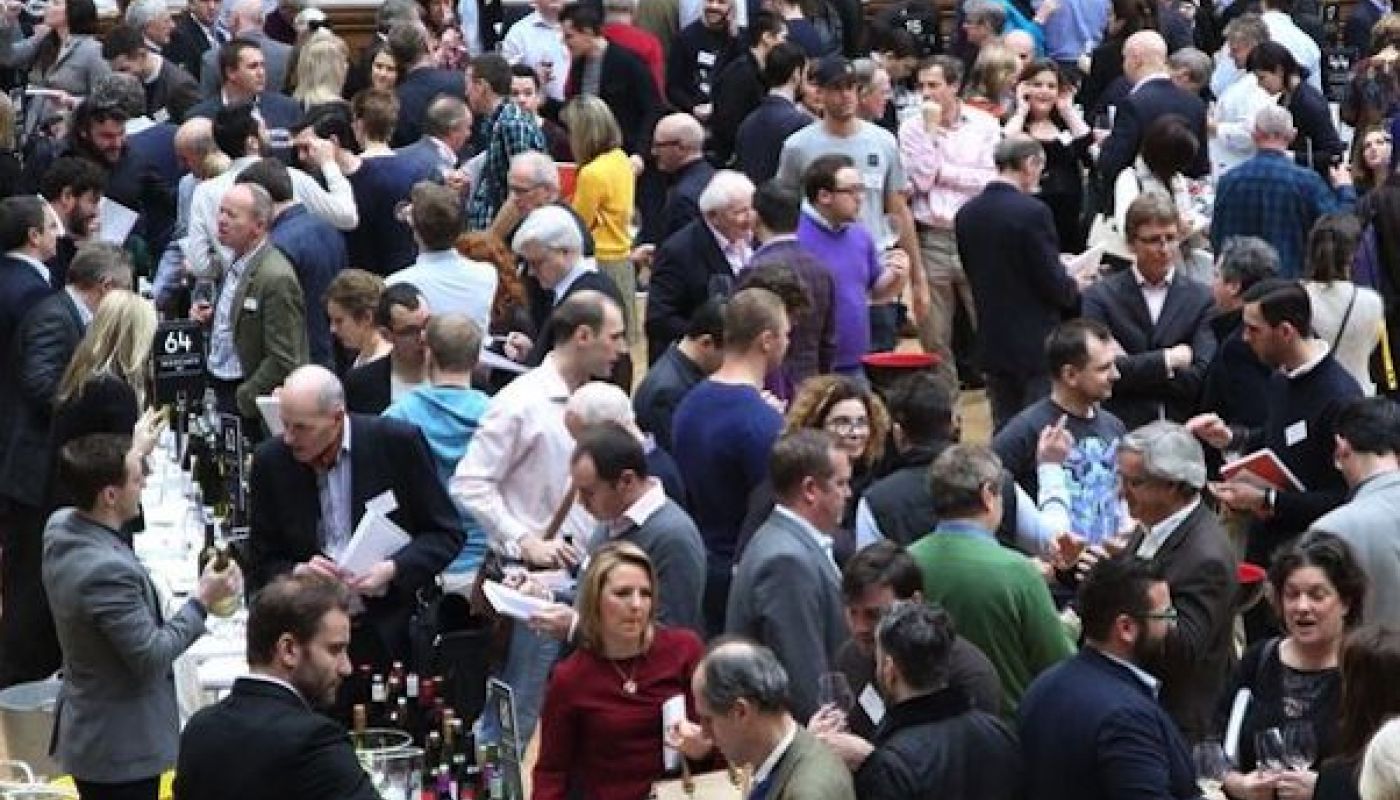
Over the years I’ve developed quite a tolerance for the combination of alcohol and crowds, but there was such a throng at one recent wine-trade tasting that for the first time ever I actually felt faint.
There was a time when London’s annual Australia Day tasting at the end of January was the high point of the UK wine-trade calendar. In the 1990s it was held provocatively at Lord’s cricket ground – often in the snow, much to the dismay of tanned visiting Australian wine producers, bemused by their brief exposure to sub-zero temperatures. We Brits were just discovering the delights of Australian wine and lapped up the laid-back attitude of the laconic incomers from Barossa and the Hunter.
Then in the early years of this century, interest in the event cooled somewhat, a trend exacerbated more recently by a strong Australian dollar and the impression that the Australian wine scene was dominated, not always beneficially, by a handful of big companies.
But this year, British wine-trade interest in Australian wine seemed to have been rekindled to judge from the crowded alleys of the Lindley Hall in Victoria – and I don’t think it was just because the Australian dollar has weakened. Wine Australia, the generic outfit that organises the Australia Day Tasting, has changed its policy on who is allowed to show wine there, in a deliberate attempt to widen the range from the same old names.
This year almost a quarter of the 58 outfits pouring 1,000 different wines were showing what you might call the new face of Australian wine – not necessarily familiar names and certainly not big corporations but those whose size and techniques tend towards the artisanal. And that’s not even counting importer Liberty Wines, who have long championed some of Australia’s finest smaller, family-owned wineries, but includes newer importers such as Hallowed Ground, whose speciality is ‘wines with provenance’, Aussie Rules of Glasgow run by a married couple specialising in ‘artisan producers at the forefront of the Aussie Wine revolution’, and Australia’s Best-Kept Secrets launched by conventional wine importer ABS but limited to wineries that produce fewer than 10,000 cases of wine a year and have so far sold mainly at their cellar door. All signs of British confidence in the current Australian wine scene.
There were also single-producer exhibitors such as the table of Vinterloper wines (‘like the craft brewer, artisan baker, the finders and keepers, we make small batch wine’), the Italian Dal Zotto ‘famiglia’ looking for an importer, and Route du Van, cool-climate Victorian wines assembled for a couple of brothers by winemaker Tod Dexter with ‘drinkability’ in mind above all else. The result of this rich mix was a record number of attendees, more than 1,200; me needing some smelling salts; and the organisers looking for a bigger setting for next year’s event.
New Zealand Winegrowers have adopted a similar policy. Recognising that their generic tastings in London were getting a little stale, they have also been actively encouraging smaller producers to participate so that last month’s event at the vertigo-inducing top of New Zealand House included not just the same old names but the smaller-scale likes of Archangel, Clos Marguerite, Georges Michel, Jules Taylor, Julicher, Mount Beautiful, Opawa and Supper Club.
Both these initiatives are admirable, and perhaps inevitable. There really is a wind of change sweeping through the wine world. I cannot remember a time when a younger generation was doing things so differently from the previous one – not just in Australia and New Zealand but in every wine-producing country I can think of, including France. Any generic presentation that does not take account of this risks seeming less and less relevant – not least because so many wine buyers today are of that same younger generation with the same tastes and ideals.
Although this movement is observable in every Australian wine region, there are certain nuclei of activity, with more or less naturalness in evidence. By no means all of the new wave is a paid-up member of the natural-wine movement but there are certain macro trends: more whole-bunch fermentation, lower alcohol, less new oak, more natural acidity, prolonged lees contact, unusual grape varieties.
One of the most obvious concentrations of Young Turkism is in the hills to the east of Adelaide, where temperatures are markedly cooler than in the more established Barossa Valley further north. The combination of an unfamiliar winery name and Adelaide Hills may provide a shortcut to a cutting-edge Australian wine. Like many of the newer names all over Australia, these producers are producing reds, often labelled Syrah rather than Shiraz, that are quite unlike the concentrated, sweet, obviously oaked and sometimes syrupy Australian Shiraz of yesteryear. This wooded region is also one of the relatively few Australian wine regions cool enough to produce seriously refreshing Sauvignon Blanc.
Another nucleus of ambition and aptitude on a small, often earnest, scale is to be found around the old mining town of Beechworth in north-east Victoria, where a group of relatively recently established producers, typically with only a few hectares of vineyard, are making some quite exceptionally good wines of both colours. Having been following the fortunes of Beechworth’s most famous producer Giaconda for many years, I was not surprised to taste some excellent Chardonnay from these new producers, but I was not expecting to taste several truly exciting wines based on the supposedly finicky Nebbiolo grape, the one responsible for Barolo and Barbaresco.
Needless to say, Australians are putting their own spin on the many imported vine varieties that are becoming so popular with Australian vine growers – not least those particularly well adapted to hot, dry conditions. So the revered Nebbiolo is known by some as ‘Neb’, its Tuscan counterpart Sangiovese as ‘Sangio’.
But perhaps we can forgive this lack of respect if the liquid results are worth drinking, and are adding to the range of exciting wines made on the planet.
I keep being told that Australian wine is decidedly out of fashion in the United States. Perhaps this is a cause for celebration for those of us able to take advantage of the fact that this means all the more for us – such as my 1,200 fellow tasters the other day.
SOME FAVOURITE AUSTRALIANS
These are just some of the particularly impressive new-wave Australian wines to have come my way recently. Stockists from wine-searcher.com.
Whites
Bellwether, Tamar Valley Chardonnay 2012 Tasmania
BK Wines, One Ball Chardonnay 2013 Adelaide Hills
Domenica Roussanne/Marsanne 2013 Beechworth
David Franz, Long Gully Road Ancient Vine Semillon 2013 Barossa Valley
Haldon Chardonnay 2013 Beechworth
L A S Vino, CBDB 2013 Margaret River
Piano Piano, Sophie’s Block Chardonnay 2012 Beechworth
A Rodda, Smiths Vineyard Chardonnay 2914 Beechworth
Reds
Baarmutha Shiraz 2013 Beechworth
Ochota Barrels, Shellac Syrah 2013 Adelaide Hills
Oxenbury, The Twins Vineyard Nebbiolo 2012 Beechworth
SC Pannell Syrah 2014 Adelaide Hills
Tolpuddle, Coal River Valley Pinot Noir 2014 Tasmania
See tasting notes on all these wines on Purple Pages – just put the producer or wine name into the tasting notes search.