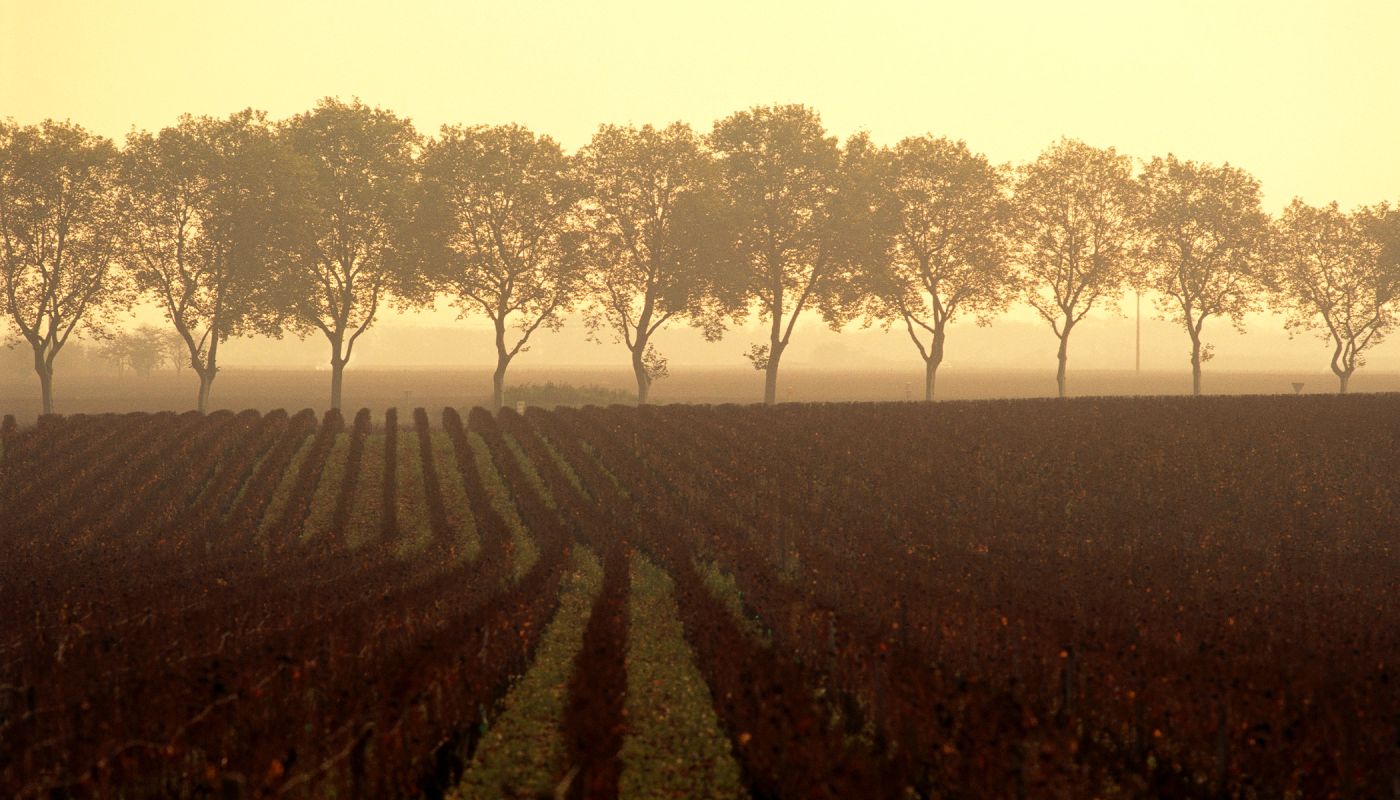
I grew up in a winemaking family in Burgundy almost 40 years ago. My parents, in all their years running the estate, never asked themselves what being profitable meant, or what financial success looked like. As long as they paid their mortgage every month and bought a new tractor every now and then, that was enough for them.
Like so many in France, my parents were operating a family winery, a concept that depicted a very different reality back then than it does today.
Recently, I ran across this quote from Johan Reyneke, owner of Reyneke Wines in South Africa: ‘The three aspects of sustainability have different timelines. You can probably exploit nature the longest and get away with it, and people the second longest, but when you run out of money it stops immediately.’ It made me wonder: is there a difference between profitability and financial sustainability? And is it different today than it was in my parents’ time?
Profitability and the family winery
It used to be that on a family farm, the goal was to sustain the life of the family. Only part of the production was sold, as the rest was reserved to feed the family. There were no lines between the household and the business. Most of the work, if not all, was done by close family members.
There were issues with this set-up; namely, that only the head of the farm had any status. That is how it was in my family: only my dad had any type of status. Myself, my brother and – most importantly – my mum, although she worked full-time, were all free labour. We had no income, and we didn’t show up on the books.
That changed in 2005, when the French government created the status of conjoint collaborateur, giving farmers’ spouses legal recognition and their own pension money, a critical resource if they ever wanted to divorce.
Many people would consider this positive progress, but not everyone adopted this change. In recent years, I stopped working with an estate owner in Burgundy who still refuses to give his wife legal status because of the extra expense. The irony is that he was an early adopter of biodynamics. I can’t fathom how you can care so much about the environment but so little about your wife.
There are other ways in which running a farm has changed: when your workforce is free, you don’t need an Excel spreadsheet, you don’t need business skills, and your risk is minimal, involving just yourself.
A cultural revolution in France’s agricultural landscape
Today in France, the paysans are now exploitants agricoles. This change of language is very revealing, illustrating a complete transformation of an entire class. Previously, the paysan – a word which shares a root with the words for country and landscape – are now ‘agricultural exploiters’. Eighty per cent of these new French exploitants are now operating outside of the traditional family model, meaning that only one member of the family works on the farm, with the other one earning income from ‘the outside’. These ‘exploiters’ now must employ people and pay salaries and taxes. With this comes not only a need to develop management skills but also a necessity to acquire financial acumen.
This is a drastic change for vignerons like my dad, as vigneron skills are no longer enough to run a ‘real’ business.
This is a reality that really struck me when I interviewed Nigel Greening of Felton Road in New Zealand about how his winery became so successful in such a short time. He explained that his first priority was getting the numbers right: how much wine they wanted to make, and how many barrels winemaker Blair Walter could physically supervise on his own. From there, they calculated their selling price.
My dad was simply not wired to think this way, and was unable to transition to the new model – from being on his own to running a company and everything that it entails, and I strongly believe that it is partly because he and my mum never asked themselves the question: what does success look like?
The need to evolve the definition of success
The notion of financial success within the agricultural – and by extension the viticultural – arena is not global. The impact of cultural context on the understanding of profitability has been widely documented. Empirically, I can see every day that while we often speak of ‘farmers’, the word actually depicts many different vineyard-related economic realities in different parts of the world.
But regardless of these differences, regardless of our history, I would like to suggest that our understanding of financial success needs to evolve.
I spent the second part of last year writing about sustainability and what it could mean for the future of fine wine. From the hundreds of interviews we did at ARENI on the matter, one thing is clear. Whether winemakers and fine-wine producers are operating within a traditional family model – just like my parents – or running an exploitation agricole or a ‘proper’ company, they are faced with new challenges, and new risks. Maintaining and developing an estate, regardless of where you are in the world, means taking into account new environmental and social costs.
In this context, financial success should no longer be discussed in terms of profitability (how much do I need to be happy, or to make my stakeholders happy), but in terms of financial sustainability: how much do I need and how do I use my profit to ensure that my estate will be there tomorrow.
Money, margins and financial success are not discussed easily in the wine world. Maybe because some of us still carry a Catholic heritage that has cultivated a culture of humility. Maybe because we don’t want the tax system to know. Maybe because it’s painful to look at the numbers and discover we’re not sustainable.
But I strongly believe that we need to not only talk about it more, but to question and challenge the way financial successes are defined (or not), and talk about the new skills that we need to develop to financially succeed. My dad would have needed help to navigate this new space. I believe he is not the only one.
All of these thoughts and more are compiled in ARENI Global white paper, Rethinking Fine Wine, released on 24 January 2023.
Photo by Charles O'Rear, Getty Images.
















