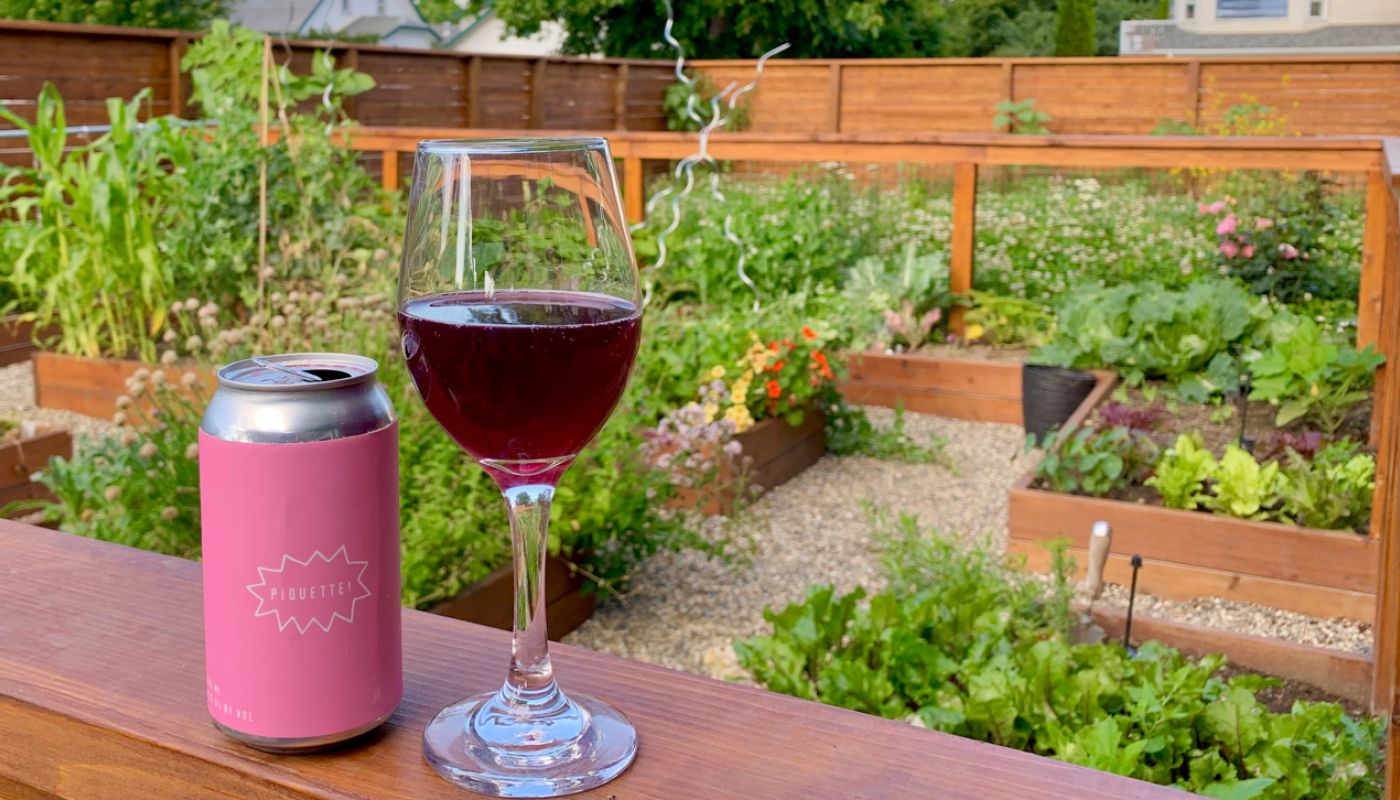
At the height of last summer, I offered up a thirst-quenching, unconventional drink for wine lovers to try in Piquette – a summer wine for everyone.
I fully expected someone to complain about this lower-alcohol, wine-waste beverage (made with water, sugar and grape must) getting exposure on this esteemed website, but no one seemed to mind. Especially as piquette isn’t even allowed to be sold in the EU – only consumed by winegrower families*. But the summer crickets chirped, the article was eventually bumped off the home page, and the fine-wine community seemed not to notice.
Grapes across the northern hemisphere ripened, were harvested, were pressed … and then last autumn the phone calls and emails began.
Winemakers from all over the globe contacted me and the producers featured in the article. They were saving their leftover grape must for the first time, wanting to make their first piquette, and wondering how. For my part, I connected these wine producers to others who had at least one season of piquette-making under their belts. For technical questions, I directed them back to Todd Cavallo at Wild Arc Farm in the Hudson Valley, New York, who pioneered North American piquette. For some special friends, I delivered the instructions in person.
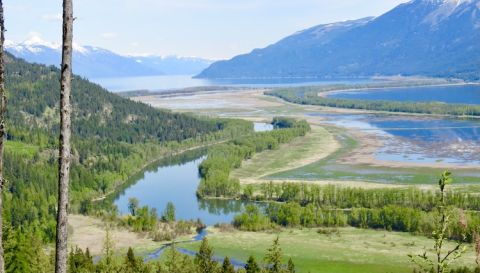
Rémi and Shannon Cardinal farm grapes on the fringes of possibility. In a wide, fertile valley between British Columbia’s rocky Purcell and Selkirk mountains, their estate winery Red Bird in Creston Valley, pictured below, has breathtaking views. Glacier rivers pour down the steep hillsides and snake through the valley’s fields; elk and grizzly bears routinely wander by.
We sat out on their front porch watching bald eagles circle. I opened a bottle of piquette from Wild Arc Farm, popping the metal cap.
‘This is what I think you should make this year’, I encouraged them, sliding glasses of bright fuchsia liquid across the table. ‘It’s not wine.’
They sipped. Surprise, then pleasure registered on their faces.
‘What is it?’ queried vigneron Rémi in his strong Québecois accent.
‘It’s piquette …’, I started to explain.
He choked, almost spat it out, then swallowed, wrinkling his eyebrows. Rémi is French Canadian, and to any francophone the word piquette is a real insult. More degrading than the English word plonk, the pre-Revolutionary word piquette is layered with hundreds of years of classism. Historically, it was the drink of farm workers, not worthy of consumption by those who could afford fine wine. Although the practice of making piquette reached North America only in the last few years, the word has been used to describe liquid garbage in the French language for centuries.
To his credit, Rémi swallowed his initial reaction, and a bit more of his juicy drink. With an open mind, he wanted to learn more.
We spread out the 230-year-old instructions I had printed from the Cours complet d'agriculture, an ancient French agricultural manual, on the front-porch table. The fact that the letters f and s were both printed as f two centuries ago had Rémi, his winemaking wife Shannon and me in stitches as we tried to translate the instructions. We polished off the bottle, and the couple agreed they should give making piquette a try.
‘It’s not going to cost us anything but time and bottles.’ Shannon summed up the winemaking community’s skyrocketing interest in piquette.
Months later, I reconvened with Todd Cavallo, the aforementioned founder of the whirlwind North American piquette movement. We were joined by one of his collaborators, Tariq Ahmed, owner of Revel Cider in Ontario, and Miguel de Leon, sommelier at New York City’s Pinch Chinese restaurant and writer for Punch magazine. We recorded our online jam session ‘Piquette: wine for the people’ for the American wine conference SommCon, released yesterday.
Our conversation followed-up on my key question ‘who is wine for?’ by asking ‘who is piquette for?’
With its spritzy, sour taste and analogue flavours, piquette is an easy drink for beer and kombucha drinkers to embrace. As Todd and Tariq explained in our chat, natural yeasts in a higher-pH environment produce a new, exciting array of aromas not expressed in first (free-run) or second (pressed) wines, but commonly found in sour beers and ciders. According to Miguel, piquette’s irreverent fruit aromas and slight fizz present exciting pairing opportunities with a wide variety of cuisines, many not traditionally paired with wine. His New York restaurant patrons are drawn to a beverage made from wine waste, supporting local farmers’ sustainability.
Piquette is for adventurous drinkers who enjoy eating broadly and drinking purposefully.
And … it’s also good for wine producers.
The last year has been challenging in so many ways for grape growers and winemakers. As Shannon astutely commented, piquette not only presents a new revenue opportunity without a lot of risk. Contrary to its ancient association with classism and inequality, contemporary piquette also presents a bridge to equity.
In a time of great isolation and polarisation, winegrowers are reaching out to each other, sharing ‘how to make piquette’ knowledge, and building community. Making piquette is such an old, widely discarded, process that there are few preconceptions about how it should taste, who should be making it, how it should be packaged or who should be drinking it. Since piquette was outlawed as a commercial beverage in the EU, knowing how to make it has remained a quiet family affair. For producers outside the EU, piquette know-how is now being formed collaboratively, in real time.
As a waste product, piquette doesn’t have the barriers to access that winemaking does. There is no need for expensive equipment, connections or even training. Anyone in the wine community with a container, some time and the willingness to reach out to others can give it a whirl.
Todd, Tariq, Miguel and I put our heads together to compile a list of beverage producers currently making piquette. On the list, you will see critically acclaimed conventional wineries, alternative garagistes, naturalistas with street cred, and even non-wine producers. Some use estate-grown fruit, others are given the must. Some are big-budget; some are no-budget. Masters of Wine are making piquette; newcomers to the industry are as well. Our list spans three continents, from ancient to newer wine areas.
But do you know what these producers have in common? They all learned how to make piquette from someone else (probably someone who is also on the list).
Regardless of their political stripes or preferred wine dogma, these producers have formed a global community, with shared passion and respectful collaboration. In times of great division, they have put aside their differences and opened their minds to take something old and make it new, together.
Who is piquette for? It’s for the growing community of open-minded drinkers and collaborative producers. Piquette is for us; it’s for the people.
*‘Piquette, where its production is authorised by the Member State concerned, may be used only for distillation or for consumption in the families of individual wine-growers.’ Regulation (EU) No 1308/2013 of 17 December 2013.
Piquette producers
This list of global piquette producers was compiled on 5 March 2021 by piquette lovers and collaborators Arnica Rowan, Miguel de Leon, Tariq Ahmed and Todd Cavallo. Some producers have their piquettes available for sale, some are for private consumption only, others are sold out, and others are in production.
Romain des Grottes explains what he has had to do to sell piquette in France: ‘I had to register with French customs as a producer of a "drink other than wine and beer", an official category alongside that of a vigneron. I can assure you that it wasn’t easy. The taxes I have to pay (after analysis and research into my recipe) are the same as on a wine.’
Australia
New South Wales – Ari's Natural Wine Co., Usher Tinkler
South Australia – Architects of Wine, Lucy Margaux
Western Australia – Yume Wine
Austria
Canada
British Columbia – A Sunday in August, Averill Creek, Bella, Birch Block, Else Wines, Lightning Rock, Little Farm, Red Bird, Terravista Vineyards, Ursa Major
Nova Scotia – Benjamin Bridge
Ontario – Revel Cider, Hawk & Hammer Wine Co., Leaning Post, Traynor Family Vineyard
Quebec – Les Pervenches
France
Burgundy – Dom des Vignes du Maynes (Julien Guillot)
Loire – Vignoble Vadé
Beaujolais – Dom des Grottes
Lebanon
New Zealand
Portugal
Slovakia
Slovenia
Braňo Bahna, Grape Abduction Company
UK
US
Arizona – Page Springs
California – Delta, Field Recordings, The Grenachista, Killer Quail, Monte Rio, Nowadays Wines, Terah Wine Co., Une Femme, Wavy Wines
Colorado – Wild Capture
Georgia – The Painted Horse
Illinois – Illinois Sparkling Co.
Maryland – Old Westminster
Michigan – Native Species Winery
Missouri – Ebb & Flow Fermentations, Fence Stile
New Jersey – Beneduce Vineyards, William Heritage
New York – Bellangelo, Rose Hill Farm, Wild Arc Farm
North Carolina – DeFi/Botanist and Barrel
Oregon – Johan Vineyards, Kramer Vineyards, The Marigny, Redolent, Swick Wines, Troon Vineyard
Texas – The Austin Winery, Scout & Cellar, Southold
Vermont – La Garagista
Washington – Pét Project
Wisconsin – American Wine Project