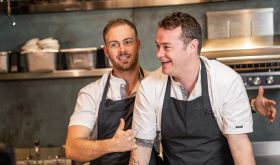
The opening of the Sessions Arts Club in Clerkenwell has brought back into the public domain the culinary skills of its chef, the charming Florence Knight, and the slightly edgier charms of restaurateur Jon Spiteri, whom I have known for almost 40 years now.
Spiteri worked for me as a waiter at L’Escargot before embarking on a career that has taken him to the US, Australia and all over London: from general manager at Bentley’s to a successful career as an itinerant GM for various successful restaurants such as Quo Vadis and the Holborn Dining Room.
But Spiteri also has a secret which in 2007 he revealed to me and the readers of this website and the FT: he became a teetotaller, turning his back on alcohol and all other drugs.
As constant exposure to alcohol is an issue that faces everybody in the drinks and hospitality industries, we thought that it was worth republishing my 2007 interview. The problems, the temptations, which Spiteri refers to still abound. Drink is the go-to drug for anybody in the business: universally available and always beckoning. It takes enormous personal courage to turn one’s back on its seemingly obvious charms, and even more to continue to work in an industry in which it plays such a vital role.
When I asked Spiteri last week about whether he had managed to stay on the straight and narrow, he was characteristically resolute. ‘Yes, Nick, it has been 17 years now and I bet that I now know far more sober chefs. This makes me very happy.’

23 June 2007 This article was also published in the Financial Times.
Over a cup of tea and a cinnamon bun, for which the recently opened Nordic Bakery in Soho’s Golden Square run by former Finnish ice-hockey player Jali Wahlsten is becoming increasingly renowned, Jon Spiteri looked across the table at me and said, ‘I bet I know a lot more successful sober restaurateurs than you do’.
Spiteri’s emphasis was on the word sober, meaning non-drinking, because for the last hour he had talked about his own personal battle with being an alcoholic in the restaurant business, how he had conquered this addiction and how, despite the fact that he had not had a drink since 4 Nov 2004, he had resumed his role as one of London’s most genial maître d’s. So successful in fact has been Spiteri’s return to restaurant management at Bentley’s just off Piccadilly that he is currently being courted by two other restaurateurs although he is most unlikely to leave a position that has allowed him to re-establish his professional credentials.
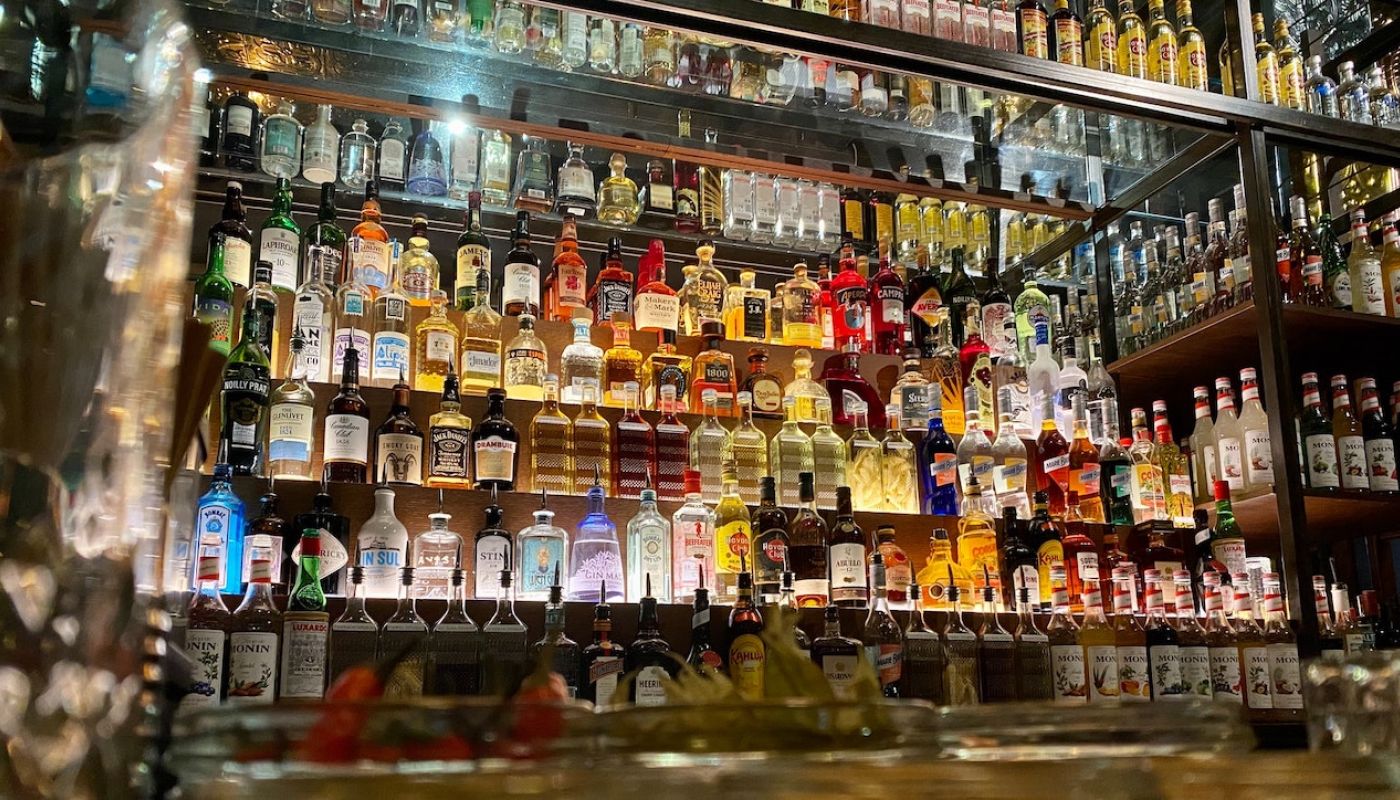
There is no doubt that the ready availability of alcohol in the restaurant business, which in turn often leads to what are classified as harder drugs, is the most dangerous side of the restaurant business. It is also one which is rarely written about or even discussed within the industry. And while there are striking examples such as Michael Quinn, once the Executive Chef at The Ritz Hotel in London, who having recovered from his alcoholic dependency went on to found The Ark Foundation, part of Hospitality Action, to educate others about alcohol dependency and other drug misuse, there are many others who have not been so fortunate. I know of three contemporaries of mine who have died too young as a result of their addiction, and, only after talking to Spiteri, did I realise that when a restaurateur myself I may have inadvertently helped others to acquire an addiction.
Spiteri, now 49, has been in the restaurant business for the past 31 years having graduated from a busboy at Parson’s to a waiter at Joe Allen’s and Peppermint Park, and then to managerial positions in California and Australia. Back in Britain, having partnered chef Fergus Henderson in the French House Dining Room, he was one of the original partners in the now famous St John restaurant, a partnership from which Spiteri walked out as a result, he now realises, of his incipient alcoholism. As a result of this missed success, I have always thought of Spiteri as the British restaurant’s equivalent of the ‘fifth Beatle’.
Everywhere in his work, from the very beginning, there has been ready access to alcohol. ‘It starts even before the customers come in’, Spiteri explained, ‘because in any restaurant there is always a close relationship between the barman, who has access to the cellar, and the chefs in the kitchen where the cellar is invariably located. The chefs need wine or spirits to do their jobs correctly but more insidiously the barman is often only too keen to trade his access to alcohol for the free food which any chef may be willing to send his way.’
During their working hours, waiting staff have the unenviable pleasure of watching their customers enjoy the drinks they have served them with, and are increasingly trained to sell more of, before going out with their colleagues from the kitchen for a few drinks of their own. ‘This is when the effects are perhaps most dangerous’, Spiteri continued, ‘because at the end of a busy night most of us are physically weak and high from the adrenalin rush that a busy service induces. The last thing we should be doing is drinking. And in between shifts restaurant staff tend only to have a limited amount of time to enjoy themselves so they tend to cram as much in as they can.’
In addition to this practice, there are certain other potentially pernicious aspects of the business. The first is that because there is immediate access to alcohol it is invariably an immediate reward. While other professionals may plan something in the near future to celebrate a deal or the signing of a contract, if the kitchen has managed to serve a record number of customers, performed well when a key member of staff has not shown up for work or done so on a humid night when the air conditioning has broken down, then the restaurateur’s response is invariably, as I did, to reward the chefs with a case or two of beer. And then there is the absence in most restaurants of a private meeting room, as there is in most offices, to discuss matters. ‘Too often’, Spiteri added, ‘the solution is to go and talk things over in the nearest pub.’
As Spiteri climbed the managerial ladder, temptations only increased. ‘There were wine tastings in the morning, then spirits tastings invariably interspersed with boozy lunches, a process that is only exacerbated by the brotherhood of hospitality within the restaurant industry which means that drinks are invariably offered.’ Harder drugs play a part, too, as Anthony Bourdain graphically outlined in his book Kitchen Confidential, because they enhance the appetite for even more alcohol.
What Spiteri described as a ‘runaway train’ finally hit the buffers when one night he did physical damage to his family’s flat. After this he turned to the medical help and then the professional counselling which have fortunately come to his rescue. Eighteen months later, Spiteri bumped into Richard Corrigan, the charismatic chef/proprietor of Bentley’s, who recognised his latent skills and promptly offered him a part-time job that allows him to continue to participate in, and contribute to, his ongoing counselling.
But wasn’t it difficult, if not impossible, for a former alcoholic to carry on working in a restaurant, I wondered? ‘Not really’, Spiteri assured me, ‘although what is strange is that sometimes I see a couple meeting in the restaurant over a glass of champagne and I think to myself “I could buy into that”. That’s strange because I never liked champagne, I was more of a whisky and coke, red wine and marc person.’
Spiteri seems delighted to be back in the restaurant business of which he can now clearly see the most positive and the most negative sides. ‘It’s a wonderful business because everyone shares so much but it is weird how when they are not working in their own places chefs and restaurateurs choose to spend so much time in other peoples’ restaurants’, he added. While he knows that fundamentally he cannot drink – although he fears it is too early to say that he never will – he is happy to hear from friends and customers that fundamentally he has not changed. ‘All they say is that now I go home much, much earlier.’
Nordic Bakery (now closed), 14 Golden Square, London W1F 9JG
Bentley’s Oyster Bar and Grill, 11–15 Swallow Street, London W1B 4DG; tel: +44 (0)20 7734 4756
Sessions Arts Club 24 Clerkenwell Green, London, EC1R 0NA; tel: +44 (0)20 3793 4025
Picture at the top of this article taken in Vienna, by Simone Natale on Unsplash.