
It was while visiting Tenuta San Guido, the Tuscan estate responsible for Sassicaia, that I realised the extraordinary fact that there may be more subtle Cabernet being made in Italy today than there is in Bordeaux.
Scrolling over my hugely privileged drinking – sorry, tasting – experiences over the last year or so, I am aware that many of the greatest wines I’ve been lucky enough to have been exposed to were wines dominated by Cabernet Sauvignon, but Cabernet in its most refined form, as a communicator of time and place, with thrilling nuances and often relative delicacy. I’m thinking of great, refined, fully mature red bordeaux that has benefited from several decades in bottle and of some of its imitators from elsewhere.
What is so impressive about Sassicaia, the unexpectedly successful hobby wine that pioneered a host of brasher wines from the Tuscan coast, is that it is consistent rather than insistent. With the possible exception of the extraordinary and apparently indestructible 1985, the wine is always elegant and refreshing – and continues to be so right up to the most recent release, the 2010. (None of this unseemly en primeur business for Sassicaia.)
It began in 1944 when Mario, father of the current Marchese Nicolò Incisa della Rocchetta, thought he’d try clearing a small, east-facing area in the woods above the little village of Bolgheri high above the Tuscan coast, still plagued by malaria then. His idea was to plant vines there to make a wine for the family to drink. Inspired by his Piemontese great uncle who had been a great plant collector and was one of the first Italians to import vine cuttings from France, by the ineffable complexity of fully mature red bordeaux, and by the fact that some of the wine produced on his friends’ estate in Migliarino near Pisa had the same bouquet as classic claret, he planted various cuttings from the Migliarino vineyard. Of these, the Cabernets proved the most successful.
By the late 1960s this house wine had such a reputation within their extended family, which included Nicolò’s cousin Piero Antinori of the ancient Florentine merchant house, that the latter suggested it be vinified and commercialised by the Antinoris under the auspices of their talented in-house oenologist Giacomo Tachis. The first proper commercial release was the 1968, thought to contain quite a bit of 1967 and 1969 (a vintage that was never released), and this arrangement continued for a few years until production and control was restored to Tenuta San Guido, the Incisa della Rocchetta’s Bolgheri estate where things went from good to superlative. (Mario Incisa della Rocchetta was never entirely happy ceding control entirely to the Antinoris and continued to make his own wine, Vino di Verso, from a small portion of the grapes, a wine which the late Italian wine commentator Luigi Veronelli apparently deemed superior to the commercially available version made by Antinori.)
It’s important to realise that the whole informing doctrine at San Guido is to try to replicate a fine red bordeaux as closely as possible. To that end they follow what they see as quintessentially traditional bordelais production techniques: picking not too ripe, full de-stemming, two-week fermentation, all French barriques but only one third new, regular rackings each year, barrels stored with the bung at two o’clock to avoid any oxidation, bottle storage after bottling and so on.
But my point is how unlike modern red bordeaux Sassicaia is today. The odd modern vintage of Château Lafite (with whose owners Nicolò Incisa discussed a joint venture quite seriously in the mid 1980s) shows similar elegance but overall, modern red bordeaux is a much beefier, more concentrated essence nowadays...
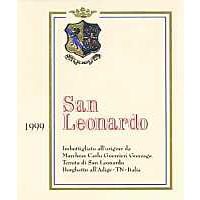
It took a recent vertical of Sassicaia and another of a similarly refined Cabernet blend, San Leonardo, the jewel of Trentino in the north of Italy, also the product of bordeaux-besotted nobleman, Carlo Guerrieri Gonzago, to drive home to me how much red bordeaux has changed over the past few decades.
The only other Cabernets that have this sort of delicacy and subtlety belong to another era: the finest red bordeaux made in the mid-twentieth century, and California Cabernets from the 1960s and 1970s. All of them are quite different from the style of wines being made today from the same grape varieties and much the same vineyards. The big difference of course is the timing of the harvest. At Sassicaia they pride themselves on picking earlier than many of their neighbours but in general both California Cabernet and red bordeaux is made from grapes picked much later than they used to be in those regions and, often, at lower yields. Quantifying the amount of visceral and intellectual pleasure I have had from these wines ancient and modern, I find myself questioning the wisdom of the mantra that the lower the yield, the higher the quality. Balance appeals to me far more important than sheer concentration.
But since both red bordeaux and California Cabernet are now increasingly rated on the basis of how they taste as babies from barrel as opposed to mature grown-ups from bottle, it is perhaps not so surprising, if slightly regrettable, that sheer power is overvalued.
A vertical of either Sassicaia or San Leonardo shows the influence of different vintages to be sure but overall what distinguishes them is the quite remarkable consistency of style. A vertical tasting of a Bordeaux château’s wine on the other hand is much more likely to show increasing intensity from the 1980s, often a flirtation with excess and possibly obvious Merlot influence at some point in the 1990s or even the early years of this century, and then increasing balance and rigour together with marked concentration today.
The big question is how these beefier, riper red bordeaux, made as no red bordeaux was made in previous centuries, will age. We already know on the other hand how today’s Sassicaia and San Leonardo will age because the recipe has changed so little.
Who makes subtle Cabernet today?
• 4 min read


选择方案
会员
$135
/year
适合葡萄酒爱好者
- 存取 297,198 条葡萄酒点评 & 16,153 篇文章
- 存取《牛津葡萄酒指南》及《世界葡萄酒地图集》
- Access askJancis, our AI wine assistant


核心会员
$249
/year
适合收藏家
Everything in “Member”, plus:
- Early access to the latest wine reviews, 48 hours in advance
- Early access to the latest articles, 48 hours in advance
专业版
$299
/year
供个人葡萄酒专业人士使用
- 存取 297,198 条葡萄酒点评 & 16,153 篇文章
- 存取《牛津葡萄酒指南》及《世界葡萄酒地图集》
- Access askJancis, our AI wine assistant
- 提前 48 小时获取最新葡萄酒点评与文章
- 可将最多 25 条葡萄酒点评与评分 用于市场宣传(商业用途)
商务版
$399
/year
供葡萄酒行业企业使用
Everything in “Professional”, plus:
- 可将最多 250 条葡萄酒点评与评分 用于市场宣传(商业用途)
- Access to submit wines for review
- Offer memberships to your employees and manage them from a single place
- API access available for an additional fee
More Free for all

Free for all
这家领先的新浪潮南非葡萄酒生产商正在展望未来。本文的一个版本由金融时报 发表。另请参阅这篇 帕拉迪乌斯垂直品鉴,他杰出的白葡萄酒混酿。...

Free for all
杰西斯 (Jancis) 回忆她遇到过的最迷人的葡萄酒生产者。上图为尼尔 (Neill) 在他的双桨园 (Two Paddocks)...

Free for all
在第一轮评审之后,我们很高兴开始发布今年写作比赛参赛作品中的最佳作品。所有入选作品均未经编辑发布...

Free for all
非凡的海鲜和完美搭配的魔力在火箭仓库 (The Rocket Store)。上图为博斯卡斯尔港 (Boscastle harbour)。...
More from JancisRobinson.com

Tasting articles
沃尔特 (Walter) 关于这个显著易饮年份报告的总结部分。今天,评论来自南部和东部村庄卡斯蒂廖内法莱托 (Castiglione...

Tasting articles
关于这个棘手年份的最终报告,如今展现出非凡的清新和易饮性。今天,我们将评鉴来自多个村庄以及北部和西部村庄凯拉斯科 (Cherasco)、罗迪...

Inside information
墨西哥的葡萄酒产业为应对气候挑战提供了经验教训,常驻墨西哥的记者兼侍酒师卡洛斯·博尔博亚 (Carlos Borboa) 如是说...

Vinomakase
理查德 (Richard) 的新专栏 Vinomakase 探讨专家如何将葡萄酒与日本料理搭配...

Bite-sized
位于圣奥尔本斯 (St Albans) 大教堂区的一家 15 世纪酒吧,提供最新潮的美食盛宴。 前厅酒吧仍然令人安心地保持着酒吧风格...

Wines of the week
来自法国中部的一款红葡萄酒,带来解渴的清新感。售价 £15.50, $26.95 起。 对于一个在过去七百年中饱受诟病的品种来说,佳美...

Book reviews
经典葡萄酒图书馆系列的三本新书,以及一本自行出版的葡萄牙葡萄酒指南。 以下四篇评论中,有三篇是关于葡萄酒学院 (Académie du...

Tasting articles
一场揭示性的垂直品鉴,追溯南非最受追捧白葡萄酒的演变。这些酒款由英国进口商贝瑞兄弟与路德 (Berry Bros & Rudd)...