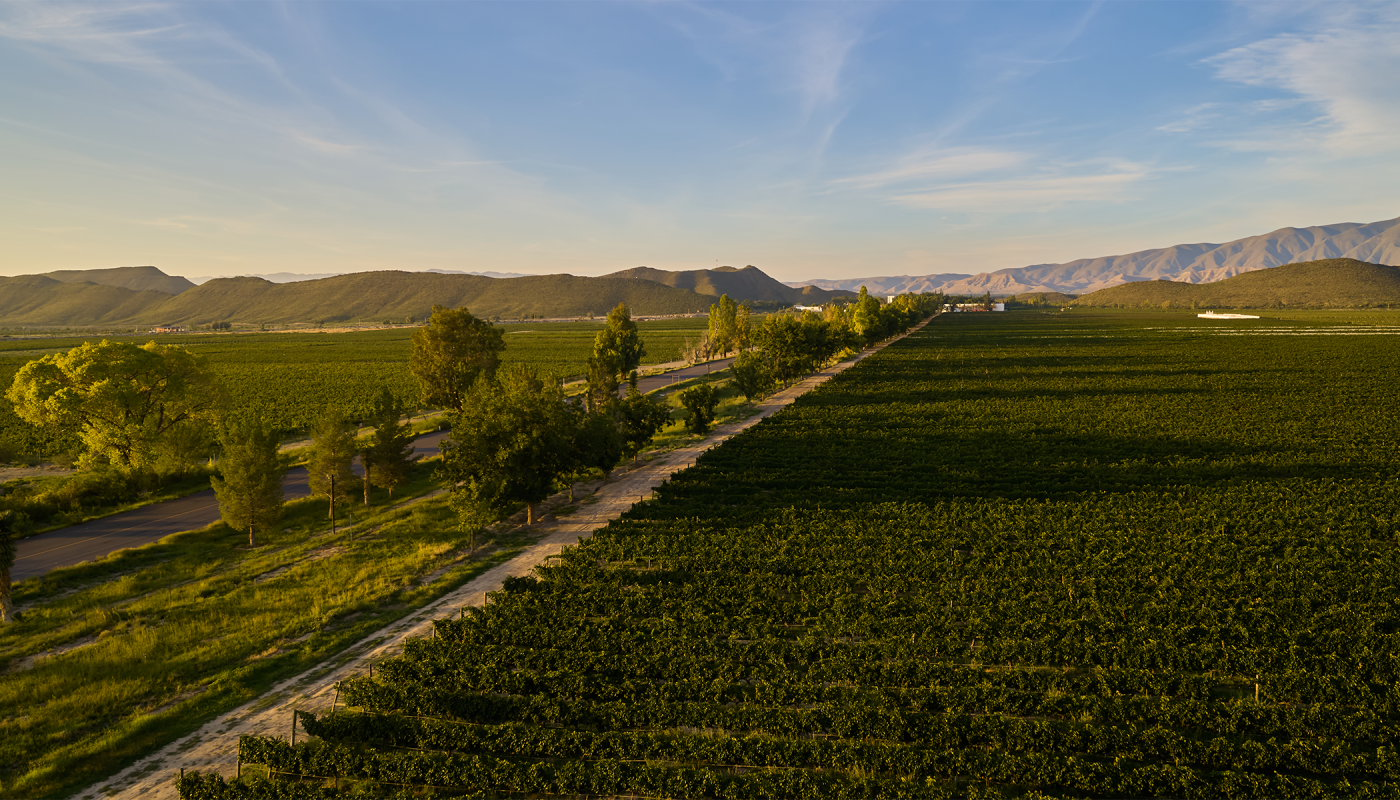
I reclined on a lounger by the pool at eco-luxury boutique hotel Encuentro Guadalupe, high in the hills of the upper Valle de Guadalupe. Watching the sun sink on the rocky, golden-brown landscape with a glass of chilled rosé in my hand, it was tempting to forget the pessimistic predictions I’d heard earlier.
I’d travelled to Ensenada (Baja California, Mexico) to attend the OIV World Congress of Vine and Wine and learn about sustainable winegrowing in a warming world. I’d learned that Mexico’s output is growing: according to sommelier Sergio Gonzalez, while there were only seven commercial wineries in 1996, there were more than 400 by 2022.
Vineyards used for wine production span 8,600 ha (21,250 acres), and five out of every 10 bottles consumed in Mexico are produced domestically. In 2019 the country had the world’s second-highest growth rate in consumption, and by 2021, national per-capita consumption had reached 1.2 litres – which may seem small compared with the US figure (around 12 litres according to WineInstitute.org), but Mexico is home to 132.5 million people with growing expendable income: the opportunities are obvious.

‘The demand for Mexican wines has grown in double digits in the last 15 years’, Hans Backhoff Guerrero, president* of the Mexican Vitiviniculture Council, told me as he showed me the newly created logo for Mexican-made wines. Martin Skelton, director general of historic Baja producer Bodegas Domecq, added, ‘There’s a real pride in all things Mexican, hence the desire to drink “local”.’ National demand for Mexican wine now exceeds supply, and Skelton cites tourism as the catalyst: ‘Mexicans have become interested in wine thanks to vineyard tours, luxury wine resorts with fine-dining restaurants, music festivals and weddings held at wineries.’
On the one hand, it was encouraging to hear of the success of Mexican wine, and to learn how researchers and experts are approaching winegrowing in a time of climate change.
On the other, I had to wonder: when natural resources are so stretched, is it ethical to be planting and farming vines? When I’d put this question to OIV director general Pau Roca, he pointed out that not only are wine grapes one of the least water-consuming crops**, but that responsible planting and farming avoids land erosion, provides for functional biodiversity, adds organic material and captures CO2 – ‘so not only is it ethical, but it’s also something to be encouraged if you do it on these terms’.
However, Roca’s remarks in a report published at the end of the Congress added some nuance: ‘We are entering a new era in which it is necessary to deploy a new economic model that places less emphasis on growth, and more attention on managing the balance.’ I canvassed several prominent growers to find out how they are approaching this challenge.
Battling heat and drought with ancient vines
Enrico Battiston, head of the OIV’s Viticulture Unit, explained that the organisation is paying particular attention to grapevine resilience to climate change. Several studies are underway to understand why certain plant material adapts better to adverse conditions such as absence of rainfall and sudden temperature spikes – conditions that have been common in recent vintages.
According to Battiston, this work is beginning to explain the special bond between vines and their environment, on which the plants’ adaptive mechanisms are based. The phenotypic expression of a plant over the years is a consequence of the interrelationships between its genetic characteristics and the accumulated effects of soil, climate and human intervention. Healthy old grapevines are evidence of sustainable practices, and an example of resilience and adaptability to changes in their environment.
It also highlights the need to preserve the genetic heritage that resides in their vineyards. ‘With increasing grapevine decay we are losing the huge heritage of viti-vinicultural biodiversity, which is the milestone of terroirs worldwide’, he warns.
In Baja, which accounts for around 70% of Mexico’s total production and boasts 4,500 ha (11,120 acres) of vineyards, three wine routes, the largest number of commercial wineries in a wine-producing region (180), and a booming, sophisticated wine-tourism scene, several growers are playing their part in safeguarding viticultural heritage by working with historic grapes like Mission, a hardy variety that thrives in the region's extreme heat and drought. Known in Spain as Listán Prieto, País in Chile and Criolla Chica in Argentina, Misión (as it is known in Mexico) was the first vinifera variety identified in the Americas, and was probably imported by the conquistadors in the 16th century.
Today, centenarian Mission vines are being farmed at the southernmost end of the Valle de Guadalupe by Humberto Toscano, who uses them to make his Casa Vieja wines (he also vinifies fruit from ancient Palomino vines).
Further north in Tecate, just over the border from California, natural-wine star Bichi sources grapes from local Mission vines 80 to 100 years old, as well as old-vine Rosa del Perú*** (aka Moscatel Negro) and Carignan. According to owner Noel Téllez, these three dry-farmed, head-trained varieties fare well despite the challenging climate due to their deep root systems and the leaf cover which provides shade and protects the fruit from sunburn.
Hunting for an iconic grape
Italian-born Baja producer Camillo Magoni has spent many years looking for the grapes best suited to this region. He began an experimental vineyard in Baja in 1968, when the only varieties grown locally were Misión, Rosa del Perú, Zinfandel, Alicante Bouschet, Palomino and Moscatel. To have more options, Magoni planted Riesling, Gewürztraminer, Peverella (aka Verdicchio), Sauvignon Blanc, Pinot Blanc, Colombard, Chenin Blanc, Pinot Noir, Refosco, Nebbiolo Fino and Syrah.
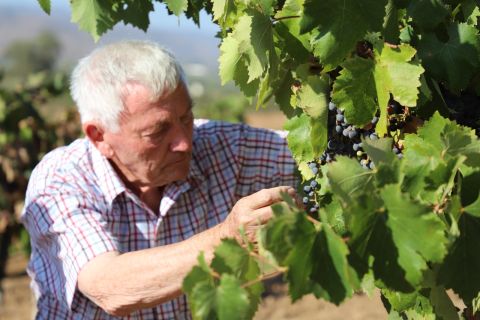
He expanded the project in the 1980s in the hope of finding a variety that can express a sense of place but also resist the extreme weather conditions of the valley, where the sun is so intense that meshing is used to protect fruit from sunburn, and water is conspicuous by its absence. Today the vineyard spans four hectares (10 acres) and features over 120 varieties from Portugal, France, Spain, Italy, Greece, Germany and the US.
Fifty-five years on, Magoni is best known for wines made from the varieties of his birthplace (think Montepulciano, Aglianico, Canaiolo, Fiano, Sangiovese and Vermentino), but he’s still searching for cultivars with tolerance to high temperatures and drought, working with INIFAP (Instituto Nacional de Investigaciones Forestales Agrícolas y Pecuarias), Mexico’s National Institute for Forestry, Agriculture and Livestock Research. (For more information about his work, see Sustainable winegrowing in a warming world).
The search extends to hybrids, not only for their adaptability to warm climates but also for disease resistance. Magoni has found some success with Carnelian, crossbred in the 1970s from vinifera varieties including Carignan, Cabernet Sauvignon and Grenache. He is now bottling a varietal Carnelian as well as other varietals in his Experimental range.
Making choices
Coahuila is the country’s second-largest wine-producing state, with 25 wineries, and over 1,000 hectares (c 2,500 acres) of vineyards. The jewel in the desert state’s crown is Parras de la Fuente, a small oasis (population 45,423) that packs a punch in tourism terms. Its wine route features a mix of artisan growers and larger estates, and some of the latter (Don Leo, Rivero González, Parvada) boast impressive luxury accommodation and real-estate projects, gourmet restaurants, function rooms, tasting rooms and boutiques that would not look out of place in the Napa Valley.
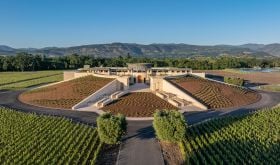
Parras is home to Casa Madero, the oldest functioning winery in the Americas. Founded in 1597 by Spanish conquistadors, it was first planted to vines for the production of wine and brandy. Today, Casa Madero has 380 ha (939 acres) of vines in production (some of them pictured at the top of this article), 70 ha (173 acres) of pecan trees (a common crop in the region) and some complex issues to deal with. In 2022, as the estate celebrated its 425th anniversary, co-owner Brandon Milmo had machete-wielding farmers at the winery gates, protesting about the amount of water taken by Casa Madero from the mountain spring they all share.
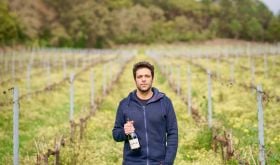
Water scarcity has forced Milmo to make some difficult decisions. Pecans consume three times more water than vines, so 20 ha of trees were recently left to die – ‘and if we have to sacrifice more pecans, we will’, says Milmo.
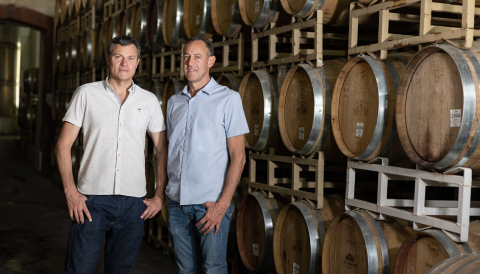
Milmo is also looking for ways to make wine production more sustainable. Despite its historic credentials, Casa Madero’s most ancient vines are only around 40 years old. In the 20th century the vineyards here were predominantly planted to grapes for brandy production, such as Lenoir and Colombard. When they decided to focus on table-wine production in the 1990s, they replanted, using AxR1 rootstock, a cross between Vitis rupestris and Vitis vinifera that was resistant to phylloxera. This choice proved unwise when the vines became susceptible to attack by a new form of the insect, resulting in 200 ha (494 acres) of vineyard having to be replaced.
However, this has opened up more chance for them to experiment. They’ve found, for instance, that Petit Verdot does well (‘it’s too hot for Merlot’), and they are planting Grenache and Vermentino at a cooler, higher site in the mountains, at around 2,000 m (6,560 ft) elevation. The estate’s more recent plantings are the result of thorough soil analysis, selecting specific rootstocks and clones for each soil type. ‘We are a hundred percent certain that our grapes from these younger vines are of much better quality, even though they are younger’, he comments.
The vineyards are also being converted to organic production (80 ha are already certified), and a new waste-water treatment facility is scheduled to come online this summer. Construction of an energy-efficient winery with solar panels is planned to start in 2023, and Casa Madero is working towards ISO 14001 certification (the international standard related to environmental management).
Refocusing energy
Querétaro is the southernmost wine region of the northern hemisphere. Situated in the centre of Mexico, its elevations range from 1,700 to 2,300 m (5,580–7,550 ft) and the climate is semi-dry, with hot summers and radically low night temperatures. This, combined with calcareous and loamy clay soils, attracted Spanish sparkling house Freixenet to the region in 1979; today many local farmers grow Chardonnay, Sauvignon Blanc, Xarello and Macabeo to sell to the famous bubble brand, and they receive technical support from the company.
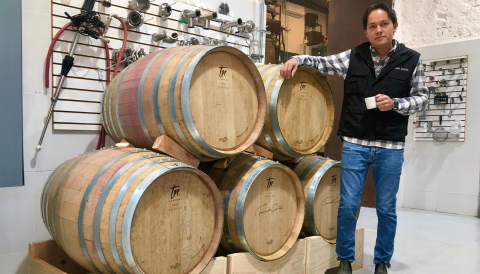
‘We want to be the bubble region of Mexico’, proclaims Fernando Cortés, consultant oenologist with Casa Végil. But climate change has presented Querétaro’s grape farmers with challenges that include frost (heaters are sometimes installed among the vines), hail (nets are prevalent), heavy rainfall from June to September and irregular weather patterns (annual average precipitation is 350–400 mm (14–16 in), but in 2021 Querétaro received 800 mm).
Freixenet México’s managing director Lluís Raventós, who has been with the company since 2012, thinks more emphasis needs to be put on vineyards today. ‘I’ve seen lots of influence from European, Chilean and Argentinian consultants, but they lack local understanding. There has been investment in teaching oenology in Mexico, but now we need to learn to think as viticulturists as well as winemakers’, he says. On that topic, in 2021 the Querétaro growers cluster started working with the University of Arkansas in the US on research that aims to provide technical data about zonification, macro- and micro-climates, soil types and, ultimately, the identity of the region’s wines.
For such a young country, the progress is impressive, and the enthusiasm is tangible. I watch Fernando Cortés fermenting small batches of organic Pinot Noir and Chardonnay in used French oak barrels to make a natural sparkling wine called Salvaje. Asked to sum up what Mexico might need to take its wine production to the next stage, he replies: ‘We need to bring science into the equation. We need analysis and research, and to work with experienced viticulture consultants and technicians. We need time to pass, and of course, for Mexican growers to make responsible choices in response to climate change.’
*At the time of writing. On 23 May 2023, Salomón Abedrop succeeded Backhoff Guerrero for a two-year term in this role.
**250 litres of water are needed to grow 1 kg of grapes, compared with 900 litres for 1 kg of soybeans (source: Hernán Ojeda/INRAE).
***According to Wine Grapes both Rosa del Perú and Moscatel Negro are among many synonyms for Mission/Misión, however the producers interviewed here spoke of Rosa del Perú and Misión as separate varieties.
Top photo and Milmo brothers photo courtesy of Casa Madero; other photos are the author's own.