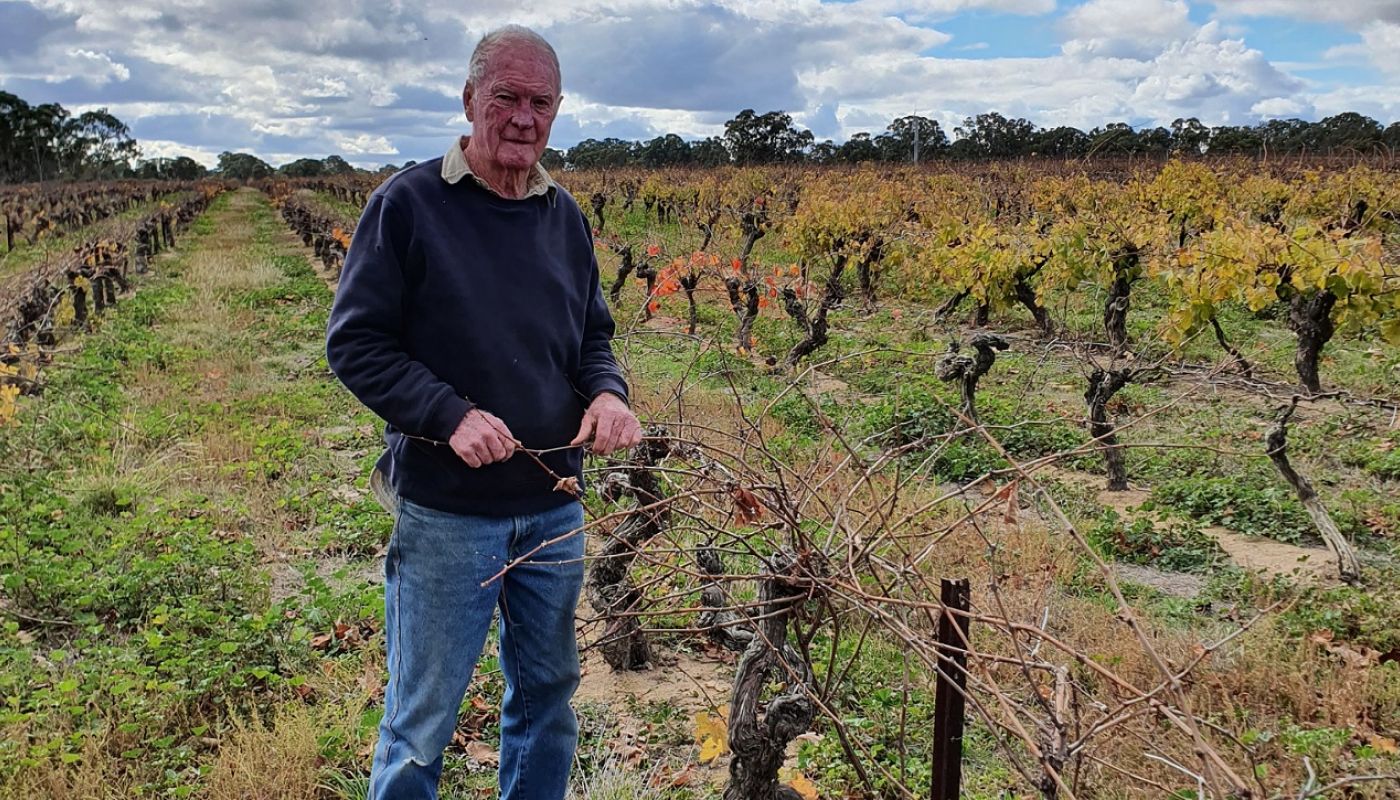
As you leave Melbourne, driving west for an hour so the sea slides away and elevated farm land with big skies become your companions, you begin to pass through wine regions of The Pyrenees and Grampians. Once through the town of Ararat, two and a half hours driving from Melbourne, you arrive in the small town of Great Western, greeted by a hotel, petrol station, general store and grape vines. The first vines came from a French couple named Trouette and Blampied in the mid 1800s. Henry Best purchased some of these cuttings to become one of the regions grape growing pioneers. Henry planted his first vines next to the Concongella Creek in 1869, including Hermitage (Syrah), Burgundy (Pinot Noir), Malbeck (Dolcetto), Miller’s Burgundy (Pinot Meunier) and many more. The original plantings of three of these varieties, to this day, are still alive and used in the production of some of Best’s finest wines. These are not staples in the Grampians region, which stakes its reputation on peppery and muscular Shiraz as well as citrusy and stony Riesling. But the Dolcetto, Pinot Noir and Pinot Meunier planted here do happen to be the oldest of their kind in the world. Best’s, who remain untouched by phylloxera, have managed to maintain these vines for over 150 years, picking fruit each vintage at increasing quality, albeit diminishing productivity. So why keep these old vines around when clonal replanting is readily available to increase production and retain bright fruity flavours? Viv Thomson, the current owner of Best’s (pictured above, among his vines), said that it was just by happenstance - there was no forethought to have the oldest vines of their kind in the world, and like many things, they just kept surviving. The owners of Best’s from the founder Henry, to the Thomson family, have never truly seen this enterprise as a money-maker but as a labour of love, and like many Australian winemakers have other agricultural interests, such as sheep and cattle.
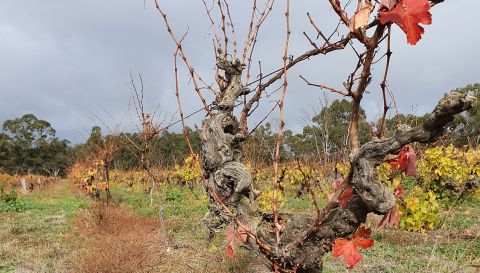
Let’s look at each of these three great varietals individually, starting with the Pinot Meunier. This was a 1.2-hectare planting in 1868, with 85% “Rough Leaf” and 15% “Smooth Leaf”, which was identified as Pinot Noir in the 1970s. In 1971 Viv Thomson took cuttings from the Rough Leaf and planted less than one-hectare next door. These old vines from 1868 are still used for a single varietal Pinot Meunier labelled as Old Vine Pinot Meunier. A rising interest in table wine from Australia’s domestic market, and exceptional fruit quality brought many opportunities. When Viv and his father were inspecting the grapes during the 1967 vintage, Viv suggested that the grapes be made into their own wine as opposed to blending them with the Pinot Noir which had previously been the norm. To Viv’s memory, this was the finest vintage of Pinot Meunier produced by Best’s. These Meunier vines have gone on to propagate some of Victoria’s finest vineyards, including Oakridge.
The Pinot Noir vines, also planted in 1868, were likely accidental plantings amongst the 1.2-hectare Pinot Meunier plantings. In 1971 cuttings were taken from the Pinot Noir and three and a half rows were replanted. These were later identified by a visiting viticulturist named Danny Schuster as two different clones, one French and the other Swiss with the French clone being selected for a separate 1.8ha planting in 1987 as Best’s were interested in increasing their Pinot Noir plantings, these grapes now go into their Old Clone Pinot Noir.
Dolcetto is famously from Alba in Italy. Translating to “sweet one” in its diminutive form, it typically shows as just that with soft tannins, lush red fruit and purple flowers. Arriving at Best’s as Malbeck, it is completely unrelated to the dark wines of Cahors. Even before wine’s popularity began to rise in Australia, Best’s Dolcetto sold well in the local Great Western and Grampians markets.
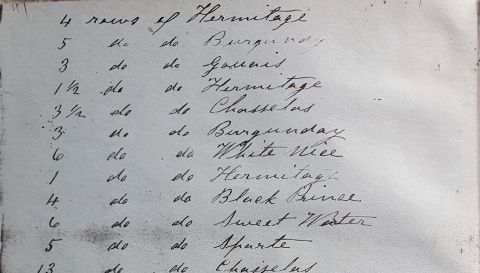
Henry Best had many paths in life including the ownership of a butcher shop with his brother Joseph to supply the local gold miners with meat. He was obsessive with his planting and there are theories that he began working the land on the Concongella Creek property slightly earlier than 1869. Henry Best kept meticulous notes of what was planted and how many rows of each vine went into the vineyard. The Thomson family has speculated that some of the early vines had come from the renowned James Busby collection which is responsible for the establishment of many of Australia’s oldest vineyards. In 1920 the Thomson family purchased the Concongella Vineyard for today’s equivalent of AUD$20,000 after Henry Best passed away in 1913. The Thomsons had been in the area for over 30 years at this stage, establishing other vineyards. The Great Depression saw the foreclosure of the Concongella vineyard in 1929 but in 1931 the bank handed the keys back to Viv’s father. This is the only time that neither of the two families have owned the vineyard. Viv Thomson was born in 1938 and participated in his first vintage in 1961. Trevor Mast was the first external winemaker in 1975, and was instrumental in the rise of quality and fame of the Grampians region, taking cuttings of the old Shiraz vines to Mount Langi Ghiran. Best’s is now run by Viv’s eldest son Ben Thomson and the wine made by Justin Purser. When you visit the winery you see everything that Henry built, from ancient Dolcetto vines and the curiosities of the nursery block along the driveway that started it all, the old stables which is now the cellar door to the underground cellar where wine is still stored today. You see the barrels he fermented his wines in, the beams keeping the structure of the winery together without any screw or bolt or nail, and you see the many dusty bottles kept safe over the decades by the Thomson Family.

In order for history to be preserved you need to care for it with loving hands. For old vines like these, and for the wines they provide for us, the labour of love is worth it. Where most of this area of Victoria is dedicated to sheep and cattle farming, who would think to look here for these vines with such historical importance? There is always so much we can learn from the past and to look to the future we must take note from the Bests and the Thomsons: take your time, it will surely be worth it. If you manage to get your hands on any of these wines, make sure you share them with your nearest and dearest. This is the house that Henry built.
The photos are provided by Max Hollander.