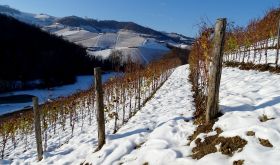
A visit to Cape winelands earlier this year left me both excited and concerned about the future of South African wine.
There is no doubt that there is a whole new cohort of small-scale, younger wine producers, typically but not necessarily based in Swartland, making thrilling and definitively South African wines based on old Cape vineyards rather than the copies of European classics that have been more typical of the more traditional wineries based in and around Stellenbosch.
But, just as the South African economy is characterised by a depressing set of restrictive factors and uncertainties, so are the economics of wine production in this beautiful but imperfect corner of the world. Grape prices in California, for instance, vary enormously according to quality. The average for the entire state, including the vast tracts of very ordinary grapes grown in the Central Valley, is more than $700 a ton, with Napa Valley Cabernet averaging more than $5,000 ( and up to $18,000) a ton. South African grape prices are a fraction of this, and much less differentiated, mostly between the equivalent of $150 and $850 a ton – with grapes for the top wines costing more or less the same as they did eight years ago.
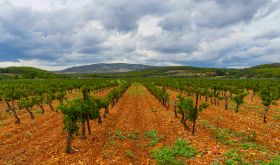
Just about my first sight during a week spent touring wine country was that of a 140-hectare vineyard in fashionable Swartland next to the highly regarded Porseleinberg site. The vines had just been pulled out by the large fruit company the farmer had sold it to. The old vine posts were stacked neatly at the bottom of the propitious slope and the land was being prepared for a more profitable crop, citrus. ‘Farmers are pulling up vineyards faster than they’re planting them', acknowledged Marc Kent of Boekenhoutskloof. Plums, nectarines, passion fruit, citrus, rooibos for tea and apples are all now providing a better return than grapes. In the relatively new Elgin wine region on the south coast, vineyards replaced apple orchards not long ago, but now the trend is in the opposite direction.
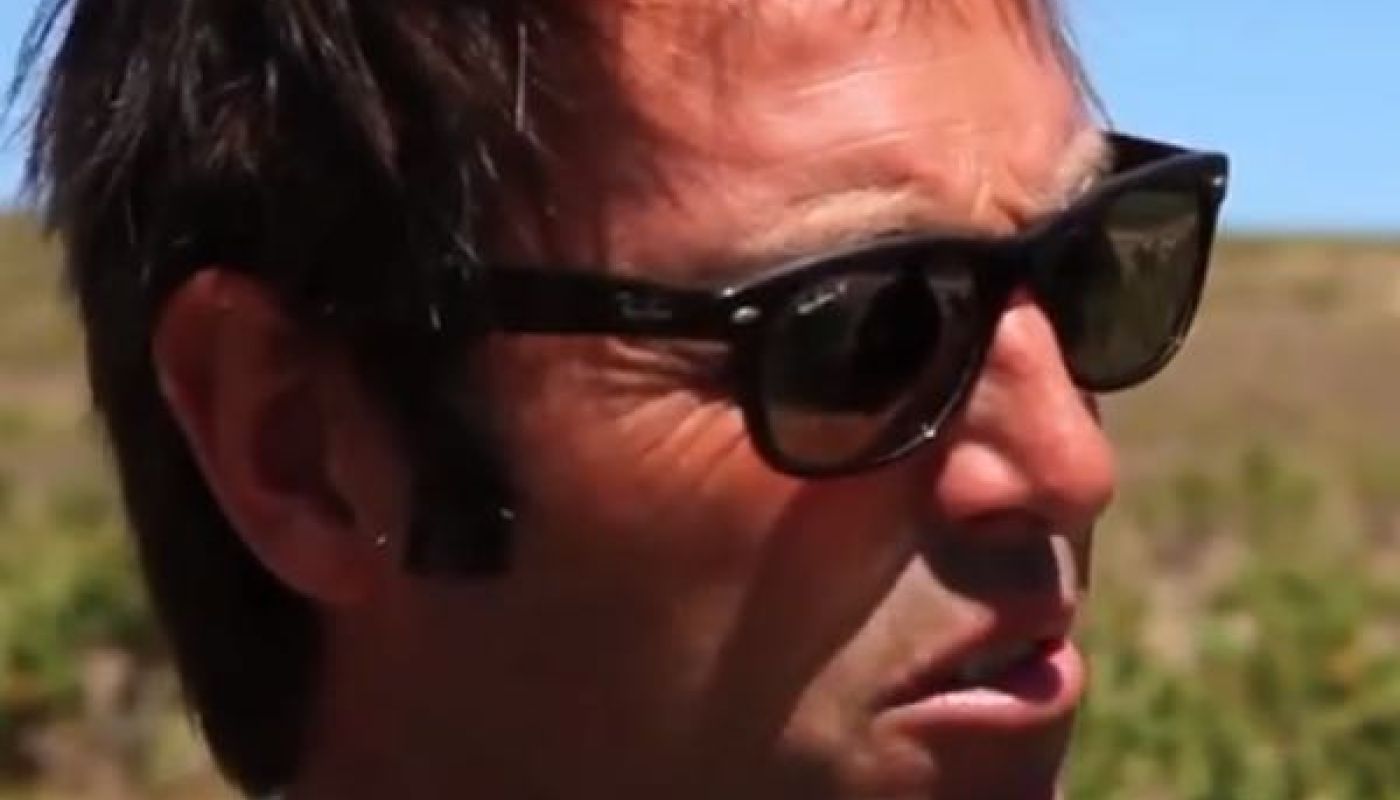
Swartland is particularly vulnerable because so little of it is irrigated, dry seasons can be seriously challenging and the high average age of the vines means that yields are notably low. The most committed wine producers such as Eben Sadie lease land from the local farmers by area rather than paying them by weight of fruit. He showed me a few rows of straggly, struggling old Chenin Blanc bushvines near his base in Aprilskloof that go into the much-lauded, concentrated dry whites of Sadie Family Wines. I would have said the bunches were barely the size of a fist, but Sadie’s fist is the size of a melon and these irregular bunches only a small fraction of that. (The photo of Eben Sadie, above, is taken from the website of the Swartland Revolution.)
He pointed to a very different-looking dark-green trellised vineyard on the brow of the hill. ‘Distell', he said, citing South Africa’s dominant wine producer. ‘Irrigated, conventionally farmed. They probably get a yield of 100 hl/ha of wine from there that they blend and sell as Coastal region. We get 12.’
The young guns, for all their talent and enthusiasm, are in a relatively precarious position. Few of them can afford to buy land, so for their creative and inspiring blends they are largely dependent on the goodwill of a range of (mainly wheat) farmers. Eben talks the talk, claims rather charmingly, ‘I have a non-estate concept at the moment’, and says his supply sources are safe ‘because we’re paying eight times what anyone else does’. He pays 30,000 rand a ton for his best fruit and every year is contacted by the wine statisticians to check that he hasn’t added an extra zero by mistake, but it is surely significant that he is in the process of converting 10 hectares around his winery into vineyard.

His great travelling companion and neighbour Adi Badenhorst (left, photo from his website) is lucky enough to have a well-heeled cousin who installed him in 2008 on a beautiful farm already planted with mature vines. But even Adi has to buy in grapes and admits that for some of his grape suppliers he has been ‘pipped by carpetbaggers coming in; it wouldn’t happen with friends but it’s always a concern’.
David and Nadia Sadie (no relation of Eben’s) have emerged as equally talented Swartland wine producers under their David label. Until very recently, they had no winery or vineyards to their name. From the 2015 harvest, however, they have the security of having been established as resident winemakers at Paardebosch winery with its own old vines just down the hill from Adi.
Chris and Andrea Mullineux, also founding members of the Swartland Independent producers' association, have taken a different route towards stability. They are now backed by Indian businessman Analjit Singh, who has funded the recent acquisition of Roundstone vineyard, in prime position with access to water on the cooler side of the Riebeekberg overlooking Swartland’s main town Riebeek Kasteel. ‘Up to now, we have used only bought-in fruit', Chris Mullineux told me in their cellars in the town, ‘from about 30 different vineyards. But as interest in Swartland grapes has grown, it has been getting more difficult to be sure of your fruit sources. We’ve lost five different farms to new people.’
Duncan Savage is the winemaker at Cape Point Vineyards, whose whites have won an almost embarrassing number of awards. He recently started up his own label for the deliberately vaguely described Savage Red and Savage White. ‘I was the first to find this really good source of Cinsault in the Darling district', he told me, ’and now there are crowds of people after those red wine grapes.’ He goes surfing with Eben Sadie and claims to get lessons in red winemaking between waves. His plans comprise ‘leasing interesting parcels of land and managing vines or even planting new vineyards in order to have the sole right to the fruit, but as you know the lead times … and budget …’
Formal contracts between winemakers and grape growers are a rarity. More typical, even for the big companies, is a verbal agreement, just for a year. ‘It’s great if it works', says Rosa Kruger, queen of South Africa’s old vineyards and manager of many of them. ‘For many producers it’s culturally unacceptable to queer someone else’s pitch. If I see a Distell block I really like, for instance, I’ll go and ask Distell how important it is to them, always respecting the grower. But the big risk at the moment is that people are pulling out vines to make way for other crops. Because prices are very low, farmers irrigate more (when they can) and fertilise more. There are still some fantastic vineyards in Swartland whose fruit goes into bulk wine.’
So what is the solution? For Rosa Kruger it is to pay more for grapes and improve the lot of the workers on these farms. For me it is that the world’s wine drinkers realise how exceptional South Africa’s wines can be and pay more for them. For this to happen, exporters and importers need to put as much effort into their work as the new wave of Cape wine producers do.
SOME FAVOURITE NEW(ISH) WAVE CAPE WINE PRODUCERS
See detailed tasting notes in South African excitement – reds and;South African excitement – the rest
A A Badenhorst
Blackwater
Crystallum
David (Sadie)
Momento
Mullineux & Leeu Family
Paardebosch (by association)
Porseleinberg
Rall
Sadie Family
Shannon
Storm
J C Wickens