The recent opening of Matriarca (meaning matriarch) in downtown Oporto in northern Portugal represents the fourth restaurant to be opened by the Symington wine family, and the consequence of a phenomenon that began 6,000 miles away 50 years ago.
I can certainly remember the coverage that Domaine Chandon, as it was called then, received when it opened in Yountville, Napa Valley. And I can still recall the late, permanently effervescent Robert Mondavi holding forth about how it seemed to him to be the logical development for all wineries.
I refer, of course, to winery restaurants, areas where customers who live in, or are visiting, cities nearby can sit, eat well in the producer’s winery and enjoy wines that are invariably made in the surrounding countryside and, most crucially, in the producer’s winery. Today, a winery restaurant is deemed a ‘no brainer’, an essential ingredient in many regions if the winery is to be a success. English sparkling-wine producer Hambledon, which the Symingtons and Berry Bros & Rudd jointly bought last year, is about to open one in Hampshire. Their biggest concern is whether there is a large-enough pool of talented young people to cook and staff a busy restaurant.
What is beyond doubt is that restaurants in wineries were principally and originally located in the New World. They were part of an open policy of welcoming visitors, encouraging wine sales direct to the consumer at the cellar door. This has obvious financial advantages but also the added, if unquantifiable, bonus that once they had been customers, visitors would leave as ambassadors for the winery and its produce. This friendly approach long seemed actively discouraged in Europe and particularly in France.
Ten years ago Paul Symington, then chairman of the family-owned wine company, visited the Vergelegen wine estate in South Africa and was impressed by their restaurant. This was followed by a trip to California which convinced him that hospitality was the future for his country’s wine industry. Their production facilities are less than a 90-minute drive from Oporto which made it a very nice day out for the many tourists who now flock to that city – if the burgeoning number of visitors were made to feel comfortable and looked after.
I did not envy what Paul had to do on returning to Portugal, persuading his fellow board members that their next move had to be into hospitality. Not because they are risk-averse. Twenty-five years ago the Symingtons had been among the first to see the potential of table wines as well as their long-admired ports. But for two very different reasons.
The first was the Symingtons’ age. Restaurants are by and large a young person’s game and Paul’s generation were then in their late fifties. I would have worried, too, because they share a family trait which plays no part in the make-up of a successful restaurateur. They are all self-deprecating to an astonishing degree. Whenever I mentioned that I would be visiting their latest restaurant in Oporto, a 20-minute drive from the airport, their immediate response was to play down its charms, to excuse it almost, even before we had set foot in it. Fortunately, the execution of their new restaurant, Matriarca, has been largely the responsibility of the next generation.
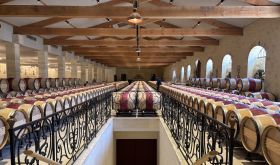
Paul’s plan was given the green light but with the caveat of suitable caution. For their first venture, the creation of Vinum restaurant in what had been the barrel-storage space for Cockburn’s port, they entered into an agreement with Sagardi, the Basque restaurant group. Then, when they opened Bomfim 1896 restaurant in their Quinta do Bomfim complex in Pinhão in the Douro valley, they entered into a partnership with Pedro Lemos, a chef who had won a Michelin star for his eponymous restaurant in Oporto.
The results are impressive. On our first night in the Douro, on the terrace of Casa do Ecos, Bomfim’s more casual restaurant, the highlight of the meal was cabrito, or kid, cooked in a wood-fired oven. I enjoyed pulling the meat from the bone and ate it with great relish. On the subsequent evening at Bomfim 1896, the fish course, described simply as creamy blue-lobster rice, was sensational. I still have a problem with Portuguese desserts which I find simply too sweet, however.
As the Symingtons grew their hospitality business, mistakes were made along the way, but lessons quickly learned. Paul’s face went a whiter shade of pale when he told me about the creation of a conservatory at one of his restaurants which immediately increased the number of covers they could seat but without any thought having been given to the extra demands that this would put on the kitchen.
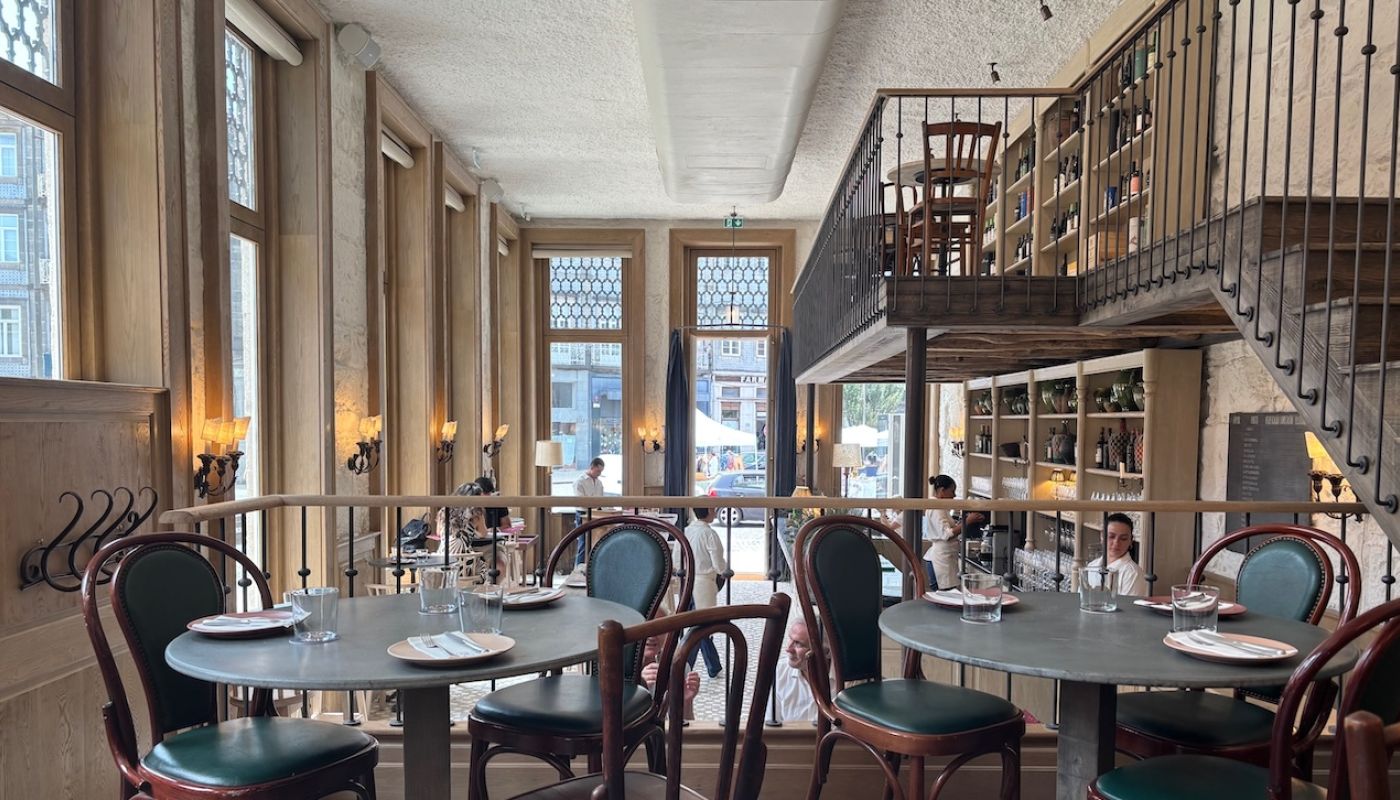
The opening of Matriarca, entirely conceived, funded and run by the Symington company, could not have taken place without the confidence gained from running their three previous restaurants (one at the Graham’s lodge in Vila Nova de Gaia and the two at Bomfim). It occupies a corner site in downtown Oporto and does not hide their many brands for a second. There’s an attractive wine shop, a wine bar on the ground floor, a more formal restaurant on the first floor (see below for the room, the open kitchen and some of the many Symington family portraits in evidence) and plans for a wine academy from September on the floor above.
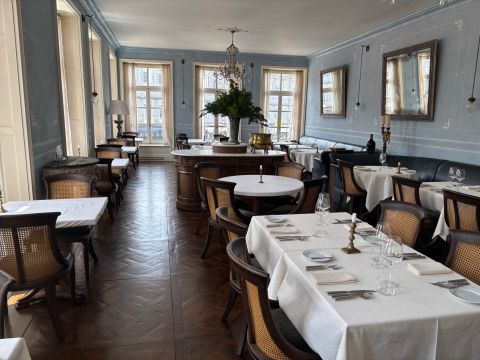
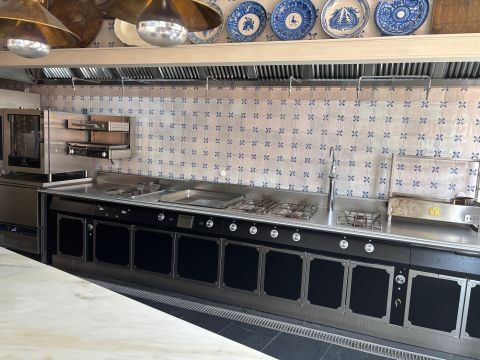
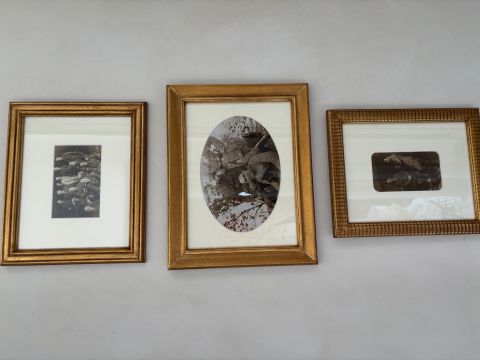
We enjoyed Sunday lunch in the wine bar though it was just the second week of operation. At the moment, the restaurant is open only in the evenings which is a great shame. I will have to return to enjoy creme de sapateira com scones e crème fraîche, or crab soup with scones and crème fraîche – a delicious-sounding first course.
But we ate extremely well in a room where there were as many staff as customers from a distinctive menu broken down into seven unusual categories: appetisers; light – which included two more soups; bread; sea; hills; a heading ‘with cutlery’; and desserts and fruit. There is also a specials board which offered two delicious dishes: thinly sliced but highly spiced ox tongue with vinegar sauce and a bowl of small red prawns served, on ice cubes, with a Marie Rose dipping sauce.
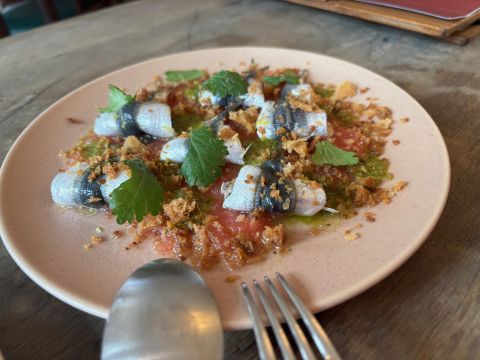
We began with a typically Portuguese dish. There is no direct translation for a mirita, a mound of slices of a typical northern Portuguese bread called pão bijou covered in this iteration with melted ilha cheese (from the Azores) and a green sauce. It lasted only a few seconds. We followed this with an excellent rendition of shrimp toast, in which the generous and juicy pieces of shrimp were clearly visible; and the dish of tomato-pickled ‘whitebait’ above (that was in fact horse mackerel).
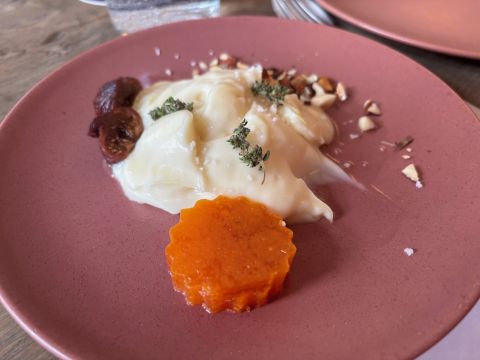
We finished with a plate of Portugal’s creamy Serra da Estrela, a cheese from the mountains that, once tasted, can become highly addictive, and goes beautifully with port. I enjoyed my glass filled with an orange trifle and custard.

Not surprisingly we drank well, too, though tactlessly chose wines by the glass that were not from the Symington stable: a MOB Bical 2023 from Dão; Chocapalha Arinto 2022; Pardusco Private 2018 red Vinho Verde from Anselmo Mendes (the Syms’ partner in their new venture Casa de Roda in Melgaço) and Filipa Pato’s Dinâmica Baga 2023. All at prices that look very reasonable to Londoners.
Restaurants, a business which was entered into with some trepidation a decade ago, have grown into a significant part of the Symington business. Hospitality employs 120 out of a total workforce of 640; it is the only division that has grown over the past two years, and it now contributes approximately 10% of the company’s turnover. So much so that Paul actually dreams of opening a 35-bedroom hotel close to Pinhão. And all this is without taking into account the ‘soft profit’ of selling so much wine. Owners of wine companies in the rest of Europe, please take note.
Matriarca 14 Rua Actor João Guedes, 4050-310 Oporto, Portugal; tel: +351 910 886 628
Every Sunday, Nick writes about restaurants. To stay abreast of his reviews, sign up for our weekly newsletter.