Sandra Gomes Rocha writes Sandra Gomes Rocha is a Portuguese wine importer in California with deep familial roots in Portugal. She holds a BA in Communications from William Paterson University, a Certified Specialist of Wine (CSW), and an MBA in Wine Business from Sonoma State University. She is also a WSET Diploma Candidate. She recently served as President of Women For WineSense – Los Angeles, a national nonprofit dedicated to wine education and female leadership in the wine industry.
Crimson in the lagares – Touriga Nacional from the hands of my grandfather
There was a place in Portugal’s Trás-os-Montes region where men gathered most nights after a long day plowing the fertile soils of Arcos, Montalegre. This northern medieval village, vibrant and rugged, seemed mostly forgotten by Father Time. Here, terrain-cracked hands worked to uphold a heritage passed down through the centuries. “A Taverna do Dinis” was a tavern nestled in a tiny corner of my grandparent’s house. This place was small in square meters yet vast in camaraderie and served as a refuge for kindred spirits. Townsfolk would come for “um copo de vinho” – a glass of wine – while listening as a scratchy John Lennon record spun in the background, lending its hopeful melodies to their tired souls.
My grandfather, Américo Dinis – farmer, trader, and backyard alchemist – stood behind an oak counter pouring the crimson elixir fermented in centuries-old lagares. Yet the wine poured carried a story far beyond our ancestry. Bottles unlabeled, wines often nameless, one grape was always present, even if unknown: Touriga Nacional. In this “cold land” it showed up rustic, tannic as mountain rock, sharp as dawn’s biting chill, yet bold and powerful enough to sand the day’s rough edges smooth. Its full essence is inky-dark, with aromas of violets and dark berries, serving fine tannins and refreshing acidity.
These farmers, having lived in this mountainous region for generations, were intimately familiar with their land and instinctively locked into mother nature’s cycles. They grew food and livestock for survival, occasionally heading to the regional markets to sell their haul for a handful of coins. Wine, however, was something they made for themselves. It was more than a way of life. It’s a connection to our ancestors, heritage, a ritual that binds land to the hands that made it. Wine always sat at the table, much like a beloved family member, a source of identity and pride.
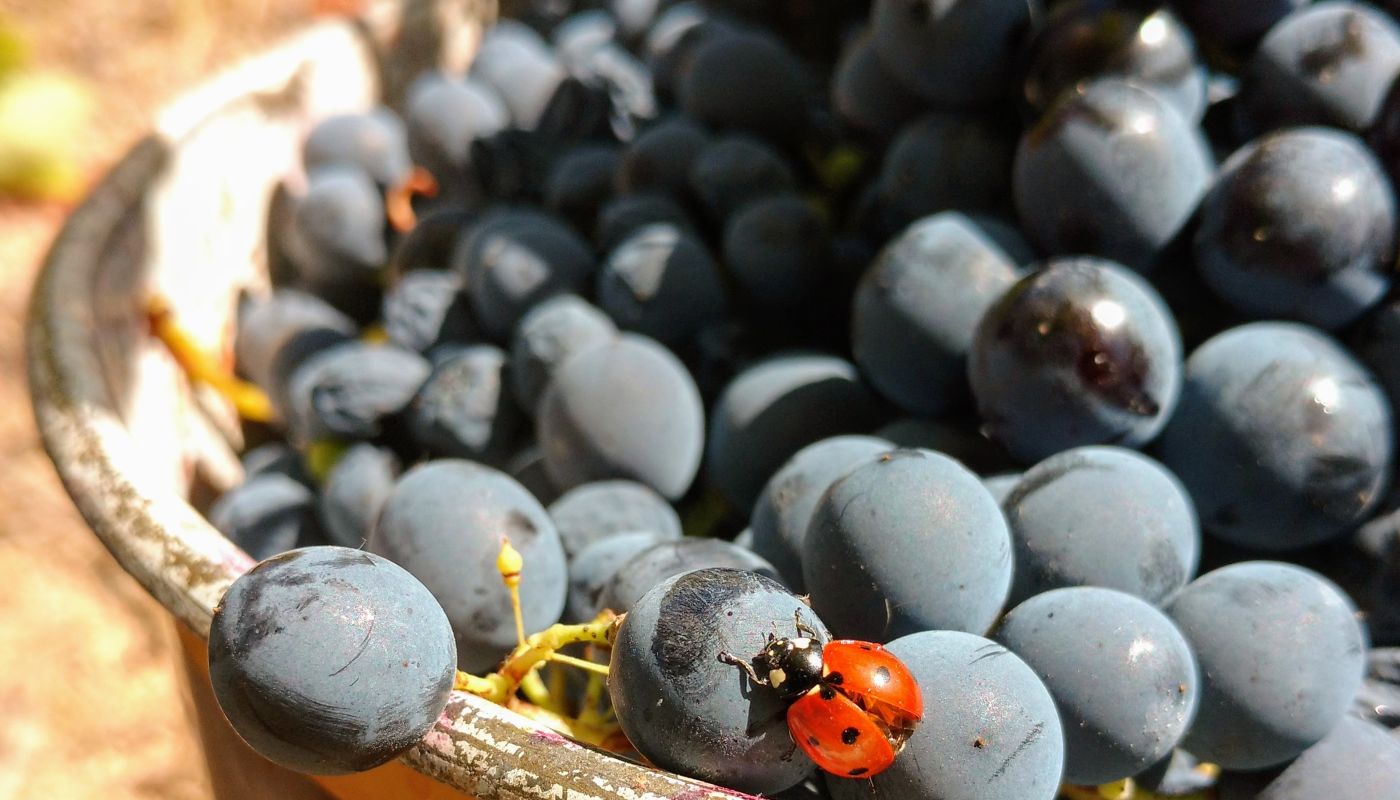
Most folk found small pockets of land in their parcels to plant whatever grape varieties they could find. They were masters of the field blend – made popular by generations of farmers who shared shoots with their neighbors, oftentimes not knowing the name of the variety and therefore giving it a regional, more colorful name. Mortágua, Bical Tinto, Touriga Fina, and Tourigo are some of the synonyms for the heat-loving variety. While found in every corner of Portugal, this variety has its beginnings in Dão, a region just Southwest of the Douro Valley, where in the town of Tourigo we can still find 100-year-old Touriga Nacional vines. Berries as tiny as a ladybug, low yielding, and nearly extinct after phylloxera hit Portugal around 1868, Touriga Nacional has become a beacon of hope. Robust, complex… adaptable. In an ever-changing world, this variety is emerging as a crucial component in the fight for our future.
Touriga Nacional’s extraordinary gifts are being discovered the world over and thrives where others are starting to wither. Its thick skin, resilience to heat, and ability to anchor both structure and aroma make it not just Portugal’s past, but the wine world’s future. In 2021 growers in Bordeaux approved the introduction of this variety to their native blends. Others in the U.S., Australia and South Africa are recognizing the grape’s ability to retain acidity in a period of accelerated ripening due to continued elevated temperatures during the growing season. Be it as a blend, or allowed to shine on its own, Touriga Nacional is a variety that will bring vibrancy and longevity to regions who are fighting to survive and reinvent themselves in a rapidly warming world.
My grandfather would have been proud to see the grape that was once the backbone of his community become a key instrument in the sustainability and longevity of the wine industry. Today, my father is the steward of that tiny space, bringing it back to life as a new place of gathering, reminiscence, gratitude, and love. While the village of Arcos has fewer people coming over after a long day in the fields, a more refined Touriga Nacional is being poured. It still has a seat at the table, it will always be family, but from today onwards, its family expands to include wine lovers from across the globe.
I never had the opportunity to have “um copo de vinho” with my grandfather in his Taverna. However, today I raise a glass in gratitude for his legacy, and that of Touriga Nacional’s as darling of the Dão and steward of the Douro.
To Touriga Nacional, obrigada for your resilience, for your tiny-but-mighty presence in our past, and for the promise you carry into our future.
With love,
Sandra Gomes Rocha
Diniz Cellars
Portuguese Wine Importer - California
Photo courtesy of Juliana Kelman from Kelman Family Vineyards in the Dão region, one of the producers represented by the author.
















