Carol Kaufmann writes Carol Kaufmann is a professional jack-of-all-trades writer and editor currently focusing on public policy in the U.S. and around the world. She’s the author of four natural history New York Times bestsellers, a former staff writer at National Geographic magazine, reporter at Reader’s Digest, ghost writer at The World Bank, and the creator of countless freelance articles. She earned the WSET Diploma in 2024 and regularly hosts wine tastings in Alexandria, Virginia, where she is inevitably called upon to defend Chardonnay.
You just haven’t met the right Chardonnay
I’m destined to champion a grape.
You’ve heard wine drinkers denigrate Chardonnay, I’m sure. At least in the United States, where I host educational wine tastings, we have a not-so-discrete and rather loud club: the ABCers, those who claim they will drink Anything But Chardonnay.
No matter the presentation— a lovely, etched bottle (thoughtfully lightweight for shipping) or the glassware that tings when touched—noses begin to wrinkle, eyes go squinty, and lips start to purse after I tell them what’s in the glass. I know what’s coming.
“I don’t like Chardonnay.”
It’s this precise phrase that offers the opportunity to change hearts, minds, and tastes. My eyes twinkle because I know I will meet the moment. Also, I can’t help myself. I am beyond excited.
“Oh, but I think you might. You just haven’t tried the right one.”
Yes, I say, wine is a matter of personal taste. No one is obliged to like a certain grape, a famous blend, or a bottle of rare juice that costs a mortgage payment. If you’re told otherwise, leave immediately! But rejecting Chardonnay outright? Which Chardonnay?
I hold up a blank piece of paper: “This! This is Chardonnay!”
Let’s consider. That lovely, little golden grape has its own flavors from sharp lemon to mellow banana, but it also grooves and shimmies to a winemaker’s beat. It’s the blank slate grape, adaptable to what the winemaker wants it to be. And different winemakers want different flavors and textures. Creating a Chardonnay wine is a marriage between plant and person, each bringing their own handiwork to the product.
I do understand. We Americans came of drinking age when California winemakers were going nuts with the oak. Our first white wine-drinking experiences involved an onslaught of wood and a big butter bomb, like sawdust dripping with scampi sauce. Those big flavors fought with the fruits’ notes of fresh peaches and apricots and overwhelmed the lemony, maybe pineappley notes. And if you were just beginning your career, like I was, you perhaps sipped this not in a fine dining establishment, but in a bar that also served chicken wings.
Anyway, most winemakers have gotten away from that. They’re using different kinds of barrels, stainless steel, even concrete for fermentation and aging. Today’s Chards have more what Europeans call elegance, and the butter notes are more subtle; it doesn’t feel like a brick of Kerrygold shoved in your mouth.
If they’re still looking at the bottle with squinty eyes and have their arms crossed, I pivot.
Many Chards are made without oak at all. No trees killed! These wines showcase the fruit of the grapes, reflect the place where they’re grown, and the winemaker’s ability to let that shine through. If you like steely, mineral-driven, citrus kisses and zingy-fresh stone fruit, Chardonnay can do that, too.
Here, Chablis comes in handy because many are fans of its chalky zip. Or I whip out a cheeky little number from Dundee Hills that’s rested and readied for debut in stainless steel and brings with it the cool crispness of the Willamette Valley.
This is Chardonnay! I exclaim. By law, Chablis has to be Chardonnay and the bottle from Dundee Hills? 100% Chardy from Oregon.
For some, this is the A-Ha moment and my work is done. They will now look at Chards with new eyes. But if not, I bring in the monks.
Cast your imagination back to the Middle Ages in France, specifically, in, Burgundy, the Cistercian and Benedictine brothers built walls around their Chardonnay vines, meticulously observed them, and recorded what they saw. They had the luxury of time to learn how to coax the best from their vines, gleaning that different plots of land give the grapes their own distinct expression—the birth of the “terroir” concept. It’s because of the monks’ devotion a thousand years ago that we know so much about how to grow Chardonnay today. So much that it’s the most planted wine grape in the world.
Offering sips of a well-chosen Burgundy, where fruit, winemaking, and aging all play together, illustrates the point. But if that history and its translated grace doesn’t do the trick, I pull out the big gun.
Do you like Champagne? Heads nod.
Without Chardonnay, our revered Champagnes wouldn’t offer the finesse and citrus flavors, it wouldn’t be the cup of elegance that we pop open for celebrations and birthdays and anniversaries and weddings. A majority of Champagnes are blends of three grapes, including Chardonnay. So if you like, or love, Champagne, you actually do like Chardonnay.
It’s a kick to see eyes light up when wine tasters try new-to-them wine and love it. It’s an even bigger joy to witness a Grape Transformation, when they realize they actually do like a grape they thought wasn’t for them.
They begin to see that it’s mind-blowing the range of wine that Chardonnay can become. I’m astonished that some boxed blends from California to Australia offer refreshing, “cheap and cheerful” tastes, while a Puligny Montrachet can be an orchestral, holy experience.
Maybe I try so hard with Chard detractors not because of the grape’s notable traits–the blank canvas, the versatility, the labor of love that its cultivation was and is— but because it was the varietal I most drank when I discovered I liked wine, decades ago. To me, a sniff of butter-spritzed popcorn surrounded by cedar is a certain heaven. But that profile also made me want to know more: why does this taste like butter and fruit? Drinking big Cali Chards, still, evokes memories, the opening salvos into my long and continuing wine trip decorated with experiences and people that have become my cornerstones.
I tout this grape so vociferously because it has an excellent story, and is big part of my own. And its potential expressions? Nearly limitless.
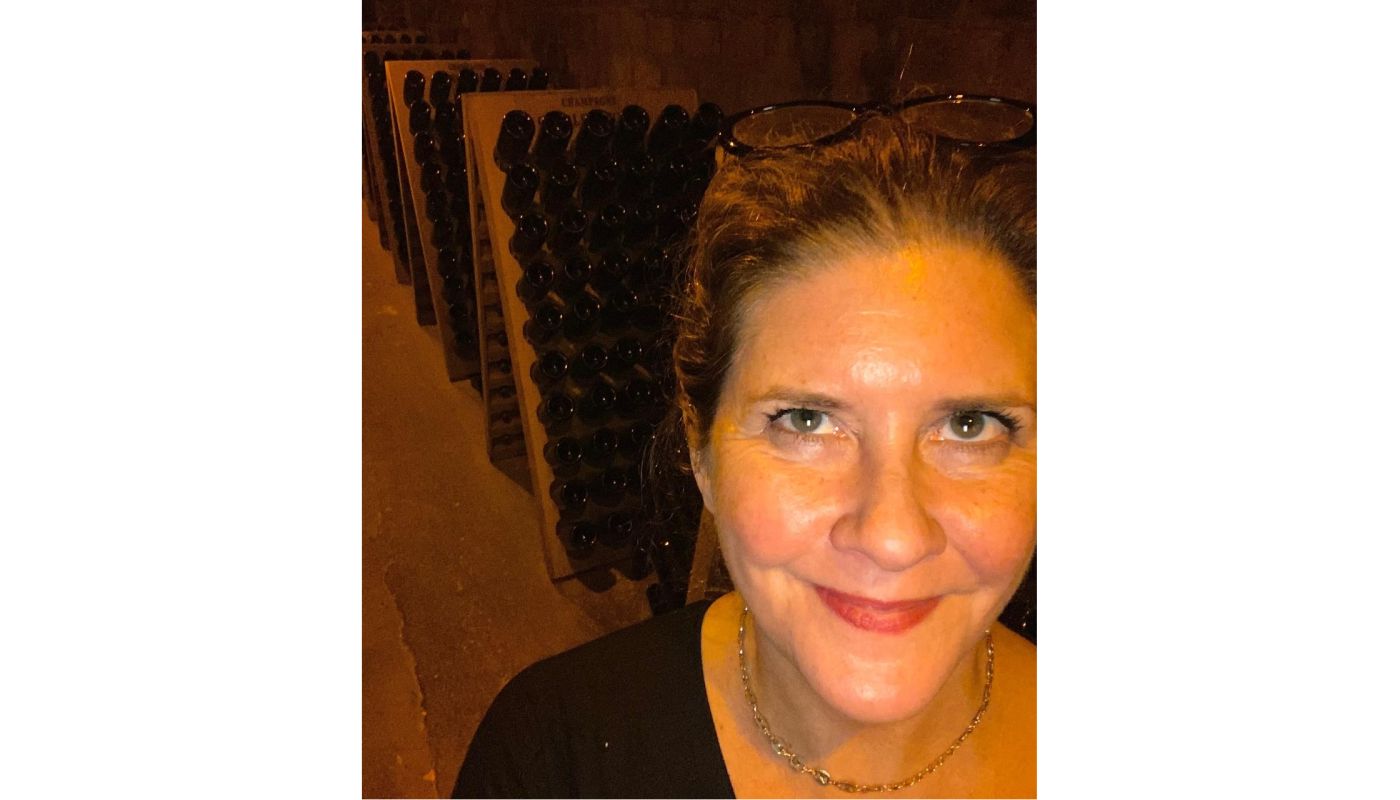
Photo caption: 'Carol Kaufmann explores Champagne cellars in Epernay, France, believing that to know Chardonnay is to investigate it in all its expressions. “Someone has to do it,” she says.'
















