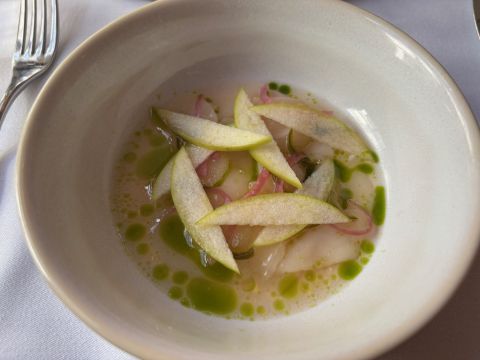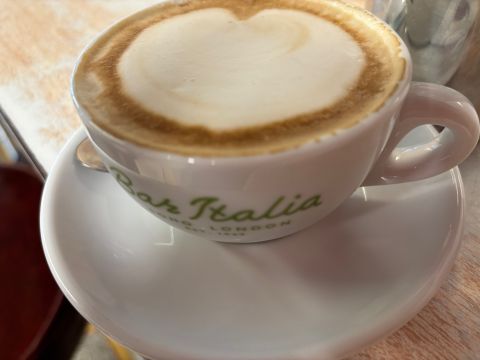
The inherently Italian pleasures of my lunch at Doppo on Dean Street – thin slices of scallops topped with equally thin slices of tart apples (below), pici with a thick sausage sauce and a glass of Dievole, Campinovi Trebbiano 2020 IGT Toscana – began with a very Italian cappuccino 100 yards away.
The Bar Italia on Frith Street has long been a popular Italian outpost in Soho but I hadn’t been for some time. I sat opposite the large poster of Rocky Marciano as sunlight temporarily poured in through the plate-glass frontage. What is unchanged is the size of the coffee and the proportion of foam, and no chocolate (café owners and restaurateurs, please note). The only change I noticed was a menu offering ‘all-day breakfast’ served until 6 pm!
There was an era when Italians staffed the kitchens and front-of-house in Soho’s many cafés, bars and restaurants. Old Compton Street used to house butchers Bifulco at one end (since moved to Cricklewood) and I Camisa & Son at the other, a deli which finally closed in 2024 after 63 years. Elena Salvoni was maitresse d’ for many years at Bianchi’s, then L’Escargot before moving slightly north. And in Dean Street on one side of Doppo there was once a barber’s shop called Gino’s where all the staff were Italian. On the other there still is Quo Vadis whose founder was Peppino Leoni.
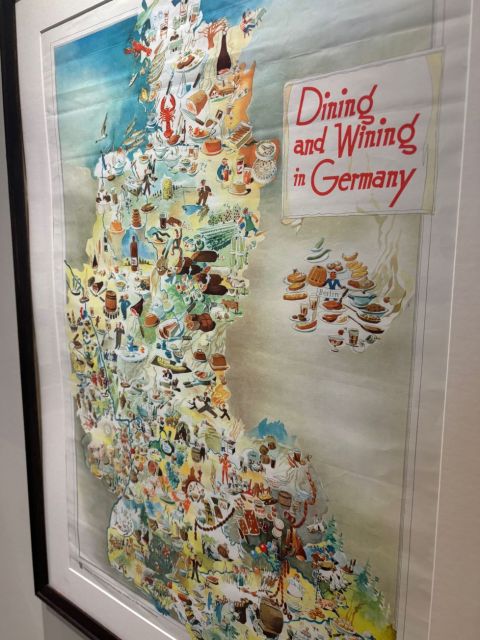
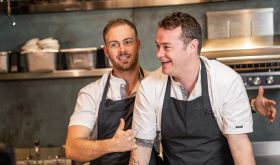
It would be fair to call Doppo an Italian restaurant. It takes its name from the letters of Denominazione di Origine Protetta, Italian for a protected designation of origin (PDO). Half the enormous wine list of over 1,000 references is Italian. The chef Giuseppe Zen is unquestionably Italian and the vast majority of the dishes on his menu are Italian, cooked with intuition and passion. The walls are covered in maps, the oldest from 1690, including several of Italy of course, although the most fun is the one headed ‘Dining and Wining in Germany’ hung en route to the lavatories.
But one of Doppo’s co-owners, Tom Cordiner, slightly recoiled from the idea that it is an Italian restaurant when I returned to interview him and sommelier Thomas Davies. ‘It could imply that we are a facsimile of an “Italian restaurant” which is certainly not our aim. It is more about our gastronomic inspiration and our gravitating to Italy generally and central Italy in particular rather than to France.’
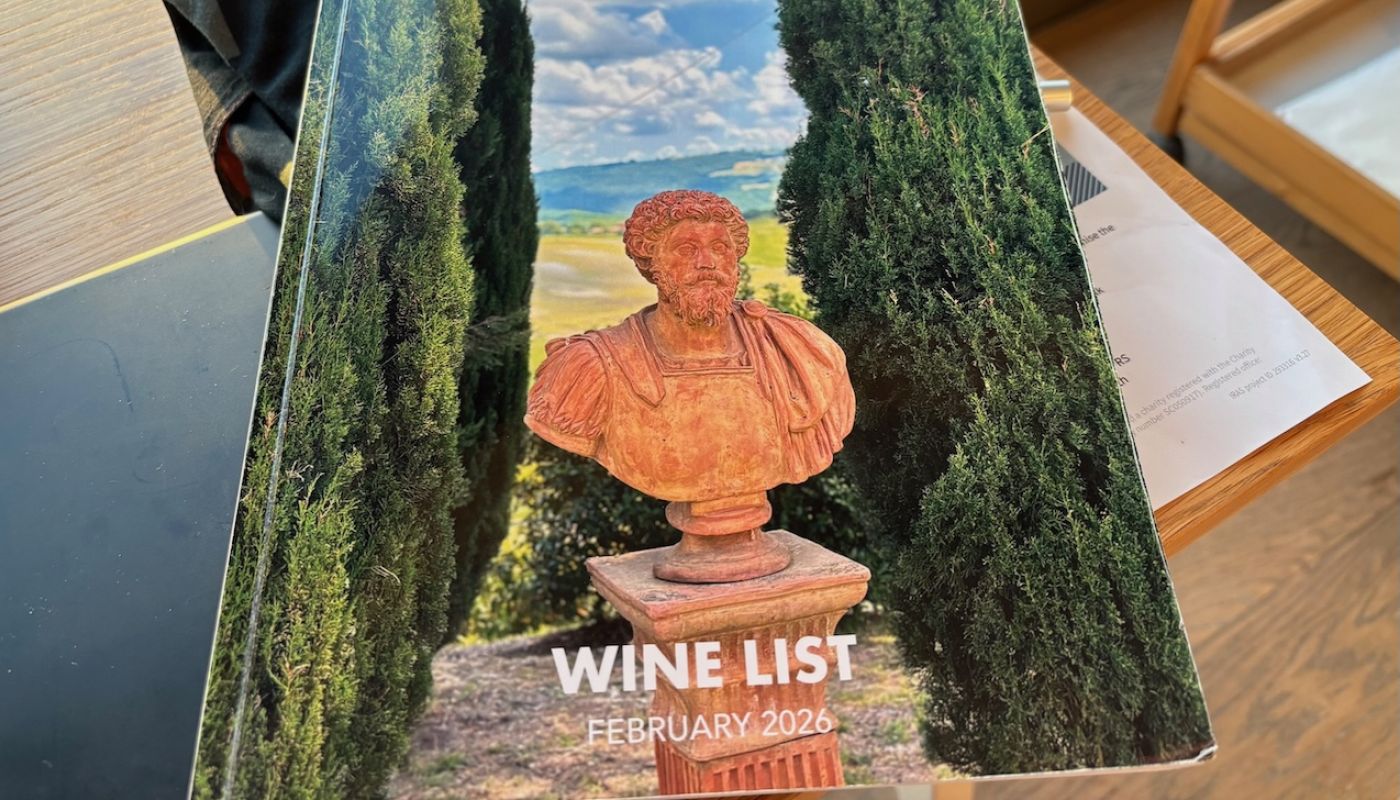
But Doppo is definitively Italian in one particular aspect: the pricing of its wine is based on the very Italian sentiment that wine is to be enjoyed, the bottles on offer are to be drunk. On page 3 of their monthly-changing wine list (which looks like a glossy magazine), just below the statement that the February list contains 71 new wines, were references to the importance of place and people, and the observation that friends and wine improve with age. The list commendably includes more than 50 wines under £50 a bottle, and our first wine at my second meal, chosen by JR who said she hadn’t tasted a mature Verdicchio in a while, was a Rincrocca Riserva 2021 which was £76 on the list and is available from Swig for £42, so no hefty mark-up.
Their wine list is a gem, offering exciting wines from no fewer than 25 countries, all of which are clearly listed. The wines are clearly laid out in this handsome publication, one of which, I have to admit, I stole one lunchtime so that I could take it home for JR to study in time for dinner that night.
She had decided on a sensible, well-priced Fontodi 2021 Chianti Classico as our red wine but that was not to be. When the Italian wine-loving friend we had planned to treat to dinner arrived, he announced that he had just received a significant windfall and would like not only to pay for dinner but to choose our red wine. There followed a reasonably lengthy discussion on the other side of the table and some advice from sommelier Davies before agreement was finally reached and a bottle of Poggio di Sotto 2015 Brunello di Montalcino was ordered for £295 (£140–£175 retail). It was delicious, with great length and charm: quintessentially Italian with an appetisingly dry finish.
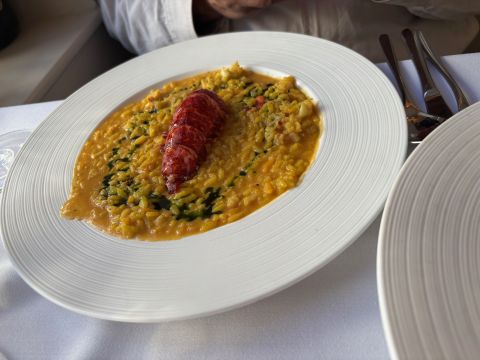
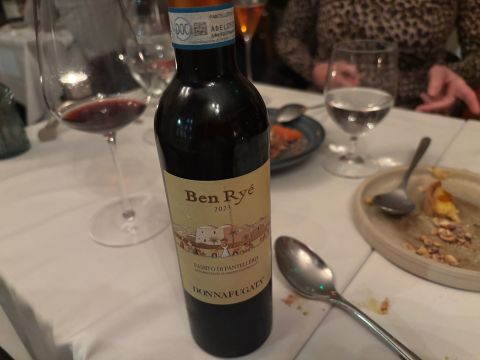
Alongside these wines we ate well from a menu that is obviously Italian. My guest on my first visit had enjoyed a tentacle of grilled octopus with a carrot purée alongside a glass of Cutizzi Greco di Tufo Riserva from Feudi di San Gregorio (£11) and a main course of lobster risotto (£42 and shown above) which with a couple of coffees brought a bill of £128.90 including my main course of pici with Tuscan sausage (JR ordered for dinner exactly what I had enjoyed at lunchtime). On our return the bill was somewhat larger, £639.35, but I am delighted to report that £449 was spent on wine: the Verdicchio, the Brunello and a half bottle of Donnafugata, Ben Ryé 2021 Passito di Pantelleria. With all this I enjoyed a burrata with salad, the lobster risotto and a few mouthfuls of a chocolate crémeux with the last of this year’s blood oranges.
There was a marked difference in the atmosphere between my lunch and dinner. At lunch at Table 13 at the top of the stairs by the window overlooking Bateman Street, the restaurant had seemed light and airy with sunshine pouring in. In the evening, it was far more intimate with the large wine fridge full of bottles and the shelf above full of empties dominant. According to Davies who served us on both occasions, there is a marked difference between the empty bottles that adorn the first floor and those on the ground floor. ‘It’s the bottles of Latour and Sassicaia upstairs, and those drunk while we were planning the opening downstairs, so J J Prüm and Ridge Chardonnay’, he explained with a broad smile.
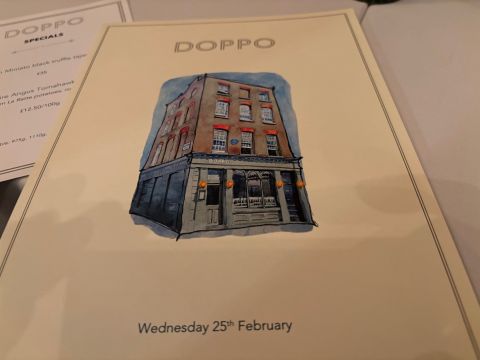
The tall, narrow house at 33 Dean Street has a long history. Built in 1743, it once housed a meeting attended by Charles Dickens and John Stuart Mill, before being converted some time ago into the Italian restaurant Il Siciliano that was well-known chef Aldo Zilli’s first professional kitchen.
A more difficult and tortuous space in which to introduce a restaurant, it is difficult to imagine. The kitchen is in the basement with a narrow staircase up to the ground floor where there is a small bar with room for just six small tables and a few customers at the counter. Then the narrow staircase continues to the first floor with another 12 tables, so Doppo can seat 36 without the benefit of any form of lift.
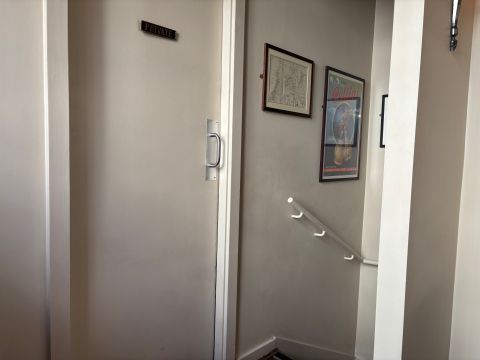
This became obvious as I sat at the top of the stairs. All the food has to be carried up by strong men who, when they reach the turn, look round for a waiter to take their tray. If no one’s available, they knock on the door marked Private to the right. This small ‘office’ acts as a staging post in which the waiting staff take over the food as it comes up and where they store dirty plates and glasses until the end of each service.
It was watching the staff carry out these duties numerous times each service that prompted me next day to ask Davies, an economics graduate from UCL, ‘Do you ever go to the gym?’ ‘Not after a busy lunch and dinner service here; it’s more than a workout’, came his honest and not unexpected response.
And which two bottles have most excited him to have served? The response came immediately. ‘I will never forget the bottle of Soldera 1996 Brunello di Montalcino Riserva nor a bottle of Ridge, Monte Bello 2008 that I once had the pleasure of opening.’
To Cordiner and his fellow directors, grazie from all of us who enjoy wine.
Doppo 33 Dean Street, London W1D 4PW; tel: +44 (0)20 7183 2100
The restaurant does not have a website but reservations can be made via Open Table.
Bar Italia 22 Frith Street, London W1D 4RF; tel: +44 (0)20 7437 4520
Every Sunday, Nick writes about restaurants. To stay abreast of his reviews, sign up for our weekly newsletter.