
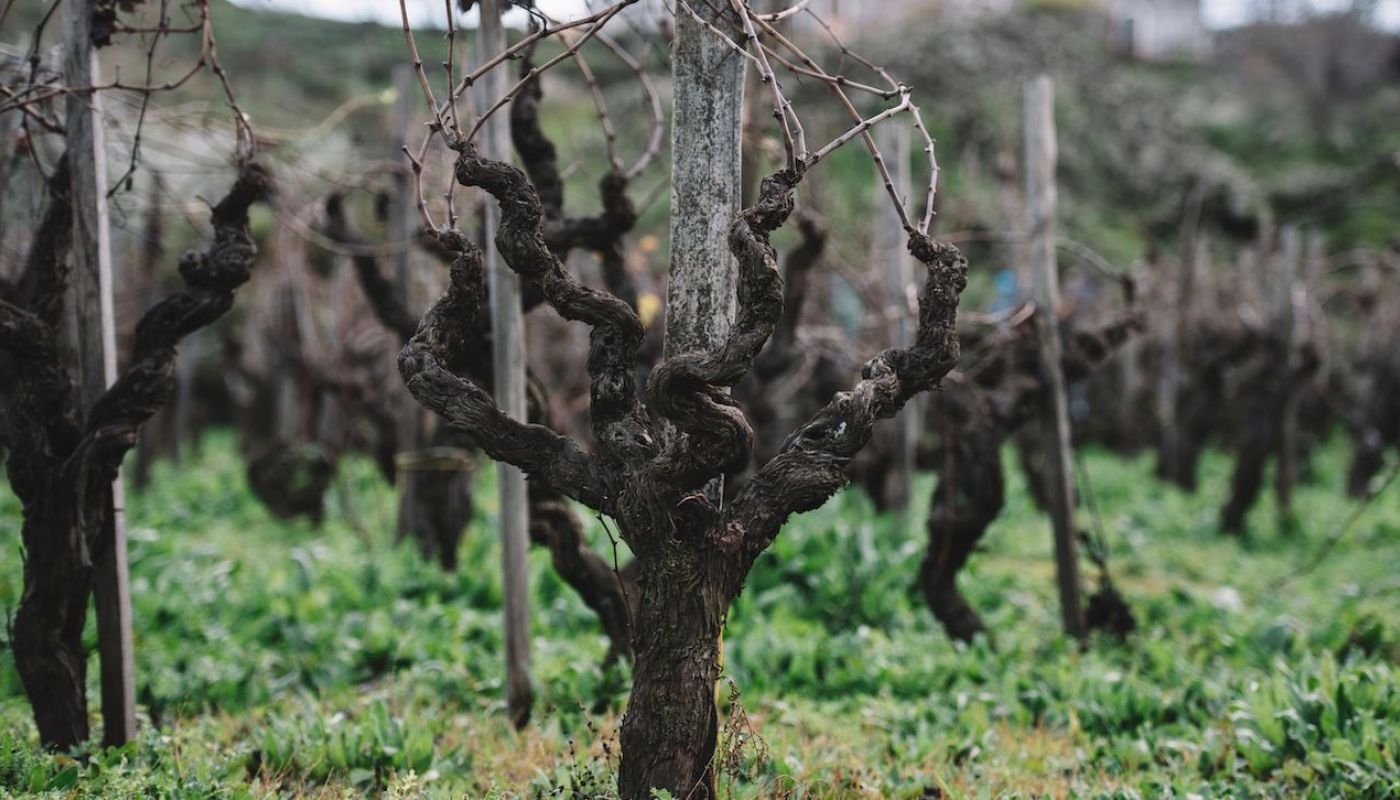
Some of the most interesting wines in the world are made from particularly old vines. A new UK-based initiative, the Old Vine Conference, is dedicated to keeping them in the ground.
Choosing which clone of a variety to plant, on which rootstock, on which training system, according to which vineyard design, is a long-term commitment for growers, but sometimes not long enough. After 25 years or so, conventionally grown vines tend to produce fewer and fewer grapes. So there is a strong commercial argument for pulling them out and replacing them at around 30 years. Other reasons for replanting could include a desire to switch to a rootstock more suitable for local conditions, or to a better-quality clone. But in general, vines from about 35 years old produce increasingly flavourful and intense wine, it is thought because they have established a deep root system and have settled into an equilibrium with the local conditions, especially water supply. Yields are also a bit lower, which concentrates the fruit.
So growers in countries and regions with a history of continuous, efficient wine production regularly replace their vines roughly every 30 years or even more frequently, even though vines can actually survive for more than a century. This is one reason why there are relatively few seriously old vines in the classic wine regions of France. However liberally French wine producers use the term vieilles vignes (old vines) on labels – and similar expressions such as alte Reben and viñas viejas are used in other EU countries – there are no regulations governing their use. (See the entry on vine age in the The Oxford Companion to Wine.)
Really old vines tend to have remained in the ground because they are seriously well suited to the local conditions, or if for economic reasons it has not been worth replacing them or paying the price of pulling them out. California has a particularly rich repository of very old vines because during Prohibition (1920–1933) it wasn’t worth replacing them or pulling them out when there was so little demand for grapes.
The 2004 film Sideways caused such a spike in the price of Pinot Noir grapes that many plots of ancient vines, particularly in northern California where they had been planted by the descendants of Italian immigrants drawn by the gold rush and mining, were grubbed up in favour of Pinot. As a result, a group of wine producers who truly valued old vines got together and in 2011 formed the Historic Vineyard Society to create a register of vines more than 50 years old and to encourage their owners to keep them in the ground.
The older the vineyard, however, the more likely it is that some vines will have perished – and need to be replaced. The rules of the Historic Vineyard Society are that at least one-third of the vines in any vineyard on their register should be of the stated age.
Some Australians got there first, however, with the Barossa Old Vine Charter that was drawn up in 2009, based on even earlier vine-preservation work by the family company Yalumba. At least 10 Barossa vineyards have qualified for the Barossa Ancestor Vine accreditation, being more than 125 years old. Langmeil’s The Freedom Shiraz vineyard was apparently planted in 1843, with Cirillo’s Grenache only five years younger. One reason for this longevity is the (literally) conservative mindset of descendants of the Silesian immigrants who dominate Barossa Valley’s grape-growing landscape.
But really reliable records of exactly what was planted when can be few and far between. One country that has enviably detailed records is South Africa. The KWV regulatory body oversaw every aspect of vine growing and wine production on the Cape from 1918 and has records of vine planting even earlier than that, so that those in charge of the country’s Old Vine Project launched in 2016 have an extra degree of certitude compared with other similar initiatives. Nowadays, Cape wines from vineyards more than 35 years old are adorned with a special Certified Heritage Vineyards seal on the bottle neck that, in the case of single-vineyard wines, may even cite the planting date. (See the main image in Tam’s article earlier this week about the Old Vine Conference.)
In Barossa they claim to have the oldest vines in the world but they may have to revise that claim. Bolivia has vines believed to be 200 years old growing, as they used to before we corralled them into vineyards, up trees. And during the recent online Old Vine Conference, Tim Atkin MW displayed a bottle of Leo Erazo’s A Los Viñateros Bravos País, lamenting that it retails for well under €20 or $20 a bottle even though the vines are more than two centuries old*. Similarly, grape prices for Undurraga’s wine from 70-year-old Cinsault vines in the same region are so low that The Wine Society can sell a bottle for just £7.50 a bottle (not surprisingly, it is currently sold out).
It is partly to raise grape prices by increasing the perceived value of old vines in the eyes of growers and wine buyers, both professional and amateur, that oldvines.org has been founded. The theory is that old-vine wines deserve to have their own, celebrated category. The Old Vine Conference is inviting people to become members of their non-profit initiative to participate in tastings of wines made from heirloom vines.
Like almost all of the world’s oldest vines, these ancient plants in California and the southern hemisphere have never been irrigated and, instead of being trained on more productive trellis systems that may be better adapted to damp climates by encouraging aeration, they grow in low bushes, their trunks visibly widening every year. This seems to have encouraged them to develop deep, well-established root systems that keep them well supplied with just enough water to survive and produce grapes full of flavour.
The greatest concentration of really old vines in Europe is of bush vines like this in Spain. One of the most revealing presentations in the recent conference was by Elías López Montero from a long-standing family wine company in La Mancha (see Ferran’s article on his Verum project). He has proved that even modest grape varieties can make great wine if the vines are old enough and sufficient care is taken. La Mancha’s dominant grape is the pale-skinned Airén, for decades dismissed as fit only for producing grape concentrate and base wine for Spanish brandy. Montero’s Las Tinadas from Airén vines planted in 1950 and recommended here last September has proved what potential there is in the most unlikely places. Throughout Spain, old Garnacha vines, having been overlooked for many years, are now being harnessed to produce sumptuously appetising reds.
Our annual writing competition has a different theme each year. Last year’s was sustainability. This year’s, with a prize of a trip to South Africa, pandemic permitting, is old vines (see details here). We too want to keep as many of them in the ground as possible – even if it means paying a bit more for their inimitable produce.
*Leo Erazo, who has been busy juggling his 2021 harvest with Chile’s demanding coronavirus restrictions, found time to explain:
‘In Itata, as you saw on your visit, it is not strange to find old vines, but what is difficult is to have an accurate date of the planting as the vineyard parcels normally change ownership over time.
‘What is particular to this vineyard is that it has been in the same family since the first planting. The vineyard was planted by Floripa Cisternas back in 1798.
‘I bought it from Anibal Diaz, who was the fourth generation (today Anibal is more than 80) to take care of this vineyard, and I was very lucky he chose me to continue the family tradition as his son did not want to take over.’
Some recommended wines from old vines
There are hundreds but these happen to be some that come immediately to mind.
Whites
Verum, Las Tinadas Airén 2019 Vino de la Tierra de Castilla, Spain 12%
From €13.40 in Spain, £20.95 Exel Wines
Maturana, Naranjo Torontel 2019 Maule, Chile 13.5%
£15.25 Corney & Barrow
Winter, Leckerberg Riesling Grosses Gewächs 2018 Rheinhessen, Germany 13.5%
€30 producer's website
Mullineux & Leeu Family Wines, Mullineux Old Vines 2019 Swartland, South Africa 14%
£25.99 Noel Young Wines, Hay Wines, also The Wine Reserve and Philglas & Swiggot
Alheit, Cartology 2019 Western Cape, South Africa 13%
From £32.95 Vin Neuf and other independents
Reds
Bedrock, The Whole Shebang! Cuvée XIII California 14%
£17.50 The Old Bridge Wine Shop
Pedro Parra, Imaginador Cinsault 2017 Itata, Chile 14%
£18.10 VINVM
Verum, Ulterior Garnacha Parcela No 6 2017 Vino de la Tierra de Castilla, Spain 14.5%
£19.95 Great Wine Co
Ridge Vineyards, Geyserville 2018 Alexander Valley, California 14.7%
£38.40 Mayfly Wine and other independents
Mount Edelstone Shiraz 2015 Eden Valley, Australia 14.5%
£116.50 Eton Vintners
More stockists on Wine-Searcher.com
See our unique, if incomplete, Old Vines Register and our 70+ articles tagged ‘old vines’.













